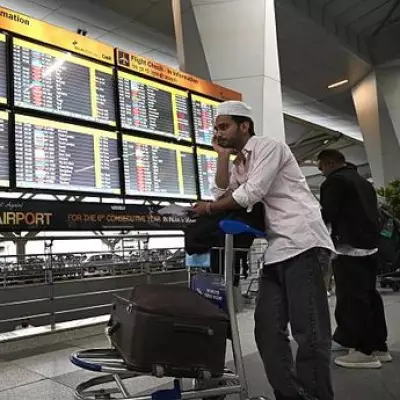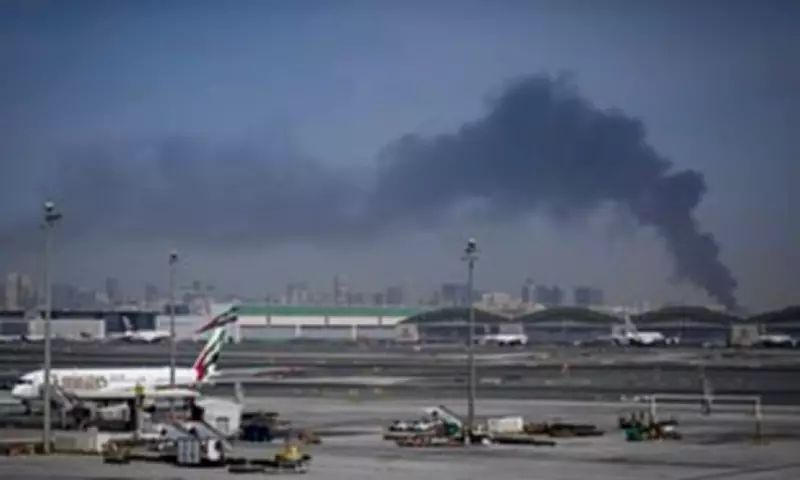
British travellers heading to or currently in the Middle East are confronting severe and widespread disruption to their holiday plans, with thousands of flights abruptly cancelled following a dangerous escalation of regional violence. Current estimates indicate that at least 200,000 British nationals are presently stranded across the Gulf region as international airspace remains largely closed. This crisis stems directly from Iran's extensive suicide drone and missile attacks, which were launched in retaliation for recent US and Israeli military strikes.
Major Airport Hubs Paralyzed
The ripple effects have been catastrophic for regional aviation. A significant number of flights to major transportation hubs, including Dubai, Doha, and Abu Dhabi, have been either suspended or cancelled indefinitely. Dubai International Airport, renowned as the world's busiest for international travel, has been forced to close its operations. This closure was precipitated by physical damage sustained at several airports during Iran's retaliatory assaults. Tragically, these attacks resulted in at least one fatality and seven injuries at Abu Dhabi's airport, with Kuwait's aviation infrastructure also suffering impacts.
Expert Analysis on Recovery Timelines
Prominent travel analyst Simon Calder provided a sobering assessment of the situation via a detailed Instagram video. "The paramount question on everyone's mind is when will this profound disruption cease?" Calder stated. He highlighted that Dubai's airport is closed indefinitely, though Emirates airline has tentatively suggested services might partially resume by Monday.

Calder expressed a cautious hope that the current flight bans and the UK Foreign Office's advisory against travel to the region would be lifted promptly. "If pressed for a prediction," he continued, "we might see a very limited resumption of flights within the next few days. However, restoring normal operations will be a monumental logistical challenge. Aircraft, pilots, cabin crews, and passengers are all severely out of position, necessitating a complex and time-consuming recovery process."
The Staggering Scale of the Disruption
The analyst underscored the immense scale of the crisis with stark statistics. "Consider that every single day without flights at Dubai, Doha, and Abu Dhabi airports represents approximately 2,500 cancelled flights and nearly half a million affected passengers," Calder explained. "On average, these hubs collectively handle around 20,000 arrivals and departures hourly. We are witnessing a massive, compounding problem."
He further noted that the stranded population is not static. "While no new travellers are arriving, the number of people needing to leave continues to grow as holidays conclude, adding them to an ever-lengthening queue. It is an utterly desperate and stressful predicament for these individuals, compounded by the terrifying reality of ongoing drone and missile threats."
Potential for Limited Relief and Long-Term Outlook
In search of potential solutions, Calder speculated about the possibility of establishing emergency shuttle services to nearer destinations, such as Cyprus, to help alleviate the backlog. However, he tempered expectations regarding a swift return to full capacity. A complete restoration of normal flight schedules is unlikely in the immediate future, given the sheer magnitude of the operational dislocation and the need for thorough safety and security reassessments across the region's airspace.