Global Travel Faces Severe Disruption as Middle East Airspace Closures Ground Thousands of Flights
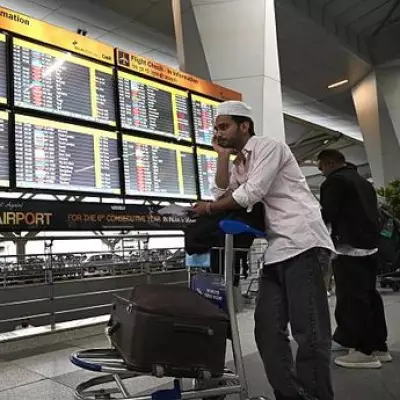
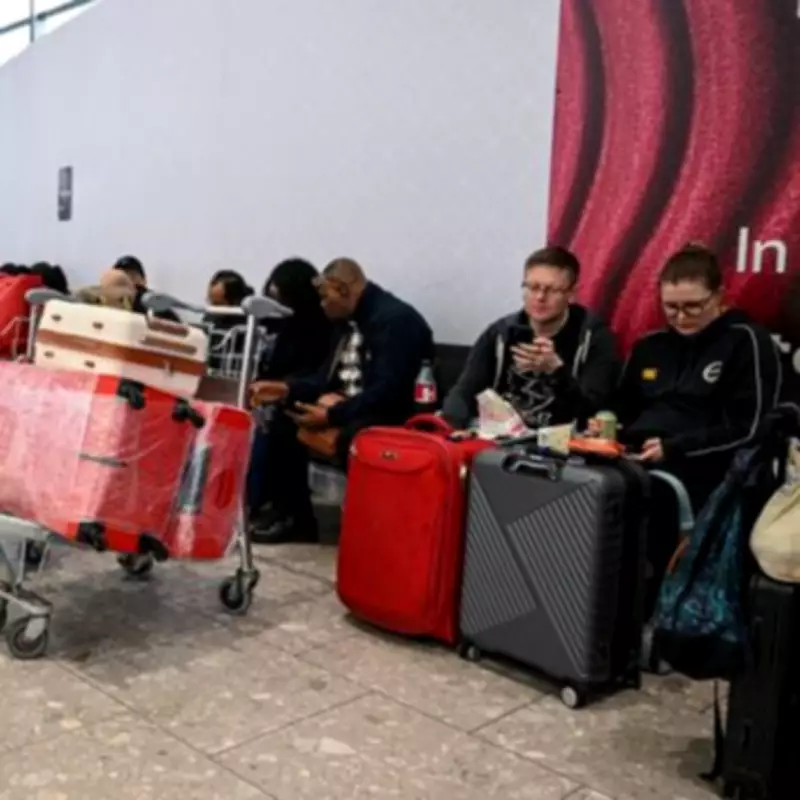
The most significant disruption to international travel since the coronavirus pandemic is currently unfolding, with airspace restrictions across multiple Middle Eastern nations forcing the cancellation of thousands of commercial flights worldwide. This unprecedented situation has left airlines scrambling and tens of thousands of British travelers stranded or facing major itinerary changes.
Scale of the Aviation Crisis
According to flight tracking data, the crisis reached a peak on Sunday with 3,156 flights cancelled, following 2,800 cancellations on Saturday. As of Monday morning, an additional 1,555 flights to the Middle East had been grounded. Flight tracking services show airspace over Iran, Iraq, Kuwait, Israel, Bahrain, the United Arab Emirates, and Qatar remains virtually empty of commercial traffic, creating ripple effects across global aviation networks.
Major Airlines Issue Critical Updates
Three major carriers serving UAE destinations have issued urgent operational updates in response to the escalating situation:

Wizz Air has suspended all flights to and from Israel, Dubai, Abu Dhabi, Amman, and Saudi Arabia through 7 March. The airline stated it is continuously monitoring developments and maintaining close contact with aviation authorities, warning that further operational adjustments may be necessary as the situation evolves.
British Airways has cancelled a number of flights to the Middle East, emphasizing that safety remains their absolute priority. The airline is offering flexible rebooking options for passengers scheduled to travel to Abu Dhabi, Amman, Bahrain, Doha, Dubai, or Tel Aviv through 15 March, with free changes available for travel before 29 March. Full refunds are being offered for flights through 8 March.
Emirates has temporarily suspended all operations to and from Dubai until 3pm UAE time on Tuesday, 3 March. The airline described the situation as dynamic and continuously assessed, urging customers to check for operational updates and offering rebooking on alternate flights through 20 March.
British Government Response and Evacuation Planning
Foreign Secretary Yvette Cooper has revealed that 102,000 British nationals have registered their presence in Gulf countries targeted by recent hostilities, with approximately 300,000 British citizens estimated to be residing across the affected region. Speaking on BBC Breakfast, Cooper emphasized the government's efforts to maintain contact with affected citizens.
"The latest figure I have from this morning is we have 102,000 people who have responded to our proposal to ask people to register their presence," Cooper stated. "This is deeply stressful for people because we're talking about a lot of people who are holidaymakers, transit passengers, or people on business visits to the region."
British officials are believed to be formulating contingency plans for potential large-scale evacuations, with one possible route involving overland travel to Saudi Arabia for subsequent flights home. The Foreign Office is encouraging British nationals in Bahrain, Israel, Kuwait, Palestine, Qatar, and the UAE to register their presence online to receive urgent updates.
Historical Context and Operational Challenges
While the British government has previously utilized registration schemes to communicate with citizens during international crises, officials acknowledge they have never before needed to manage such a large number of people across so many different countries simultaneously. The Civil Aviation Authority has experience with large-scale repatriations from the collapses of travel firms Monarch and Thomas Cook, though those operations primarily involved holidaymakers covered by the Atol protection scheme rather than such widespread geographical disruption.
The Foreign Office advises all British nationals in affected regions to closely follow instructions from local authorities and monitor official travel advice, which is expected to change rapidly as the situation develops. With airspace closures continuing and airlines adjusting schedules daily, travelers face ongoing uncertainty about when normal flight operations might resume across the Middle East.