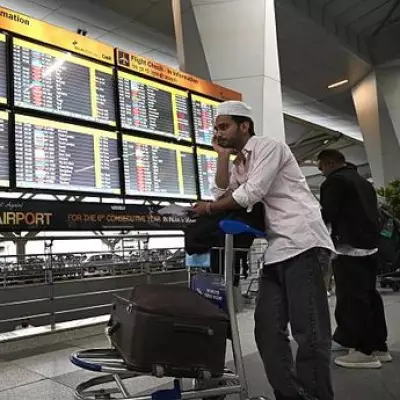
Hundreds of thousands of airline passengers have had their travel plans thrown into disarray following a major military escalation in the Middle East. The attack by Israeli and US forces on Iran, and the subsequent response from Tehran, has brought aviation across much of the region to a grinding halt.
Widespread Flight Disruptions and Airport Closures
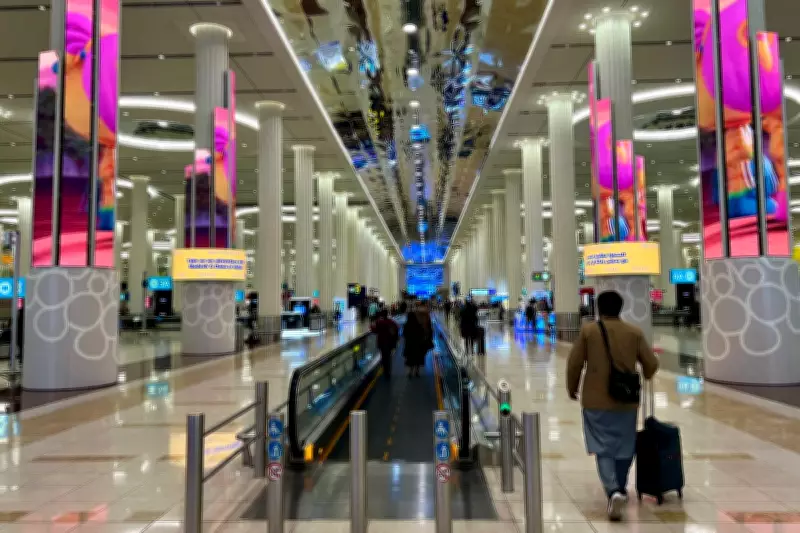
Cancellations and diversions began after a "major combat operation" was confirmed by former US President Donald Trump against Iran. Dubai International Airport, the world's busiest global hub, has closed to all arrivals and departures. Meanwhile, the giant Gulf carrier Qatar Airways has suspended all flights to and from its hub in Doha, exacerbating the travel chaos.
Many readers have contacted travel correspondent Simon Calder seeking urgent advice on their rights and available options. Below are some of the most pressing questions and his detailed responses.

Stranded in Dubai: Passenger Rights and Rerouting Dilemmas
Q: "I am one of the many passengers whose British Airways flight on Saturday from Dubai to London was cancelled. I have been rebooked to fly home on Monday on Qatar Airways – but this involves a 12-hour wait at Doha airport. I asked for a non-stop flight instead, but BA told me: 'Unfortunately, we do not have the interline agreement with Emirates.' I challenged again and was told: 'There are no such policies to entitle passengers with the direct flight if there is disruption.' What are my options?" – Mike Boreham
A: Under established air passengers' rights regulations, travellers whose flights are cancelled by British Airways or any other European airline are entitled to be flown to their destination as soon as possible on any carrier that has seats available "under comparable conditions" to the original flight. In Simon Calder's view, this should mean a like-for-like nonstop trip to Heathrow.
He recalled a previous incident: "In calmer times, when my BA flight from London to Singapore was cancelled at the gate, the airline first offered a Qatar Airways replacement via Doha but then agreed to transfer me to Singapore Airlines nonstop."
Calder recently queried the Civil Aviation Authority on whether cancelling a nonstop flight obliges the airline to replace it with another nonstop service, or if airlines can simply offer "take-it-or-leave-it" connecting flights. The CAA declined to provide firm guidance, stating it is a matter for the courts or alternative dispute resolution mechanisms to resolve.
"If you would like to become a test case, do go ahead and buy a new nonstop ticket on Emirates," Calder advised. "The British Airways assertion that 'we do not have the interline agreement with Emirates' is irrelevant: BA has to find the most appropriate flight, paying cash if necessary."
However, he added a sobering note: "Having said that, I doubt Emirates will have any space for the next week or so, as the airline seeks to recover from disruption. So I think your reasonable request will be moot. And while I hate to add more gloom to your day: your flight on Monday does not look at all certain to go ahead."
Hong Kong to Manchester: Options for Non-European Carriers
Q: "My son's flight from Hong Kong to Manchester via Doha with Qatar Airways has been cancelled. What's his best option to get home? Should they reroute him?" – D Leigh
A: If seats are available, he could potentially be rebooked on a nonstop Cathay Pacific flight, or on British Airways via Heathrow, or on one of the Chinese airlines via the People's Republic. However, Calder noted a significant limitation: "As he is flying on a non-European carrier from outside Europe, I am sorry to say there is no legal obligation to help him beyond a refund."
Home from Riyadh: Navigating Alternative Flight Paths
Q: "What would be the best route getting from Riyadh to London not going via Doha and other closed airspace?" – Elaine Shannan
A: "At present I cannot see any problem affecting flights from the Saudi capital to the UK – beyond Virgin Atlantic cancelling its flights on Sunday/Monday," Calder responded. "The standard routing that many carriers are following to avoid the Gulf involves flying over Saudi Arabia."

He elaborated on the typical flight path: "The usual flight path would see you travel west to the Gulf of Aqaba and then northwest over Egypt and the Mediterranean, followed by a normal track from Athens to the UK."
The aviation expert emphasised that while this route remains operational for now, the situation is highly fluid and passengers should stay in close contact with their airlines for the latest updates and potential further disruptions.