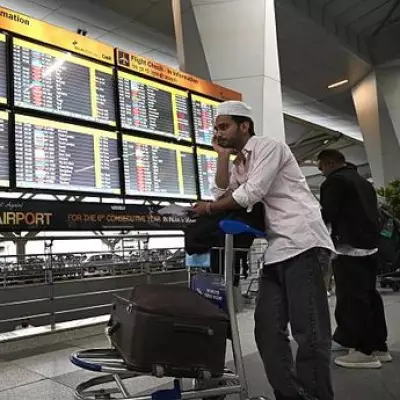
British Holidaymakers Face Travel Chaos as Middle East Flights Cancelled
British holidaymakers are confronting significant uncertainty and disruption to their travel plans as numerous flights across the Middle East have been abruptly cancelled. Key routes to major travel hubs including Dubai, Israel, Doha, and Abu Dhabi have been suspended indefinitely. The UK Foreign Office has escalated its travel warnings, now advising against all but essential travel to several nations in the region, specifically the United Arab Emirates, Bahrain, Kuwait, and Qatar.
British citizens currently in these affected countries have been urgently instructed to immediately shelter in place for their safety. This situation raises critical questions for those planning holidays to other popular Middle Eastern destinations such as Cyprus, Turkey, and Egypt, where travel conditions remain volatile.
Root Cause of the Travel Disruption
The current crisis stems from military actions initiated over the weekend. The United States and Israel conducted what they described as pre-emptive strikes against Iran on Saturday morning, with the stated objective of curtailing Tehran's nuclear program. In response, Tehran launched retaliatory strikes that impacted several tourist and expatriate centres, notably Dubai, Abu Dhabi, Qatar, and Kuwait.

The immediate consequence has been the cancellation of flights from major regional airports, stranding thousands of British nationals who were in the area for both business and leisure purposes. British expatriates are now being strongly encouraged to register their presence with the Foreign Office through its online service. A record-breaking 94,000 individuals have already registered, with the majority located in the UAE.
Updated Government Travel Guidance
The UK government's official travel advice has been substantially revised in light of the escalating tensions. Authorities currently advise against all travel to Iran and Israel. Furthermore, guidance has been updated for several other Middle Eastern nations:
- Iraq, Jordan, Bahrain, Oman, Qatar, Saudi Arabia, Yemen, and the United Arab Emirates: The Foreign Office has issued updated warnings for these countries.
- Turkey: The FCDO advises against all travel within 10km of the Syrian border due to ongoing conflict and an elevated terrorism risk. Specific protocols are in place for British nationals crossing from Iran into Turkey, requiring prior facilitation from the British Embassy in Ankara.
- Egypt: The government advises against all travel to the North Sinai Governorate and within 20km of the Egypt-Libya border (except El Salloum). It also advises against all but essential travel to the northern part of the South Sinai Governorate, the Nile Valley, Nile Delta regions, and the Ismailiyah Governorate east of the Suez Canal.
- Cyprus: Following a suspected drone impact at RAF Akrotiri on March 2, 2026, British nationals in the Sovereign Base Areas should follow instructions from the local administration, while those in the Republic of Cyprus should adhere to Cypriot authorities' guidance.
Incident at RAF Akrotiri in Cyprus
A Royal Air Force base in Cyprus, RAF Akrotiri, was directly targeted by an Iranian drone. The Ministry of Defence confirmed the attack, which prompted the evacuation of service members' families from the site as a precautionary measure. Reports indicate strong blasts were heard at the base around midnight local time after a security threat was declared. The MoD stated that the drone attack resulted in minimal damage and that base operations are continuing normally.
Refund and Insurance Implications for Travellers
For travellers concerned about their plans, the situation carries significant implications for refunds and insurance. In areas where the FCDO advises against travel, disregarding this official guidance could invalidate your travel insurance policy. The Foreign Office explicitly warns that travel insurance could be invalidated if you travel against FCDO advice.

Holidaymakers already in affected regions are advised to contact their insurance provider directly. For those wishing to cancel future trips, the UK Civil Aviation Authority provides clarification: if your flight is covered under UK passenger rights legislation and has been cancelled due to the current situation, you may be entitled to a refund. The authority states that travellers must confirm this option with their airline, which should process the refund within seven days.
The evolving security landscape in the Middle East continues to create profound challenges for British travellers, with widespread flight cancellations and stringent government warnings reshaping holiday plans across the region.