US-Israel Strikes on Iran Trigger Widespread Flight Cancellations Across Middle East
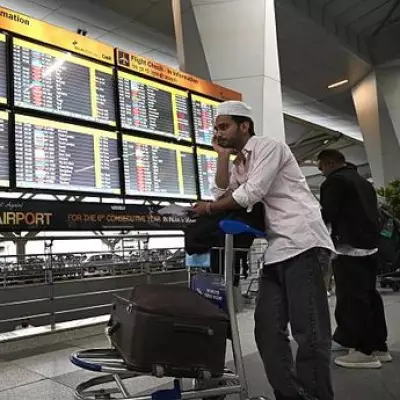
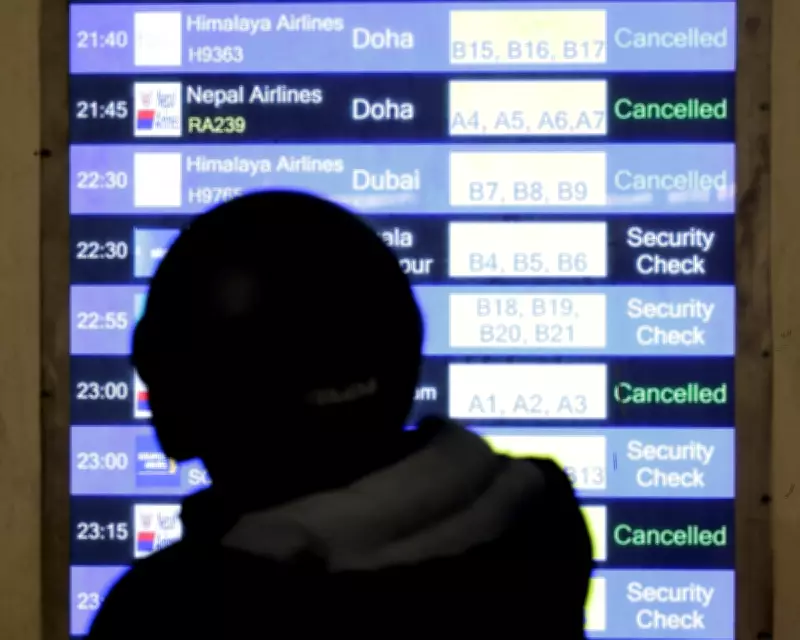
Chaos erupted across global aviation networks as hundreds of thousands of travellers found themselves stranded or diverted following airspace closures throughout the Middle East. This disruption was precipitated by military strikes launched by the United States and Israel targeting Iran, leading to the immediate cancellation of all evening flights from Tribhuvan International Airport to destinations including Sharjah, Doha, Dubai, Kuwait City, Abu Dhabi, and Dammam.
Key Transit Hubs Halt Operations
The situation escalated rapidly as critical transit hubs in Dubai, Abu Dhabi, and Doha were forced to close their operations. This resulted in the cancellation of more than 1,000 flights operated by major Middle Eastern airlines. According to aviation analytics firm Cirium, airlines such as Emirates, Qatar Airways, and Etihad, which typically handle approximately 90,000 passengers daily through these hubs, faced severe interruptions. Dubai International Airport, renowned as the world's busiest for international flights, was among the facilities most affected.
Flight tracking data from FlightRadar24 indicated no flight activity over the United Arab Emirates after the government announced a temporary and partial closure of its airspace. Similarly, Israel, Qatar, Syria, Iran, Iraq, Kuwait, and Bahrain all implemented airspace closures, compounding the travel chaos.

Analyst Warnings and Passenger Experiences
Henry Harteveldt, an airline industry analyst and president of Atmosphere Research Group, offered a stark assessment: "For travellers, there's no way to sugarcoat this. You should prepare for delays or cancellations for the next few days as these attacks evolve and hopefully end."
Passengers like Jonathan Escott experienced the disruption firsthand. After arriving at Newcastle Airport in England for a direct Emirates flight to Dubai, he discovered the cancellation, leaving him and others stranded with no clear timeline for resumption. "No one knows," Escott lamented. "No one really knows what's going on with the conflict, really. Not Emirates, Emirates don't have a clue. No one has a clue."
Statistical Impact and Rerouting Challenges
Data from Cirium revealed that on Saturday, 966 out of 4,218 scheduled flights to Middle Eastern countries were cancelled, representing 22.9% of traffic. When including outbound flights, the figure surged above 1,800 cancellations. For Sunday, 716 flights out of 4,329 scheduled to the region were already cancelled.
Globally, FlightAware reported more than 18,000 delayed flights and over 2,350 cancellations as of 10:30 PM GMT on Saturday. Airlines are now compelled to reroute flights around the conflict zone, primarily diverting south over Saudi Arabia. This rerouting adds hours to journey times and increases fuel consumption, potentially leading to higher ticket prices if the conflict persists.
Mike McCormick, a former FAA air traffic control official and current professor at Embry-Riddle Aeronautical University, suggested that airspace might partially reopen within 24 to 36 hours as military activities become more defined and Iran's missile capabilities are assessed. However, he cautioned that the situation remains fluid, with comparisons drawn to a previous 12-day disruption from a similar attack in June 2025.
Airline Responses and Broader Closures
Numerous airlines issued travel waivers and suspended services. Air India cancelled all flights to Middle East destinations, while Turkish Airlines halted flights to Lebanon, Syria, Iraq, Iran, and Jordan until Monday, with additional suspensions for Qatar, Kuwait, Bahrain, the UAE, and Oman. US carriers Delta Air Lines and United Airlines suspended flights to Tel Aviv through the weekend, and European airlines like KLM, Lufthansa, and Air France cancelled flights to Lebanon and other affected regions.
Authorities across the Middle East confirmed airspace closures, with Iran shutting its skies "until further notice," Israel closing to civilian flights, and Qatar, Iraq, the UAE, Syria, and Kuwait implementing temporary restrictions. Jordan's air force conducted defensive drills, further complicating air traffic management.

As the situation evolves, airlines are urging passengers to check flight statuses online before heading to airports, with some offering rebooking options without extra fees. The long-term impact on global aviation remains uncertain, hinging on the duration and escalation of military actions in the region.