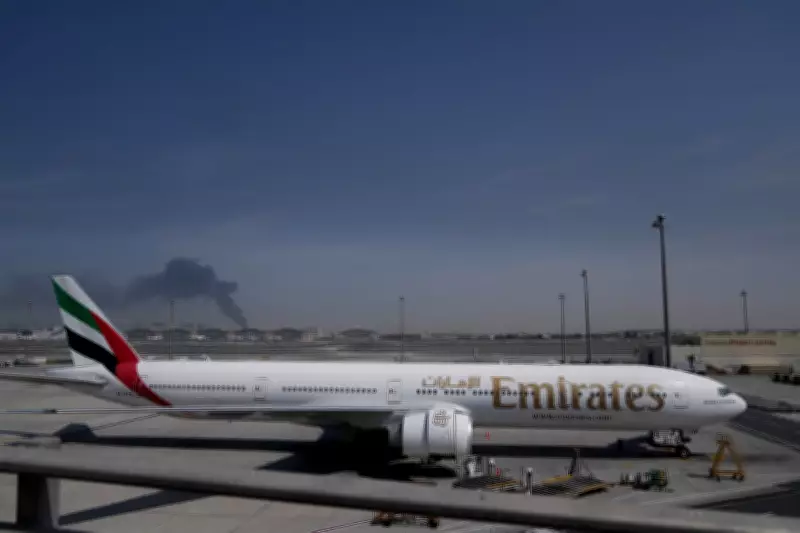
Middle East Aviation in Crisis as US-Iran Conflict Creates Vast No-Fly Zone
The escalating military confrontation between the United States and Iran has plunged Middle Eastern aviation into unprecedented chaos, with more than 12,000 commercial flights canceled since Operation Epic Fury commenced on February 28. This conflict has effectively established a massive no-go zone for civilian air traffic spanning Iran, Iraq, Israel, Syria, and significant portions of the Gulf region.
Unprecedented Disruption to Global Air Travel
The aviation crisis represents the most severe disruption to Middle Eastern air travel since the pandemic, severely impacting vital air corridors connecting Europe, Asia, and Australia. Major international hubs including Dubai International Airport—the world's busiest for international travel—along with Zayed International Airport in the UAE and Hamad International Airport in Doha, Qatar, have experienced massive operational shutdowns.
America's three largest carriers—United Airlines, American Airlines, and Delta Air Lines—have all suspended services to the region indefinitely. They have been joined by numerous other global airlines including Emirates, Etihad Airways, Qatar Airways, British Airways, Air France, and Lufthansa in canceling Middle Eastern operations.

Limited Flight Operations and Government Warnings
According to aviation data firm Cirium, only 49 flights were scheduled to depart from the United States to the Middle East on Wednesday, representing just 16,254 available seats. However, even these limited services face extensive cancellations, with all flights to Israel suspended, 10 of 15 services to Qatar canceled, and 14 of 19 scheduled flights to the United Arab Emirates not operating.
The U.S. State Department has issued urgent travel advisories, telling American citizens to "depart now" from multiple Middle Eastern nations including Bahrain, Egypt, Iran, Iraq, Israel, Jordan, Kuwait, Lebanon, Oman, Qatar, Saudi Arabia, Syria, the United Arab Emirates, and Yemen. Secretary of State Marco Rubio emphasized that a 24/7 task force has been activated to provide safety information to Americans abroad.
Targeted Attacks and Passenger Frustration
U.S. Central Command reports that Iranian forces have targeted civilian locations across more than a dozen sites, including major airports in Dubai, Kuwait, Abu Dhabi, and Erbil, along with prominent hotels in Dubai and Bahrain. This has compounded the aviation crisis and created dangerous conditions for travelers.
Many American citizens stranded in the region have expressed frustration with what they perceive as inadequate government support. One traveler stuck in Bahrain told CNN: "The Department of State tells me to evacuate, but there's no way to do so. I cannot believe there is no support for US Citizens stranded when the US started this conflict."
Passenger Rights and Recovery Timeline
For travelers whose flights have been canceled, U.S. regulations entitle passengers to full refunds if they choose not to rebook, though compensation for delays caused by conflicts is not mandated. Airlines may offer rebooking without fees, but provisions for accommodation and meals during extended delays remain at carrier discretion rather than legal requirement.
Even when airspace eventually reopens, aviation experts warn that widespread disruption will persist for days or possibly weeks. Aircraft and crew will be significantly out of position, and airlines operating at maximum capacity will face challenges returning thousands of stranded passengers to their destinations efficiently.
The conflict has forced many flights that would normally traverse Iranian or Iraqi airspace to take extensive diversions, adding substantial journey times and requiring additional refueling stops. This creates ongoing ripple effects throughout global aviation networks that will continue even as limited services resume.