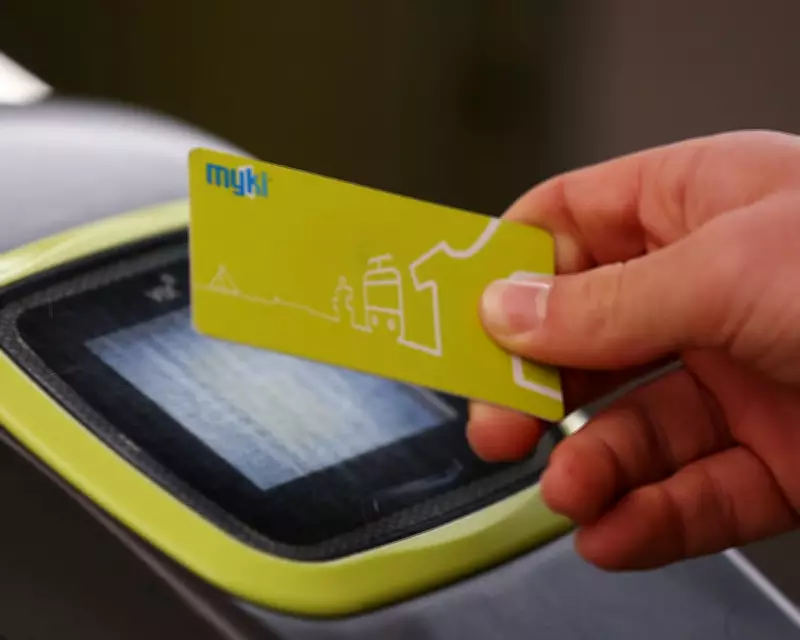
Myki Card System to Persist in Victoria Until 2027 Amid Tap-and-Go Rollout Delays
Victoria's Myki card system will continue to be essential for public transport users until at least 2027, as revealed by the state's auditor general. This delay stems from significant setbacks in the full implementation of tap-and-go technology, which has been hampered by an 18-month dispute between the government and a US-based contractor.
Contract Dispute Adds $136.8m to Project Costs
A report from the Victorian Auditor-General's Office (Vago) highlights that a conflict between the Department of Transport and Planning and the firm Conduent has not only delayed the project but also inflated its cost by $136.8 million. Conduent was awarded a $1.7 billion, 15-year contract in 2023 to upgrade the Myki system, aiming to introduce contactless payments via debit or credit cards, smartphones, or smartwatches.
Former public transport minister Ben Carroll had previously hailed this upgrade as a move into the "21st century," yet Victoria lags behind other regions, such as Sydney, which adopted similar technology in 2017. Daniel Bowen, a longtime public transport campaigner, expressed frustration, noting that Victoria has "fallen so far behind the rest of Australia and a lot of jurisdictions around the world."

Unrealistic Schedules and Intellectual Property Issues
The Vago report, tabled in parliament, found that the department was warned before signing the contract that Conduent's delivery schedule was "overly optimistic and did not contain enough detail." Ultimately, this schedule proved unrealistic, and the department failed to address these issues beforehand, contributing to disputes.
Additionally, delays were exacerbated by slow handover of source code from the existing Myki system, with conflicts over intellectual property rights. Conduent's revised master schedule proposed delaying milestones by an average of 6.5 months due to these challenges.
Revised Timeline and Upcoming Challenges
The audit outlines a revised timeline for the tap-and-go rollout:
- Phase 1 (2025): Installation of about 23,000 new reader devices across the network.
- Phase 2 (2026): Launch of tap-and-go payments for full-fare passengers only.
- Phase 3 (2027): Extension to concession fares and all regional areas.
- Phase 4 (2028): Full system launch, allowing retirement of the Myki system.
While Vago reports the program is on track with this timeline, warnings persist about "upcoming challenges" that could cause further delays. For instance, a secondary contract with HCLTech, worth $34 million to develop concession fare integration, has been paused due to policy changes, such as the introduction of free travel for under-18s via the youth Myki. HCLTech warns this pause directly impacts phase three timelines.
Cautious Approach and Early Trials
Bowen noted that the government is taking a "cautious" approach to the rollout, likely due to past failures like the 2009 Myki implementation, which he described as a "disaster." He added, "They don't want to push it ahead too quickly because if it goes wrong they'll have egg on their face."
Despite setbacks, some commuters have begun testing the new technology. A recent trial on the Craigieburn, Upfield, Ballarat, and Seymour lines allowed passengers to ditch their Myki cards, marking a small step forward in the state's transition to modern ticketing systems.