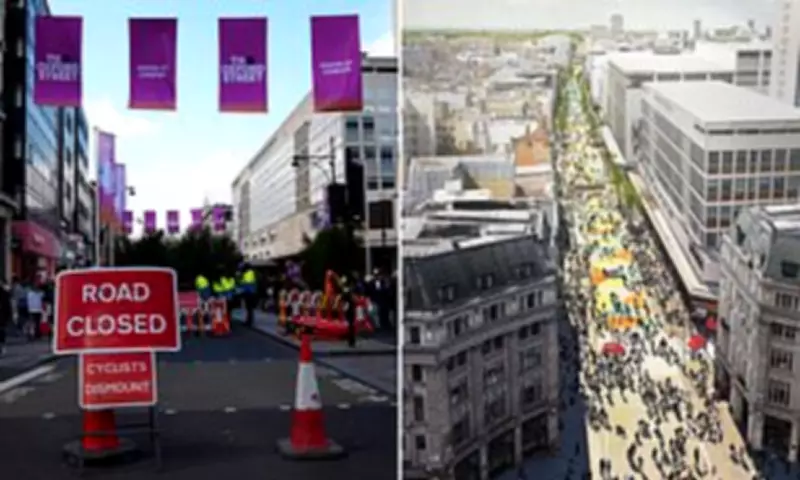
Plans to transform Oxford Street into a pedestrian-only zone have been officially approved by London Mayor Sir Sadiq Khan, despite significant concerns from local residents about potential increases in criminal activity and shoplifting in the car-free area.
Major Transformation for Iconic Shopping District
Vehicles will be completely prohibited from accessing a substantial 0.7-mile stretch of Oxford Street between Oxford Circus and Marble Arch, creating one of the largest pedestrian zones in central London. The announcement comes after extensive consultation by Transport for London (TfL), with work expected to commence this summer and the first traffic-free section operational by year's end.
Sir Sadiq Khan expressed his enthusiasm for the project, stating: "I am delighted to be moving forward with my bold vision to transform Oxford Street into a world-leading urban space for shopping, leisure and outdoor events. Following TfL's detailed consultation, I've today made the decision to move ahead with these exciting changes to the nation's high street."

Resident Opposition and Crime Concerns
The approval has proceeded despite strong opposition from local residents and community groups who fear the pedestrianisation will create a "target" for criminal elements. The Marylebone Association, representing local residents and businesses, has been particularly vocal in its criticism, describing the plans as "dangerous, unworkable and catastrophic for the surrounding neighbourhoods."
The association warned that removing traffic would eliminate natural surveillance, potentially turning the street into "an open stretch vulnerable to gangs, rough sleeping, illegal trading and street crime." They further noted that businesses already report significant problems with shoplifting, assaults, and anti-social behaviour in the area.
Steve Gooding, director of the motoring research charity RAC Foundation, highlighted practical challenges: "Perhaps the biggest traffic challenges with the Mayor's initiative is how to re-route the myriad bus services that will be affected, and deal with the junctions where road traffic currently traverses Oxford Street."
Business Support and Development Plans
Despite resident concerns, the Mayor's office reported "extensive support from the business community" during the consultation process. Scott Parsons, chair of the newly created Oxford Street Development Corporation, welcomed the decision: "This is an exciting step towards creating a vibrant, new Oxford Street for Londoners, visitors and businesses alike. We're grateful to everyone who participated in TfL's consultation, which will help shape the future of one of the world's most iconic high streets."
Alex Williams, chief customer and strategy officer at TfL, confirmed: "We will work closely with Westminster Council in the coming months to implement changes to the roads around Oxford Street, and the Mayor will provide more information on the next steps for this transformational scheme next week."
Previous Attempts and New Authority
This represents a significant victory for Sir Sadiq Khan, whose previous attempt to pedestrianise part of Oxford Street was blocked by the then-Conservative-run Westminster City Council in 2018. To overcome this obstacle, the Mayor obtained government permission to establish a new Mayoral Development Corporation, which provides planning powers, while TfL took over control of the road from the council.
The Marylebone Association has accused the Mayor of conducting an "ideological experiment" and warned that police patrols would need to be significantly increased to prevent anti-social behaviour. They also suggested barriers might be necessary to prevent "hostile vehicles" from accessing the pedestrian zone.
Oxford Street remains one of the world's busiest shopping destinations, attracting approximately half a million visitors daily. The transformation represents one of the most significant changes to London's urban landscape in recent years, with implications for transport, retail, and public safety across the capital.