South Korean Police Conduct Raid on Transport Ministry in Jeju Air Crash Investigation
South Korean police have executed a raid on the federal transport ministry as the probe into the devastating 2024 Jeju Air crash escalates. Investigators descended upon the headquarters of the ministry of land, infrastructure and transport in Sejong on Friday, aiming to secure documents pertinent to the fatal accident involving Jeju Air Flight 2216.
Details of the Catastrophic Crash
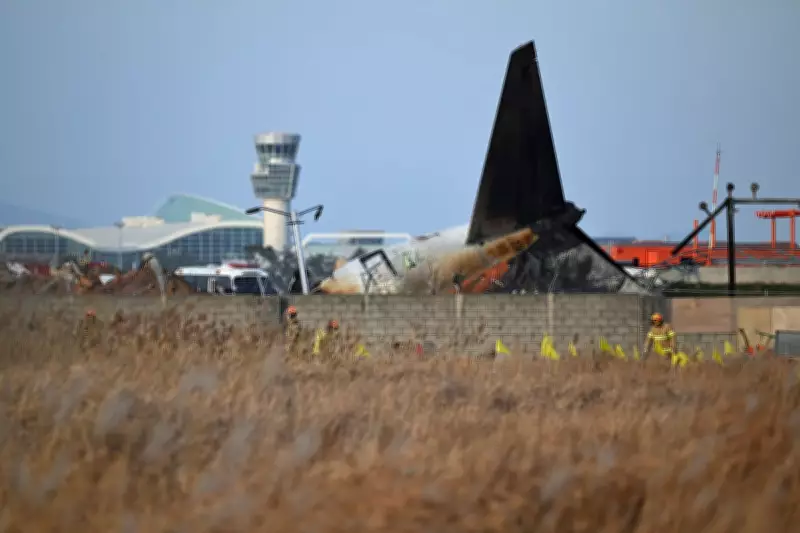
The Boeing 737-800 aircraft overshot the runway at Muan international airport on 29 December 2024, colliding violently with a concrete structure. This tragic incident resulted in the deaths of nearly 180 individuals, with only two flight attendants seated in the tail section surviving out of the 181 people on board.
Police investigators arrived at the ministry building at 8.40am to conduct search-and-seizure operations, which form part of a broader inquiry into the disaster. Their objective is to obtain records that could elucidate both the sequence of events leading to the crash and the handling of the response by government agencies.

Expanding Suspect List and Public Outcry
Officials confirmed that search warrants were issued for four individuals employed in the ministry's air navigation and airport operations divisions at the time of the accident. In total, police have identified 64 suspects, including 45 individuals suspected of causing death or injury through occupational and gross negligence, as the investigation broadens.
These developments occur amidst mounting public fury after investigators recently uncovered additional human remains and personal belongings of victims within debris collected from the crash site. Families of the victims had persistently demanded a re-examination of the rubble removed from the airport.
Presidential Intervention and Family Reactions
The discovery prompted South Korean president Lee Jae Myung to order a new inquiry on Thursday. This inquiry seeks to determine why the remains and personal items were not identified earlier and calls for disciplinary action against those responsible for delays in the recovery process.
Following this, the transport ministry issued an apology, but families of the victims vehemently rejected it. A representative for the families stated, "We are appalled by the transport ministry's late and inadequate apology, which the families say is like killing the victims a second time."
Initial Findings and Structural Failures
Initial investigations suggested that the ill-fated aircraft encountered a bird strike before attempting an emergency landing. After birds reportedly struck the engine, the pilots managed to bring the aircraft down on its belly, sliding along the runway. The situation turned catastrophic when the plane collided with a raised concrete structure housing a navigation antenna system at the runway's end.
A separate inquiry by the national audit board earlier this week revealed that this structure had been constructed as a cost-saving measure during the airport's development on sloping terrain. Instead of flattening the ground to install the navigation system, the equipment was mounted inside an elevated concrete structure near the runway.
The board noted that such localiser structures were designed to break apart on impact. Simulations indicated that everyone on board might have survived had the plane not struck the mound, which caused it to erupt into a fireball.
Safety Measures and Ongoing Investigation
In the aftermath of the disaster, aviation authorities removed similar concrete navigation structures at seven airports across the country as a precautionary measure. The investigation is anticipated to continue for several months, with official findings expected to be released by mid-year.