Scottish Government Implements Rail Fare Freeze for Commuters
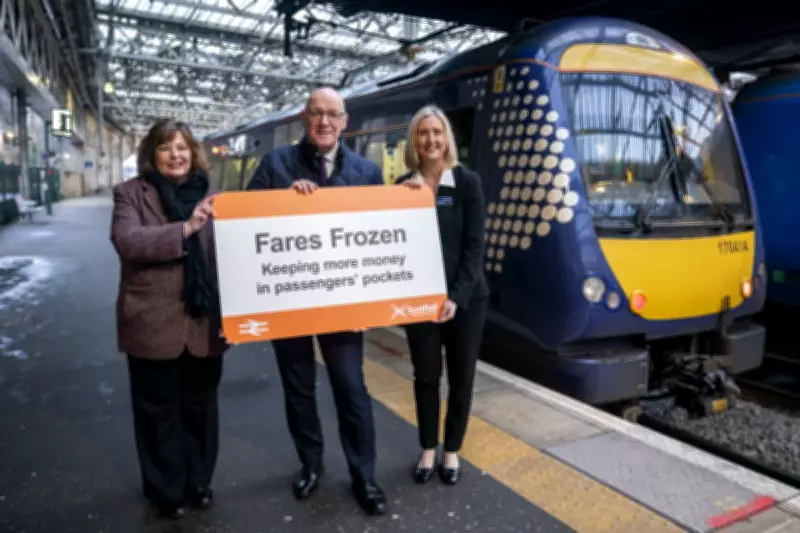
First Minister John Swinney has announced a significant policy shift, confirming that rail fares across Scotland will be frozen for the upcoming financial year. The decision, revealed during a visit to Edinburgh Waverley Station on Thursday morning, comes just ahead of the first parliamentary vote on the Scottish Government's Budget for 2026-27.
Financial Relief Amid Economic Pressures
The £4.3 million investment, which officials note may fluctuate based on passenger demand, directly addresses the annual fare increases typically imposed each April. Last year saw rail fares rise by 3.8%, adding to household financial burdens during ongoing cost-of-living challenges.
Speaking to reporters, Swinney emphasized the government's commitment to supporting Scottish families. "We recognise the challenges people face in wrestling with the cost of living at the moment," he stated. "We're looking for every step we can take to try to help people."

The First Minister highlighted that combining this freeze with last September's abolition of peak rail fares creates "a huge saving in the cost of travel for individuals" at a time when household incomes remain under considerable pressure.
Strategic Transport and Political Context
Swinney asserted that this policy aims to make rail travel "a much more credible option" for Scots, striking what he described as "the right balance between investment in customers and their costs and investment in the rail network."
When questioned about potential political motivations ahead of May's Holyrood elections, the First Minister declined to speculate, maintaining that his government is "always looking at what we can do to reduce the cost of living."
Budget Negotiations and Parliamentary Dynamics
The announcement coincides with the Scottish Government's Budget proceeding to its first parliamentary vote. Scottish Labour has already declared it will abstain, effectively allowing the tax and spending plans to advance without requiring ministerial negotiations for additional support.
Nevertheless, Swinney emphasized his administration's willingness to collaborate across party lines. "We obviously have got to work with other parties, because the Government doesn't have a majority – we need to get other people to support us," he explained.
Regarding Labour's abstention strategy, the First Minister remarked cautiously, "Let's wait and see if Scottish Labour remain consistent with what they've said in the past. They're rather chopping-and-changing these days."
Green Party Demands and Future Negotiations
The Scottish Greens, typically budget allies for the government, have indicated they will also abstain in Thursday's stage one vote. Co-leader Ross Greer outlined specific conditions for potential support, including extending free bus travel to all under-30s and implementing automatic, state-funded childcare when children turn three.
"If ministers want to go further to help families save money and protect our environment, Green MSPs are ready to work with them," Greer stated. "We've put forward plans to cut the cost of transport and childcare. If the Scottish Government wants Green support for their Budget, we are willing to work with them to deliver the change Scotland needs."
Greer contrasted his party's approach with Labour's, noting, "Labour MSPs asked for nothing and got nothing on this Budget. Green MSPs have already secured changes which will feed more children, save families money and protect Scotland's natural environment."
Broader Budget Priorities and Parliamentary Support
Swinney defended the broader Budget package, highlighting investments in NHS waiting time reductions, cost-of-living support for families, and substantial housing development funding. "The Budget merits the support of Parliament," he asserted, expressing confidence ahead of the afternoon vote.
The First Minister concluded by reaffirming his commitment to cross-party collaboration, stating, "The Government needs to talk to other parties to make sure we can get support for our Budget." This rail fare freeze represents a tangible measure within wider fiscal negotiations as the Scottish Parliament debates spending priorities for the coming year.