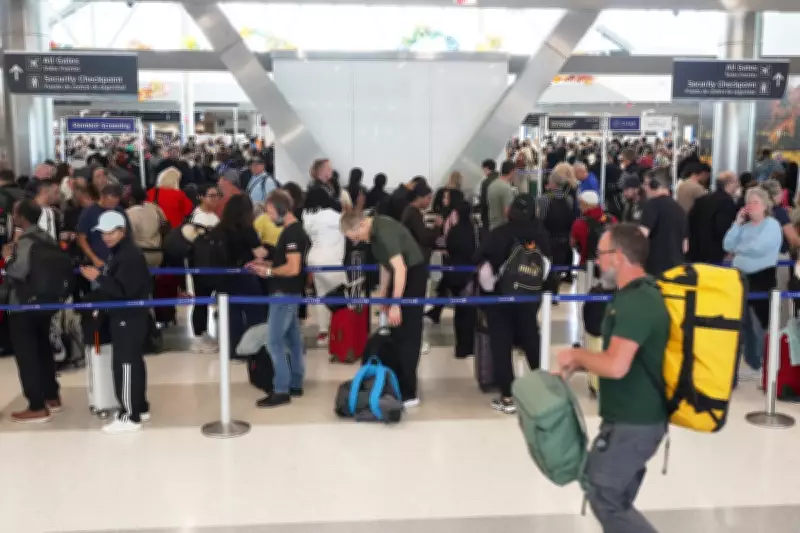
Spring Break Airport Security Lines Spiral Amid TSA Unpaid Staffing Crisis
Scenes of airport security lines overflowing from terminals are adding significant stress for travelers during the busy spring break season across the United States. The partial government shutdown has created a perfect storm of staffing shortages and heavy travel demand, resulting in unpredictable wait times that vary dramatically between airports and even within individual terminals.
Unpredictable Wait Times Plague Major Airports
Some airports have experienced wait times stretching well beyond an hour, with passengers reporting two-hour queues at Atlanta's Hartsfield-Jackson International Airport. Travelers in New Orleans and Austin, Texas have been advised to arrive at airports up to three hours before their scheduled departures. Meanwhile, many other airports continue to report normal conditions, creating confusion for passengers accustomed to last-minute arrivals or those planning upcoming trips.
The uneven delays stem from multiple factors, including the ongoing partial government shutdown that has strained Transportation Security Administration staffing combined with heavy spring break crowds. This combination creates a patchwork of conditions that can shift rapidly throughout the day.

How to Monitor Security Wait Times During the Shutdown
With TSA not actively managing its official sites during the funding lapse, the wait times listed on the MyTSA mobile app may lack accuracy. Third-party websites tracking security lines may also provide outdated information if they rely on publicly available data that isn't being updated regularly.
"Luckily, major airports tend to list checkpoint wait times terminal by terminal. I can't think of a major airport that doesn't," said Eric Rosen, director of travel content for The Points Guy travel and finance advice website.
The most reliable monitoring method currently involves checking individual airport websites and social media accounts, including platform X where many airports share timely updates and guidance. However, travelers should remember that airport conditions can change quickly, meaning any information might not reflect real-time situations.
Staffing Crisis Deepens as Shutdown Continues
The partial shutdown affecting only the Department of Homeland Security began on February 14 and represents the third funding lapse within a year. Approximately 50,000 TSA agents continue working without pay while awaiting missed paychecks.
According to the American Federation of Government Employees, which represents most airport security screeners, employee absences are increasing as unpaid TSA workers face growing financial strain. Many struggle to afford basics like gasoline or childcare while continuing to report for duty. Homeland Security has confirmed at least 366 TSA agents have resigned during the shutdown period.
"It's extremely difficult to predict where these bottlenecks will appear," Rosen explained. "One airport might experience 30% of its TSA agents calling out on a particular day and only 10% the following day. There's simply no way to anticipate these fluctuations in advance."
Political Stalemate Extends Travel Uncertainty
Democrats in Congress have stated Homeland Security won't receive funding until new restrictions are implemented on federal immigration operations. This political impasse follows the fatal shootings of Alex Pretti and Renee Good in Minneapolis earlier this year, creating additional complications for resolving the staffing crisis affecting airport security nationwide.
Expert Recommendations for Navigating Airport Chaos
Tyler Hosford, a security director at global risk management firm International SOS, advises travelers to adopt proactive approaches rather than relying solely on monitoring TSA wait times.
When booking travel, selecting earlier flights provides more flexibility if plans need adjustment, whether that involves rebooking flights, departing from alternative airports, or arranging rental vehicles.
"I always recommend having a Plan B under normal circumstances," Hosford noted. "But we've reached a point where travelers should consider developing Plans C, D, and possibly even E given current uncertainties."

Strategies When Facing Extended Security Lines
If travelers encounter unexpectedly long security lines upon arrival, the situation isn't necessarily hopeless according to Hosford. Passengers can approach security checkpoint staff for estimated wait times and inquire about available assistance to expedite the process.
"Always communicate with personnel. It never hurts to ask," Hosford emphasized. "The worst response you might receive is a simple 'No, we cannot help you.'"
If assistance isn't available, he recommends contacting airlines directly via telephone, mobile applications, or social media to explore rebooking options.
"Never remain stagnant in these situations. Continuously pursue forward momentum while identifying available options," Hosford advised. "The process might feel exhausting, but the alternative could mean becoming stranded and missing important flights entirely."
Experts universally recommend checking airport conditions early and frequently. Waiting until a few hours before departure leaves minimal margin for unexpected delays, particularly when considering transportation time to airports.