

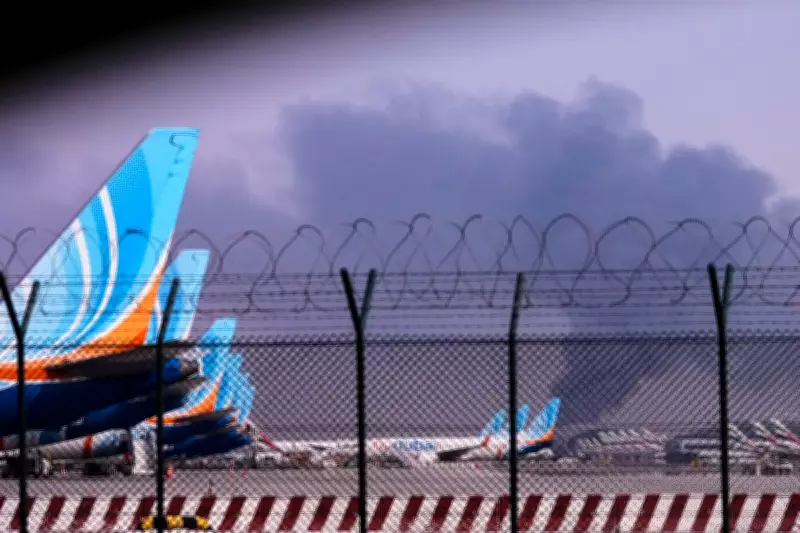
The United Arab Emirates has once again been forced to close its airspace, marking the second day in a row of severe aviation disruptions due to escalating drone and missile threats originating from Iran. This latest closure follows a drone-induced fire that erupted near Dubai International Airport the previous day, sending plumes of smoke and flames into the sky and heightening security concerns across the region.
Global Aviation in Turmoil
The ongoing and intensifying conflict between the United States, Israel, and Iran has sent shockwaves through global aviation networks, with the Middle East bearing the brunt of the chaos. Airspace across the Gulf region has been largely shut down as authorities fear further aerial attacks, leading to a cascade of flight cancellations, extensive rescheduling, and complex rerouting of aircraft.
Economic and Logistical Fallout
The aviation shutdown has triggered a sharp surge in fuel charges and ticket prices, placing additional financial strain on travelers and airlines alike. Moreover, the disruption has severely impacted the flow of goods and cargo, with supply chains experiencing significant delays. Countless holiday plans have been thrown into disarray, leaving tourists stranded and scrambling for alternatives.

Airlines Adapt to Crisis
In response to the ongoing crisis, many Gulf-based airlines are operating a drastically reduced number of flights, prioritizing safety over schedule. Notably, British Airways has extended its flight cancellations to key destinations including Dubai, Bahrain, and Tel Aviv, with these suspensions now expected to last until June. To mitigate the impact and cater to heightened demand for alternative travel options, the airline has also introduced new routes to destinations such as Singapore and Bangkok, offering passengers viable alternatives amidst the regional turmoil.
The situation remains fluid, with aviation authorities and airlines closely monitoring developments. The repeated airspace closures underscore the profound and widening impact of geopolitical tensions on international travel and commerce, with no immediate resolution in sight.






