

UAE Airspace Shut Again Amid Drone Threats, Sparking Global Travel Chaos
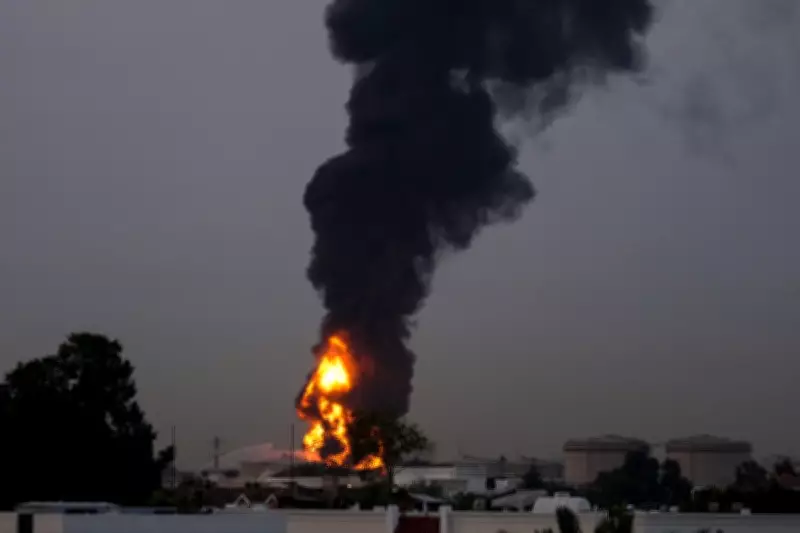
The United Arab Emirates has once again closed its airspace on Tuesday following renewed missile and drone threats from Iran, marking a second consecutive day of severe aviation disruption across the Gulf region. This latest closure comes after a drone incident caused a fire near Dubai International Airport on Monday, heightening security concerns.
The ongoing U.S.-Israeli conflict with Iran, now entering its third week, has plunged global aviation into unprecedented turmoil. Flights are being cancelled, rescheduled, and rerouted on a massive scale, with most Middle Eastern airspace remaining shut due to persistent fears of missile and drone attacks. This has created a ripple effect, disrupting travel plans worldwide.
Major Disruption to Global Travel Hub
The war has severely disrupted travel through the busy Gulf region, a critical global hub connecting Europe and Asia. The consequences are far-reaching: fuel charges and airline ticket prices have surged dramatically, the flow of essential goods like critical medicines has been hit, and countless holiday plans have been thrown into disarray.

According to Flightradar.com, Monday's initial airspace closure caused a sharp, immediate drop in flight traffic. While data for Tuesday was not yet available, the pattern of disruption is clear. Many Gulf-based airlines are operating only a small fraction of their pre-war flight schedules, though Dubai-based Emirates has reportedly experienced fewer cancellations compared to its regional peers.
The UAE's General Civil Aviation Authority stated that flights had returned to normal on Tuesday afternoon, following the earlier temporary closure, as reported by the state media agency WAM. However, the situation remains volatile.
Airlines Adapt with New Routes and Extended Cancellations
The conflict is hitting the region's major airline groups hard, including Emirates, Qatar Airways, Etihad Airways, and flydubai. In a significant development, IAG-owned British Airways has extended cancellations of flights to Dubai, Bahrain, and Tel Aviv until June, signaling that Middle East airspace may not return to normal for weeks or even months.
Simultaneously, British Airways is adding capacity on alternative routes. The airline is launching additional flights to destinations such as Singapore and Bangkok, explicitly citing the Middle East conflict as the reason. Company executives noted increased customer demand for "alternative getaways" in places like the Caribbean.
"We know there is short-term demand as a result of the situation in the Middle East," said Neil Chernoff, British Airways Chief Planning and Strategy Officer. "To support customers with alternative routes from popular destinations we have already launched additional flights, and we will continue to monitor customer demand and add flights to our schedule if we're able to do so."
Long-Term Shifts in Aviation Landscape
The conflict may lead to lasting changes in global aviation. Carsten Spohr, CEO of Germany's Lufthansa, suggested in an interview with Manager Magazin that the dominance of Gulf carriers on Asian routes could be diminished by the ongoing crisis. This points to a potential realignment of air travel corridors and competitive dynamics as airlines and passengers seek stability outside the conflict zone.
The combination of security threats, operational closures, and strategic rerouting is creating a complex new reality for international travel, with economic and logistical impacts that extend far beyond the immediate region.






