US Air Travel Chaos: Storms and Shutdown Cripple Flights Nationwide
Thousands of flights across the United States were canceled or delayed on Monday as a powerful storm system swept across the eastern half of the country. This disruption compounds an already critical situation, with a partial government shutdown affecting airport security screeners now dragging into its second month.
Perfect Storm of Disruptions
The air travel chaos arrives at an exceptionally challenging time. The government shutdown, which began on February 14, has severely strained staffing at Transportation Security Administration (TSA) checkpoints. Simultaneously, airports are packed with spring break travelers and fans journeying to March Madness games, the annual NCAA men's and women's college basketball tournaments.
Flight delays and cancellations accumulated rapidly on Monday at major hubs including New York, Chicago, and Atlanta. The storm system, which dumped feet of snow in the Midwest, is now barreling toward the East Coast. The National Weather Service issued warnings of dangerously high winds and the potential for "strong and long track tornadoes."

By the Numbers: Widespread Cancellations
According to data from the flight-tracking site FlightAware, more than 3,600 flights scheduled for Monday were canceled, with approximately 6,800 additional U.S. flights experiencing delays. Specific airport impacts were severe:
- Nearly 500 flights in and out of Chicago O’Hare International Airport.
- Over 300 flights at Atlanta’s Hartsfield-Jackson International Airport.
- More than 230 flights at New York's John F. Kennedy International Airport.
Earlier on Monday, the Federal Aviation Administration ordered ground stops at Hartsfield-Jackson and Charlotte Douglas International Airport due to severe weather, alongside ground delays at JFK and Newark Liberty International Airport.
Travelers Stranded and Frustrated
The human toll of this disruption is significant. Kelly Price, attempting to return home to Colorado after a family vacation in Orlando, Florida, found her Sunday night flight canceled early Monday. "By that time the only place for us to sleep was the airport floor. So we’re all tired and frustrated," she said, noting the soonest available rebooking was for Tuesday afternoon.
Danielle Cash was stranded in St. Louis on Sunday while trying to get home to Tampa, Florida, after a weekend trip to Las Vegas. Facing unexpected costs, she is spending hundreds of dollars extra on a hotel in a snowy city she was not dressed for. "It was 80 degrees in Tampa when I left and then going to Vegas," she recounted. "And it was 90 degrees in the desert." Her rebooked itinerary now includes a stop in Tennessee before a hoped-for return to Tampa by Tuesday afternoon.
TSA Under Unprecedented Pressure
The storms coincide with airport security screeners missing their first full paycheck over the weekend. The current partial shutdown exclusively affects the Department of Homeland Security, which oversees the TSA. This marks the third shutdown in less than a year to leave TSA workers temporarily unpaid, with back pay only issued after the government reopens.
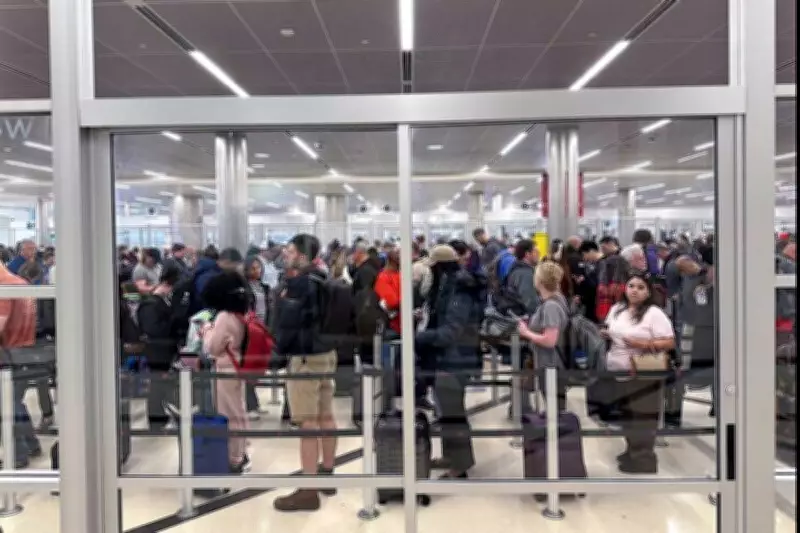
Staffing shortages have led to longer security lines at some airports, as more TSA agents take second jobs, struggle with commuting costs, or leave the profession entirely. Homeland Security reported on social media platform X last week that more than 300 TSA agents have quit since the shutdown began.
Political Impasse and Industry Plea
Democrats in Congress have stated that Homeland Security funding is contingent on new restrictions for federal immigration operations, a demand following the fatal shootings of Alex Pretti and Renee Good in Minneapolis earlier this year.
In response to the crisis, the CEOs of major airlines—including Delta, American, United, and Southwest—issued an open letter over the weekend imploring Congress to restore Homeland Security funding. They urged a bipartisan solution to ensure federal aviation workers receive pay during future government shutdowns. "It’s difficult, if not impossible, to put food on the table, put gas in the car and pay rent when you are not getting paid," the executives wrote.

The convergence of severe weather and political deadlock has created a perfect storm of travel misery, highlighting systemic vulnerabilities in the nation's air travel infrastructure during periods of governmental dysfunction.