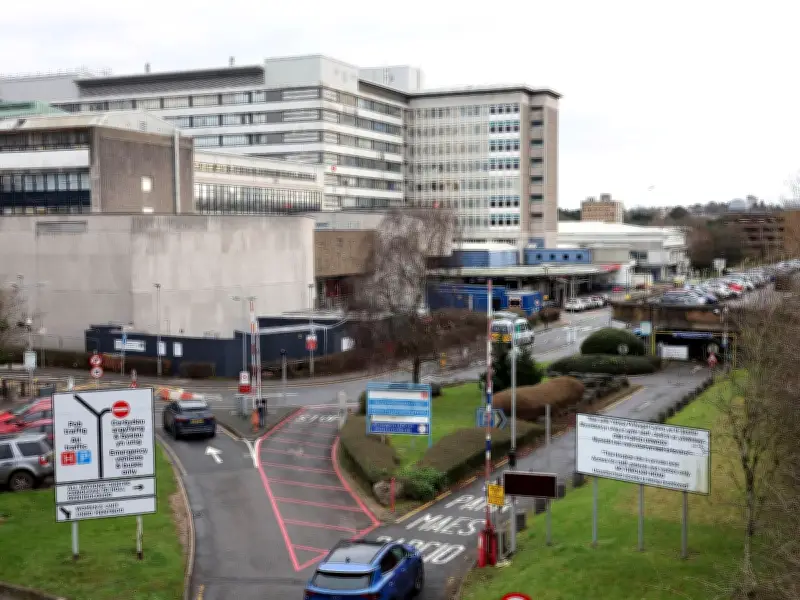
An unconscious patient undergoing gallbladder removal surgery at the University Hospital of Wales fell from an operating table on June 5, according to sources at the crisis-hit Cardiff hospital. The patient was under general anaesthetic and had not been securely strapped to the table, sources allege.
The fall was approximately four feet, and the patient made contact with the floor but not at full impact. The health board has not disputed that there was contact with the floor. The patient was not injured and was informed of the incident after waking up.
Details of the Incident
At the time of the fall, laparoscopic ports—metallic devices inserted into the abdominal wall for surgical access—were inside the patient. One source described this as dangerous, noting the infection risk from open wounds contacting the operating floor. The theatre manager reportedly ran out shouting, 'a patient's fallen on the floor,' and extra staff were needed to lift the patient back onto the table before surgery continued.

The health board denied the incident was a 'never event,' defined by the NHS as a profound failure in care with life-changing consequences. Executive nurse director Jason Roberts stated, 'This incident is not classified as a never event, as it does not meet the established criteria for that categorisation.' He added that robust processes ensure any patient safety incident is recognised, reported, reviewed, and learned from.
Context of Previous Failures
This incident follows a series of alarming events at the hospital's operating theatres. Earlier this year, a surgical swab was accidentally left in a patient's throat for over 24 hours after surgery. Last year, an internal report found illegal drug use and other potential crimes tolerated by management. The report concluded the department lacked an open and transparent safety culture, with an 'atmosphere of fear' destroying effective teamwork.
One source commented, 'I've never seen this before. It's unbelievable. It's part of the checklist before an operation: Is the patient strapped to the table? Are the straps tight enough?' They warned of worst-case scenarios, including head injury or a suturing needle causing internal damage if lost.
Health Board Response
Mr Roberts could not provide specific details due to confidentiality but assured that 'all policies and processes were followed.' He emphasised that the incident was formally recorded and a thorough review undertaken, considering equipment, procedures, human factors, and environmental factors. 'Patient safety remains our highest priority,' he said.
Sources, however, claim staff were told to keep quiet about the incident. One alleged, 'New staff aren't given the support and time needed to train. Lots of experienced staff have left because of the toxic culture.' Another added, 'After all the recent scandals they've been making serious threats to everyone against speaking to the press.'
Broader Hospital Crisis
The University Hospital of Wales has been at the centre of multiple scandals. In the last year, WalesOnline reported allegations of unauthorised visitors watching operations, an employee avoiding suspension despite arrest on suspicion of rape, and a patient dying after being wrongly injected with insulin. Whistleblowers have described horrendous conditions at the pigeon-infested site, with nearly 300 doctors accusing the health board of inaction and staff morale at an all-time low.
A 2024 internal report concluded there had been 'systemic failure at all levels of the organisation for over 10 years.' The hospital's dilapidated condition is believed to have contributed to Wales losing a vital £8m cancer facility. The health board remains at 'level four' escalation, one step short of special measures.