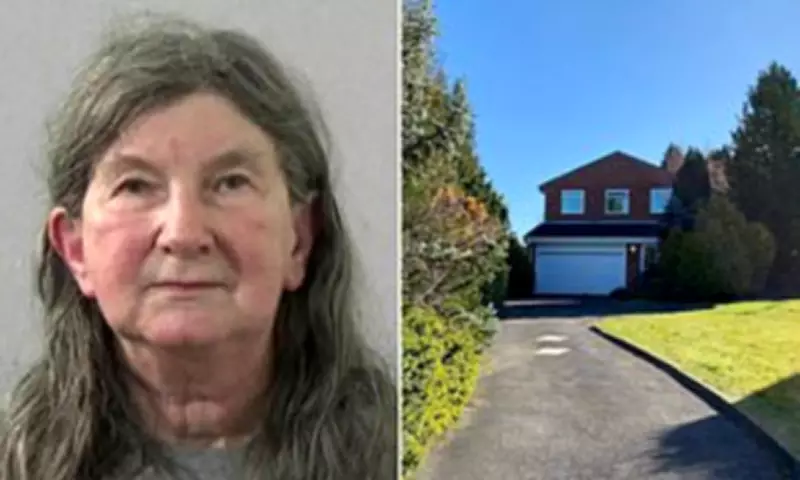
Great-Grandmother Killed Controlling Husband After 50-Year Marriage, Review Reveals
A great-grandmother suffocated her husband with a pillow following five decades in a coercively controlling marriage, a detailed domestic homicide review has concluded. Janet Dunn, then 73, killed 81-year-old Anthony Dunn at their Ponteland, Northumberland home in March 2022 after years of psychological and financial abuse.
Decades of Control Culminate in Fatal Confrontation
The tragic incident occurred during a confrontation about the couple's latest financial crisis, which threatened their home with repossession. When Janet Dunn suggested borrowing money from a daughter, her frail husband—who showed early signs of dementia—responded with a smile that proved to be the final trigger.
Judge Paul Sloan QC told Newcastle Crown Court: 'After decades of compliance and submission, it was the smile that finally caused you to snap. The anger and frustration you had repressed for years boiled over.'

Dunn held a pillow over her husband's face for at least two minutes before fleeing the house and attempting suicide at nearby Bolam Lake. She was later jailed for five years and three months after pleading guilty to manslaughter on grounds of diminished responsibility.
Pattern of Coercive Control Revealed
The comprehensive Domestic Homicide Review uncovered a disturbing pattern of controlling behavior spanning their entire 53-year marriage. The couple first met in the 1960s while both working in planning professions, but after Janet fell pregnant while unmarried and was sent to a mother-and-baby unit in Cumbria, their relationship dynamics became increasingly problematic.
Following the birth of their first daughter, Janet Dunn abandoned her career to become her husband's secretary, a position that reinforced his dominance. Their daughter contributed to the review, stating: 'Although my mother assisted my father, I got the impression that he was in control of the business and not my mother. It appeared to me that my mother was subservient and would acquiesce to my father's wishes.'
Financial Deception and Isolation
While the family appeared 'very private but seemingly happily married' after relocating to Ponteland's exclusive Darras Hill area in 1986, Anthony Dunn was secretly hiding severe financial difficulties. He repeatedly borrowed money from family and colleagues, remortgaged their home without his wife's knowledge, and was declared bankrupt twice.
The couple's daughters described constant tension in the household, with frequent whispered arguments and their father's domineering behavior extending to criticism of their appearance, weight, and social connections. One daughter recalled: 'My father was very controlling. He complained about what I wore, my weight, my worldview and the type of people that I associated with.'
Barriers to Seeking Help
The review identified multiple barriers that prevented Janet Dunn from seeking assistance. She failed to recognize her husband's behavior as abusive, believing domestic abuse services were only for women suffering physical violence. The report noted: 'The control Anthony had over Janet developed over a five-decade period acted as a significant barrier to identifying and reporting coercive control.'
Isolation compounded the problem, with Anthony discouraging friendships outside the marriage. Janet Dunn also feared 'shame' related to divorce, debt, borrowing from family, and losing their home, and couldn't envision surviving without her husband despite attempting to leave multiple times.
Health Crises and Final Breakdown
The couple's situation deteriorated further when Janet was diagnosed with a non-aggressive form of leukaemia in 2011, and Anthony stopped working during the pandemic. In 2022, with Anthony's health declining, financial pressures intensified as Janet borrowed money from daughters, faced council tax arrears, and was pursued for loan repayments.
During this period, one of their daughters passed away, adding to the emotional strain. The couple had virtually no contact with support services apart from routine health checks, and when Janet visited her GP complaining of headaches and home stress, the underlying abuse remained undetected.

Recommendations and Response
The review included recommendations to improve awareness of domestic and economic abuse risks among older people. A spokesperson for Safer Northumberland Partnership stated: 'The partnership has carefully considered all of the learning arising from this Domestic Homicide Review. Since publication, we have strengthened professional training on domestic abuse in older people, launched new public-awareness materials, and improved signposting to financial and welfare support for vulnerable residents.'
The case highlights the devastating consequences of long-term coercive control and the particular vulnerabilities of older victims who may not recognize abusive behaviors or know how to access support services.