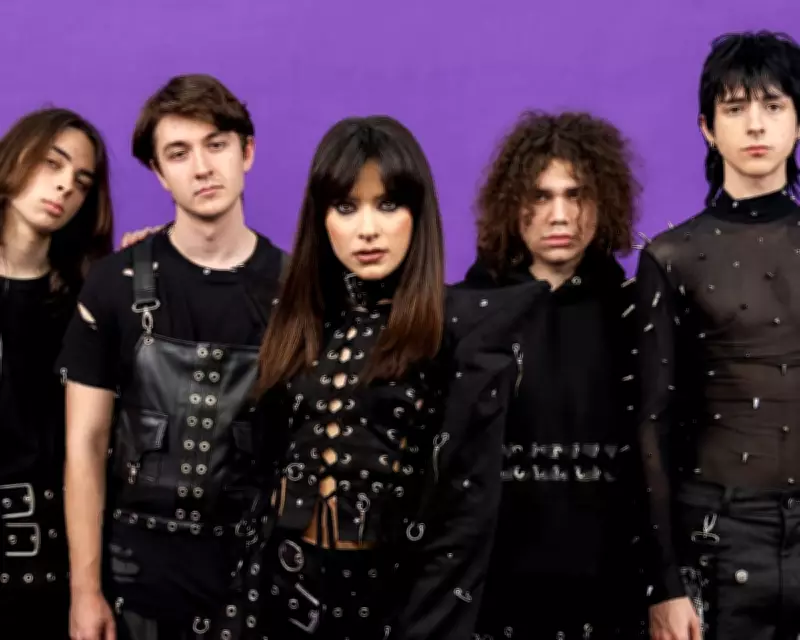
Romania's Eurovision Entry 'Choke Me' Sparks Outcry Over Sexual Strangulation
Romania's Eurovision song entry, titled Choke Me, has ignited a fierce backlash for its apparent glamorisation of sexual strangulation, a practice that medical experts warn can lead to severe brain injury or even death. The track, performed by Alexandra Căpitănescu—a former winner of the Romanian version of The Voice—repeats the phrase "choke me" thirty times throughout its three-minute duration, alongside lyrics such as "It's hard to breathe in" and "make my lungs explode."
Campaigners Condemn 'Dangerous' Lyrics
Campaigners against sexual violence have labelled the song as "dangerous" and "reckless," arguing that it trivialises a harmful act. Clare McGlynn, a professor of law at Durham University and author of Exposed: The Rise of Extreme Porn and How We Fight Back, stated that the repeated sexualised message shows an alarming disregard for young women's health and wellbeing. "The song – and its choice by Romania and Eurovision, and promotion by those organisations – represents a reckless normalisation of a dangerous practice," McGlynn emphasised. "It's playing fast and loose with young women's lives. The emerging medical evidence is that frequent sexual strangulation is giving young women brain damage."
Online Backlash and Calls for Disqualification
A growing online backlash has seen many Eurovision fans calling for the entry to be disqualified or for its lyrics to be modified. This controversy echoes past incidents where the European Broadcasting Union (EBU), which runs the song contest, has intervened to censor explicit content. For instance, last year, a complaint by the BBC led the EBU to rule against the Maltese entry due to a play on words, while in previous years, entries have been ordered to remove words like "shit" and "pussy." However, The Guardian reports that the BBC has not lodged a complaint about this year's Romanian entry, and the song remains viewable on the EBU's website. Both the BBC and EBU were contacted for comment but have not yet responded.

Defence and Psychological Analysis
In defence of the song, Alexandra Căpitănescu explained that the metaphor behind the vivid imagery is about feeling overwhelmed by strong emotions and suffocated by self-doubt. However, critics remain unconvinced. A Norwegian Eurovision YouTuber and trained psychologist, known as ESC Norway, suggested that the Romanian entry is deliberately using the practice—which is banned in UK pornography—to "create controversy." "They know what they're doing and they're using a topic that is now popular and normalised through porn culture, which is really dangerous," she said. "They know this is a trend and it's super scary what is happening."
Research Highlights Risks of Strangulation
Recent research underscores the severe risks associated with sexual strangulation. A study last year revealed that more than half of people under 35 have experienced strangulation, with nearly a third wrongly believing there are safe ways to strangle someone. Numerous studies have documented brain changes in women repeatedly "choked" during sex, including markers for brain damage and disruptions linked to depression and anxiety. Nearly half of those affected reported experiencing anxiety during or after being strangled, with even brief moments of strangulation potentially causing lifelong health problems.
Professor McGlynn added, "What this shows is the desperate need for better education and awareness-raising as to the harms to women. But what also bothers me so much is that many young women do not want to engage in strangulation or choking, but its normalisation makes them feel like they have to despite their own inner sense that it's not right. Promotion in this way makes it harder for young women to resist, putting their health and lives at risk. Why do we seem to care so little about the health and wellbeing of young women?"

Broader Eurovision Controversies
Meanwhile, Eurovision is grappling with additional controversies this year, including a partial boycott over Israel's inclusion amid accusations of genocide in Gaza. The competition has faced allegations of propaganda, with the Israeli government running paid social media ads to encourage voting for its entry, which finished second. Broadcasters from countries like Ireland, the Netherlands, Belgium, Spain, Iceland, and Finland have requested an audit of the voting system after the surprise result, amid claims that Israelis used European credit cards to vote multiple times. Some fans speculate this explains the discrepancy between the UK public vote awarding Israel the maximum 12 points and the judges awarding zero points.