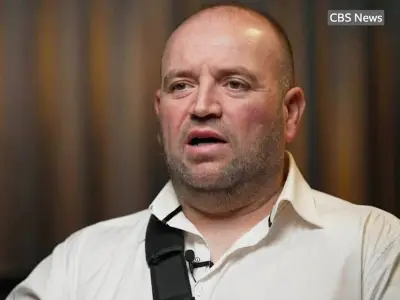
Blur drummer David Rowntree has lost his bid to continue a legal battle over the distribution of £200 million in music royalties. The Court of Appeal dismissed his appeal on Monday, upholding a previous decision by the Competition Appeal Tribunal (CAT) that threw out the challenge in August.
Background of the Claim
Rowntree sought to bring a legal claim on behalf of 160,000 songwriters against the Performing Right Society (PRS), which collects royalties and distributes them to songwriters and publishers. He alleged that PRS pays “black box” royalties, also known as unidentified royalties, to publishers but not to songwriters, a practice his lawyers described as “systematically and disproportionately biased”.
The CAT found in August that the claim did not have a “reasonable prospect of success”. Rowntree then challenged that decision at the Court of Appeal, arguing that the tribunal “erred in law” and should be ordered to reconsider.

PRS's Opposition
PRS opposed the appeal, with its barristers claiming the challenge is “unsustainable” and that the legal action “is incoherent and discloses no arguable claim”. The court was told by PRS that “black box” royalties are those the body collects but cannot match to a musical work or pay to an individual due to “data problems”, such as inability to identify a person’s payment or contact details. PRS then distributes these royalties “pro rata to its distribution of royalties which can be matched”.
Court of Appeal Ruling
In a 21-page ruling, Lord Justice Miles stated that a “true” distribution of these royalties cannot be known “because the root of the black box royalties problem is the absence of accurate information; and, conversely, if accurate information were available, the relevant royalties would be matched”. The judge noted that no member can claim entitlement to any specific amount of those royalties.
Lord Justice Miles continued: “Once one accepts that the PRS has to adopt some rule of distribution for the black box royalties, the fairness of its chosen rule can only be assessed by comparison with some other rule. It makes no sense to speak of any given rule as ‘fair’ or not in an abstract sense.”
He said that if PRS had decided to distribute revenues differently, it could “demonstrably favour” superstar writers such as Ed Sheeran, compared to artists whose songs are very rarely played. Lord Justice Miles, sitting with Lord Justice Zacaroli and Lord Justice Nugee, later noted that Rowntree “has not offered even a broad description” of a better way to distribute the black box royalties. “In my judgment, the reason why no counterfactual has been advanced, even in general terms, is manifest: it is that the very data failure problem which has given rise to the black box royalties means that there is no plausible basis for suggesting a more accurate, let alone fairer, distribution.”
PRS Response
Following the judgment, a spokesperson for PRS For Music said: “The Court of Appeal has once again recognised that this claim has no reasonable prospect of success and has upheld the Competition Appeal Tribunal’s earlier decision to strike it out, vindicating our longstanding position that this claim was never in the interests of PRS members. This class action was fundamentally flawed, and was a complete misrepresentation of our policies from the outset. It would have resulted in PRS members suing the society they collectively own, despite there being soaring costs attached and no logical basis for doing so. We welcome the decision and look forward to continuing to focus on our main priority which has always been, and remains, delivering value for our members and protecting their rights wherever and whenever their music is used.”