Coastguard Rescue Officers will no longer receive the £11-an-hour compensation they currently earn during call-outs and training, a change set to take effect from September. The decision has been condemned as 'disgusting' by locals and union representatives, especially as it was announced just days after volunteers from Crosby Coastguard Station rescued 100 people in a single incident.
Rescue heroes stripped of pay
On bank holiday Monday, May 25, HM Coastguard rescued a group of people at risk of being cut off by the tide on a sandbank off the Crosby coast. That same day, volunteers also responded to a woman with a hip injury, rescued a woman from mud, and assisted six teenagers caught in a rushing tide on the most dangerous part of the beach. Days later, on June 1, the Marine and Coastguard Agency informed the Coastguard Rescue Service that from September, Coastguard Rescue Officers—many of whom are volunteers balancing duties with full-time jobs—would no longer receive their £11-an-hour pay.
Public outrage
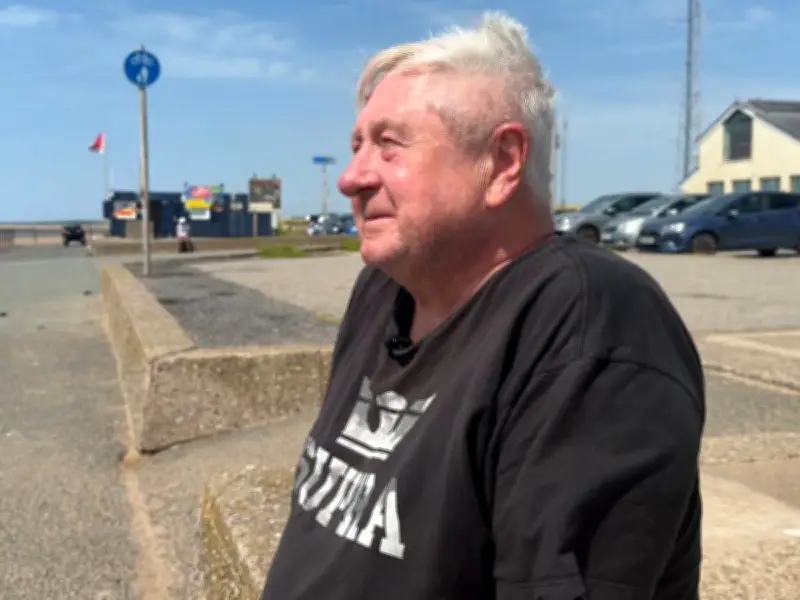
Speaking near Crosby Coastguard Station on June 25, Sandra Worsley, 62, of Netherton, said: 'They are an emergency service and we do need them. They are the lifeline for rescuing people out there. Why they're not getting paid from September is beyond me. It's a terrible thing to hear. These are volunteers and I think it's an incredible job that they do. With the number of incidents on the beach with all this mud, it's invaluable for them to be here.'

Bill Wright, 67, from Litherland, described the decision as 'disgusting'. He said: 'They are there to save lives. What if they weren't there at all? I think it's ridiculous that the coastguards won't be getting paid.' He added that £11 an hour is 'a pittance in this day and age'.
Bill Coleman, 77, of Aughton, told the ECHO on Crosby beach: 'The coastguards should be paid because they are an emergency service. The police, ambulance, and fire brigade get it. They should have a medal because they are doing an exceptional job. They’re risking their lives.'
Legal background
The Maritime and Coastguard Agency said the decision was a consequence of a court ruling and 'not something we wanted to do'. An employment tribunal in 2024 and a subsequent Court of Appeal decision in January ruled that Coastguard volunteers are workers, and therefore entitled to benefits including paid holiday. The GMB Union said Coastguard volunteers have always received compensation for their time, and described the Marine and Coastguard Agency’s decision as 'reprehensible'.
The employment tribunal case involved coastguard officer Martin Groom, whose membership was terminated in a meeting where a trade union official was not allowed to be present. Mr Groom claimed this breached the Employment Relations Act 1999, but to rely on the act, he had to prove he was a worker, not a volunteer.
Union response
Lynsay Mackay, GMB Scotland, told the GMB Congress in Blackpool earlier this month: 'When someone is lost, injured or in danger on our coastline, nobody asks whether the person coming to help is a volunteer or a worker. They ask: is someone coming? For generations, Coastguard Rescue Officers have made sure the answer to that question is yes. If we want a strong, resilient Coastguard for the future, we must make sure that those who step forward are supported, not penalised. If you save lives, you deserve respect. If you carry out work, you deserve rights.'
Agency statement
A Maritime and Coastguard Agency spokesperson said: 'After careful consideration, we are moving the Coastguard Rescue Service to a revised volunteer model, to best protect the future of the service. This decision follows a legal judgment, which means we need to change how the service operates. This is not something we wanted to do but is a consequence of the Court of Appeal ruling. This new model protects choice, flexibility and the ability for people to volunteer alongside their primary employment. We deeply value and recognise the significant service Coastguard Rescue Officers provide along our coastline, and we will be supporting them during this transition. The Coastguard Rescue Service will continue to maintain a robust, effective search and rescue response, ensuring the highest quality of service and levels of safety.'