Law enforcement agencies across Europe have successfully dismantled a sophisticated organised crime gang that was supplying specialised 'smuggling kits' to traffickers operating across the English Channel. The criminal operation, which involved inflatable boats, engines, and other maritime equipment, has been described by police as a significant disruption to the migrant smuggling supply chain.
International Police Operation Targets Smuggling Network
In a coordinated effort spanning multiple countries, police forces from Belgium, France, and Germany conducted simultaneous raids resulting in the arrest of 17 individuals. Among those detained are four Syrian nationals who are suspected of being key organisers behind the illicit operation. The investigation, which involved authorities from the United Kingdom, the Netherlands, and several other European nations, targeted a network that had been providing essential equipment to people smuggling rings.
Details of the Smuggling Kits
The criminal enterprise offered complete maritime smuggling packages priced between £9,000 and £17,000 on the black market. According to Europol, the European Union's cross-border law enforcement agency, these kits represented 'unique sea smuggling packages' specifically designed for Channel crossings. Each package typically included inflatable boats, outboard motors, life vests, and petrol containers.

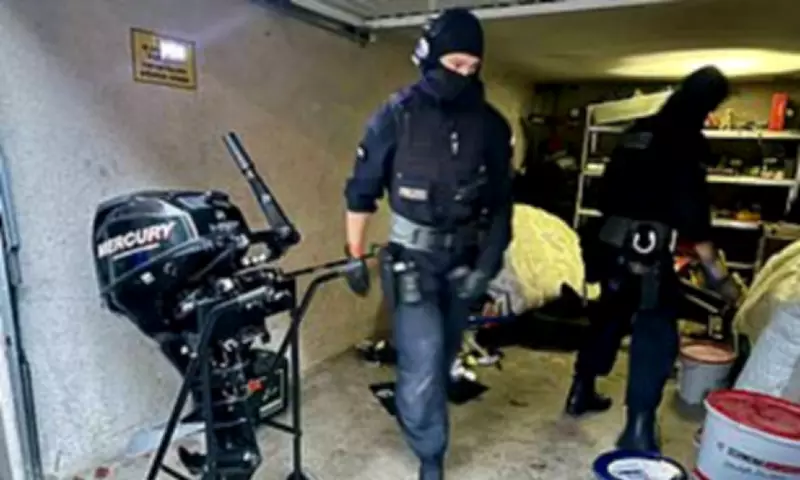
Equipment seized during the operation included:
- 11 inflatable boats ready for deployment
- One outboard motor for propulsion
- Multiple life vests for passenger safety
- Petrol jerry cans for fuel supply
- Boxes of tyre inner tubes intended as makeshift life preservers
Financial Aspects and Criminal Profits
The financial scale of the operation became apparent during the raids, with police confiscating nearly 60,000 euros (£52,000) in cash along with gold bars and weapons. A Europol spokesman revealed that each smuggling package sold for between 10,000 and 20,000 euros on the black market. Given that migrants typically pay between 1,000 and 2,000 euros for their illegal Channel crossing, and with each boat carrying an average of 66 people, smuggling gangs could potentially earn approximately 100,000 euros (£86,600) per boat after purchasing these bespoke kits.
Supply Chain and Distribution Network
The investigation uncovered a complex international supply chain for the smuggling equipment. According to Europol, the maritime equipment was originally produced in Asia before being imported from Turkey via both sea and land borders. The goods arrived in bulk quantities in Germany, where they were stored in warehouses controlled by the criminal network.
'The equipment was used to assemble unique sea smuggling packages, coordinated by an associated group,' explained the Europol spokesman. 'Criminal networks operating in northern France purchased these kits in Germany or had them delivered to the French shores, often for an additional fee.'
Cross-Border Cooperation and Raids
Police executed searches at 14 separate locations during the operation—two in Belgium and twelve in Germany. The investigation involved close cooperation between the UK's National Crime Agency, the Crown Prosecution Service, and police and judicial authorities from Belgium, France, Germany, and the Netherlands. This multinational approach proved crucial in tracking the movement of equipment and identifying key figures within the smuggling network.
The criminal enterprise specifically targeted migrant smuggling operations across the English Channel, with many of the migrants originating from the Middle East and East Africa. Traffickers used the low-quality inflatable boats provided by the network to transport migrants under dangerous conditions, often risking lives in the process.
Significant Impact on Smuggling Operations
Europol has described the operation as resulting in 'a significant disruption of the migrant smuggling supply chain serving criminal networks active along the English Channel.' By targeting the equipment suppliers rather than just the traffickers themselves, law enforcement has struck at a critical component of the smuggling infrastructure that facilitates dangerous Channel crossings.

The seizure of both equipment and substantial financial assets represents a major blow to organised crime groups profiting from migrant smuggling. The operation demonstrates the effectiveness of international cooperation in combating cross-border criminal enterprises that exploit vulnerable migrants seeking passage to the United Kingdom.