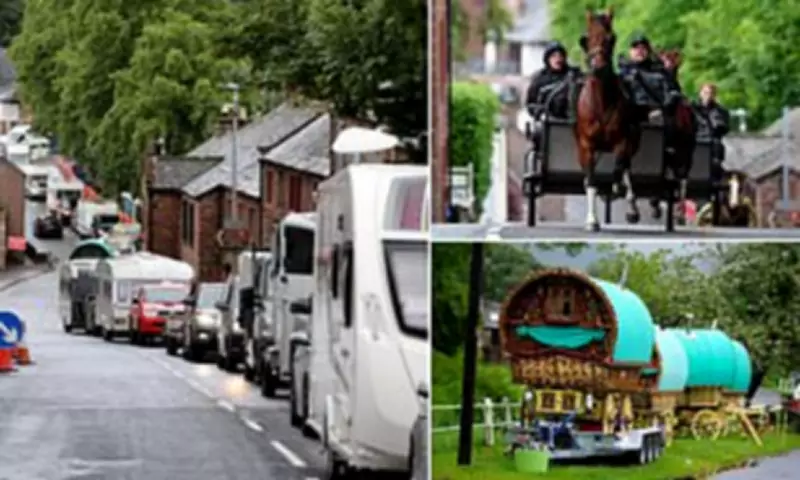
Thousands of travellers in horse-drawn carriages, wagons, and caravans have converged on Appleby for the opening day of the annual fair. The event, known as the largest traditional gypsy fair in Europe, draws approximately 10,000 travellers and 30,000 additional visitors to the small Cumbrian market town.
Fair Traditions and Local Impact
Pictures depict caravans forming lengthy traffic queues as families proudly display their wagons and dogs on carts. Over the next six days, participants will showcase and trade horses for cash. Streets are lined with market stalls offering everything from frilly baby clothes to pints of beer, accompanied by traditional music. However, many local businesses, including a sweet shop, pet shop, cafe, gift shop, and charity shop, have closed for the event due to fears of overcrowding and crime.
Facial Recognition Technology Sparks Controversy
Cumbria Police have introduced live facial recognition (LFR) technology at the fair to crack down on troublemakers. The AI-powered cameras scan faces and check them against police databases, flagging the whereabouts of wanted individuals. This move has angered many travellers, who claim they are being singled out based on their ethnicity. The issue has even caused rifts within the traveller community, with Billy Welch, the Head Gypsy (Shera Rom) and fair organiser, accused of being an 'informant' for supporting the police's use of LFR.

Police Actions and Incidents
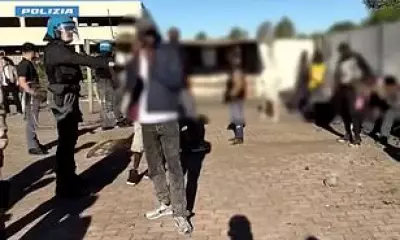
Authorities have already dealt with several incidents, including a youth allegedly threatening a local person with an axe, stolen vehicles, a horsebox driven at a police officer, and children riding recklessly on horse-drawn carts among traffic. A teenage traveller was arrested and charged with a public order offence after carrying an axe in Sedbergh and threatening a member of the public. A dispersal order was issued to move travellers from the area. In Kirkby Stephen, the youth centre closed temporarily due to incidents involving the travelling community, with a spokesperson stating, 'The safety and wellbeing of our children, young people, staff, volunteers, and wider community is always our absolute priority.'
Last week, a man in his thirties was arrested after driving at police officers while attempting to stop his vehicle in Powis Lane near Appleby. The horsebox was seized after two officers were struck by its wing mirrors but were not injured. On Monday, police seized four stolen vehicles—a car, two horseboxes, and a wood-chipper—as part of the pre-fair policing operation.
Official Responses
Detective Superintendent Dan St Quintin, Police GOLD Commander for Appleby Horse Fair, stated: 'Appleby Horse Fair is the biggest annual policing operation for Cumbria Police. Our officers work diligently and professionally throughout the Fair—as well as the lead up to it—and I will not accept people acting in a way that puts their well-being at risk.'
Cumbria's Police, Fire and Crime Commissioner, David Allen, backed the facial recognition cameras, saying: 'I genuinely believe that the use of facial recognition would be an excellent addition to the tools available for the Constabulary to use to keep our residents and visitors safe. I want to make it clear: this isn't a tool to spy on law-abiding members of the public.'
Historical Context
In its 250-year history, the horse fair has only been cancelled twice—in 2001 due to the foot-and-mouth outbreak and in 2020 because of the COVID-19 pandemic. The fair is held on Gallows Hill, named after public hangings once carried out there, where the old Roman Road crosses Long Marton Road. Originating from a royal charter by King James II in 1685, which was later cancelled, the 'New Fair' began in 1775 for sheep, cattle drovers, and horse dealers. By the 1900s, it had evolved into a major Gypsy Traveller event attracting families from across the UK and Europe. Traditions include washing horses in the River Eden and trotting them along the 'flashing lane' before haggling and sales.