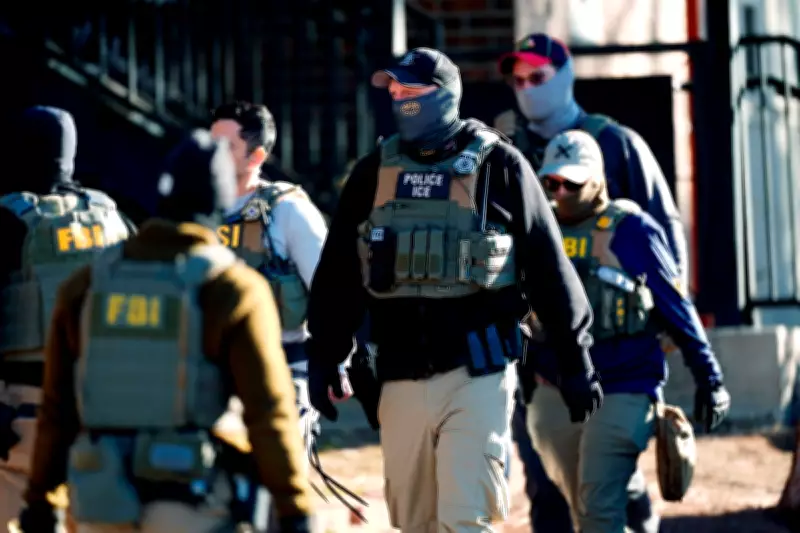
A federal judge has ruled that immigration officers in Colorado violated his order limiting when they can arrest people without a warrant. U.S. District Senior Judge R. Brooke Jackson determined that Immigration and Customs Enforcement (ICE) agents breached his November directive, which barred warrantless arrests unless officers had probable cause to believe a person is in the country illegally and likely to flee before a warrant could be obtained.
Ongoing Violations
Judge Jackson stated that ICE agents continued to make warrantless arrests "without individualized, pre-arrest probable cause determinations of flight risk," thereby contravening the court's order. The judge also mandated that immigration agents authorized to conduct warrantless arrests undergo training on the court's orders within 45 days. Additionally, the government must turn over records of such arrests.
Background of the Lawsuit
The ruling stems from a lawsuit filed by the American Civil Liberties Union (ACLU) of Colorado, which challenges so-called collateral arrests—instances where individuals are accidentally caught up in immigration enforcement actions. The ACLU accuses ICE of indiscriminately arresting Latinos to meet enforcement goals amid President Donald Trump's mass deportation efforts, ignoring legal restrictions on who should be detained.

Training and Documentation Failures
In his latest ruling, Jackson concluded that ICE had failed to adequately train its deportation officers on the requirements of his November court order. He also found that ICE "uniformly failed" to follow documentation requirements for warrantless arrests as stipulated in the order. ICE, which has appealed Jackson's November decision, did not immediately respond to a request for comment on Tuesday's ruling.
Broader Context
Over the past year, federal judges in Oregon, California, and Washington, D.C., have also ordered immigration officers in their districts to refrain from conducting warrantless arrests unless there is a likelihood of escape. Immigration officers typically obtain administrative warrants—documents issued by immigration authorities that authorize an arrest—before seeking targeted individuals. The court cases focus on the arrest of other people without legal status that officers encounter, including while searching for targeted individuals. Such collateral arrests were banned during former President Joe Biden's administration.
Former Associated Press reporter Colleen Slevin contributed to this report.