If a neighbour's tree or hedge causes damage to your property, including your garden fence, UK property law may entitle you to compensation. When the neighbour fails to address the issue, they could be held liable for repair costs. Your home insurance may cover the expenses and then reclaim them from the neighbour's insurer.
Legal Framework
Under UK law, specifically the common law of private nuisance and the Occupiers' Liability Act 1957/1984, landowners have a duty of care to ensure their trees do not pose a foreseeable threat to neighbouring properties. The government website Gov.uk states: 'Your neighbour is responsible for maintaining their hedges so they do not, for example, damage your property or grow too high. If they do damage your property, your neighbour may be liable.'
Ownership and Boundaries
Citizens Advice explains: 'If the trunk or main stem of a tree or hedge is on your land, you own it. If it's on the boundary between properties, you'll need to check the legal documents you got when you bought your home. They'll indicate where the boundary is and might say who's responsible for the tree or hedge.' You can purchase these documents from the Land Registry for a small fee. If the boundary is unclear, a surveyor from the Royal Institution of Chartered Surveyors (RICS) can assist.

Under English and Welsh law, ownership of a tree is determined by the location of its trunk. You are allowed to trim branches or roots that overhang or encroach onto your property, but only up to the boundary line. You must not enter your neighbour's land or damage the tree in the process.
Liability for Damage
If a tree causes damage, such as falling onto your fence, or if its roots cause structural problems, the owner may be held liable, particularly if they were aware of the risk and failed to act. Notify your neighbour in writing as soon as you identify a problem to prevent them from claiming lack of awareness as a defence.
Steps to Take If a Hedge Damages Your Fence
- Gather evidence: Take clear photos of the damage and the hedge pressing against the fence.
- Talk to your neighbour: Approach them calmly to discuss the issue and ask them to cut back the hedge and repair or replace the fence.
- Check your home insurance: Your insurer may cover repair costs and pursue your neighbour for reimbursement.
- Mediation: If your neighbour refuses to cooperate, use the Civil Mediation Council to find an impartial mediator.
If the boundary is unclear, consider engaging a RICS-registered surveyor to formally establish property lines.
Steps to Take If a Tree Damages Your Fence
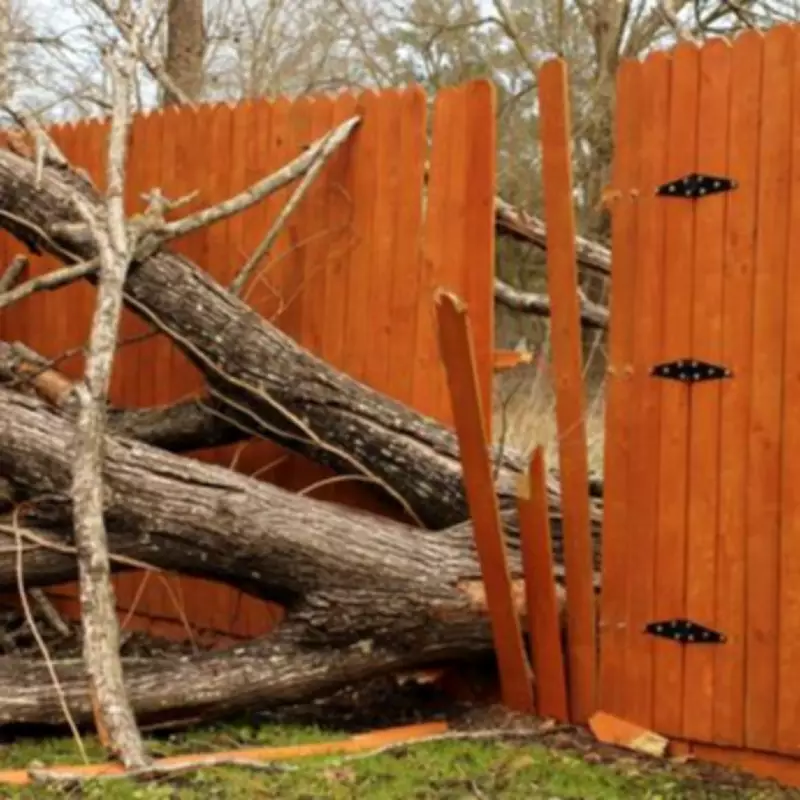
Under UK law, if a tree falls from your neighbour's property onto your fence, the tree's owner is generally accountable for the damage. The neighbour is responsible for removing the tree and covering repair costs, especially if they knew the tree was dangerous and failed to act.
- Document the damage: Take clear photos of the broken fence, the tree, and any property damage before clearing anything.
- Contact your neighbour: Have a polite conversation to agree on who covers costs. If they refuse, send a written letter outlining the issue.
- Notify your insurer: Call your home insurance provider to handle the claim against your neighbour or advise on quick repairs.
- Check tree protection: Use the UK Government's 'Check if a tree has a TPO' tool. If the tree has a Preservation Order or is in a conservation area, you need council permission to prune or remove it.
- Get estimates: Obtain at least two written quotes from tree surgeons or contractors as evidence if you take the dispute to Small Claims Court.
If you believe a neighbour's garden poses a health hazard, contact your local council's environmental health department.
Blocking Light or Views
Citizens Advice states: 'If you've lost daylight to your property or views you previously enjoyed, you should try to negotiate with your neighbour to reduce the height of the tree. You can't chop down your neighbour's tree without their permission. If a hedge or two or more trees in a row are blocking light, you can complain to your local council.'

Neighbour Damages Your Tree
Citizens Advice explains: 'Your neighbour can cut back roots and branches that overhang onto their property, but they should discuss this with you first. You both might need advice from a tree specialist about what will happen if you cut back the roots.'
Dangerous or Non-Native Weeds
Certain harmful weeds, such as giant hogweed and Japanese knotweed, are illegal to allow to spread into natural areas. If you are dealing with such weeds, you may persuade the landowner to remove them. Your local council may help eradicate the weed. Contact your council to check eligibility. Specialist firms can assist, and you should expect a free first visit for a quote, a reasonable charge based on time and chemicals, and a guarantee for a reasonable number of years.