Suspect in Michigan Synagogue Attack Identified as Lebanese-Born US Citizen
The Department of Homeland Security has identified the suspect in Thursday's attack on a Michigan synagogue as Ayman Mohamad Ghazali, a naturalized US citizen who was born in Lebanon. According to DHS records, Ghazali arrived in the United States in May 2011 through Detroit Metropolitan International Airport and became a citizen in February 2016 after applying for naturalization in October 2015.
Details of the Targeted Attack on Temple Israel
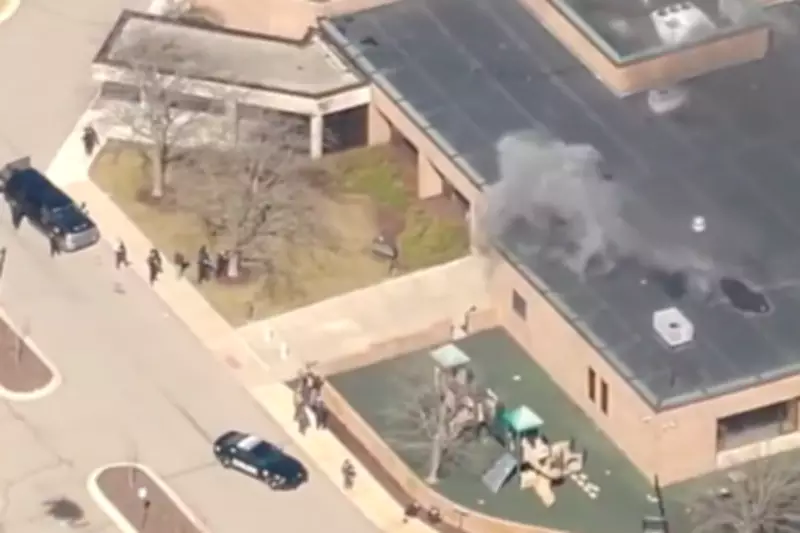
Authorities report that Ghazali rammed his vehicle into the Temple Israel synagogue in West Bloomfield, Michigan, before the car burst into flames. The suspect died after exchanging gunfire with security guards at the scene. One security guard was injured after being struck by the vehicle but is expected to recover. Law enforcement sources told CNN that the suspect's car contained mortars, though no explosives were detonated during the incident.
The FBI is investigating the attack as "an act of targeted violence against the Jewish community" according to statements from federal officials. While the specific motive remains unclear, FBI Special Agent Jennifer Runyan confirmed that more than 100 bureau agents, including bomb specialists and evidence collection teams, are pursuing every lead in the case.

Community Response and Security Measures
Oakland County Sheriff Mike Bouchard addressed concerns during a press conference, stating: "If you think you can target the Jewish community in this county or anywhere in this state, you're wrong. We're going to not only stand in front of them to protect them, we're coming for you." The sheriff confirmed that no children or staff from the synagogue's preschool were injured, though worried parents rushed to pick up their children following the attack.
Michigan state Representative Samantha Steckloff, who attends Temple Israel, told CNN she was "absolutely shaken" by the attack on her place of worship. She expressed concern about rising antisemitism, noting: "When you have so many people blaming the Jewish community across the world for a war that is being done in the Middle East, the divisiveness you have seen boil up for the past few years was just almost ripe for the picking."
Political Reactions and Broader Context
Michigan Attorney General Dana Nessel suggested a possible connection between the attack and international conflicts, telling CNN: "I think we can absolutely draw a nexus between the war in Iran and the events of today. I don't think it's a coincidence that out of all the synagogues or temples that this individual could have picked, he picked the one that is named Temple Israel."
President Donald Trump described the incident as "a terrible thing" after being briefed on the attack. The incident represents the latest in a series targeting religious institutions worldwide, intensifying concerns among clergy and worshippers about security at houses of worship.
Temple Israel, which operates as part of Reform Judaism with approximately 3,500 families and over 12,000 members, represents one of the largest congregations in the denomination. The attack has prompted renewed discussions about protecting religious institutions and addressing rising antisemitism in communities across the United States.