FBI Confirms Hezbollah Inspiration Behind Michigan Synagogue Truck Attack
The Federal Bureau of Investigation has declared that a man who deliberately crashed his pickup truck into a prominent Detroit-area synagogue earlier this month was carrying out a terrorist attack directly inspired by the Iran-backed militant organization Hezbollah. This targeted act of violence was specifically aimed at inflicting maximum damage upon the Jewish community, according to official statements released on Monday.
Details of the Deliberate Assault
Forty-one-year-old Ayman Ghazali spent several hours surveilling the parking lot of Temple Israel in West Bloomfield Township before executing his attack on March 12. He recorded a video prior to the assault, explicitly stating his intention to "kill as many of them as I possibly can," revealed FBI Detroit Special Agent in Charge Jennifer Runyan. Ghazali then accelerated his Ford F150 truck through the synagogue's doors, crashing into an early childhood education area and striking a security guard.
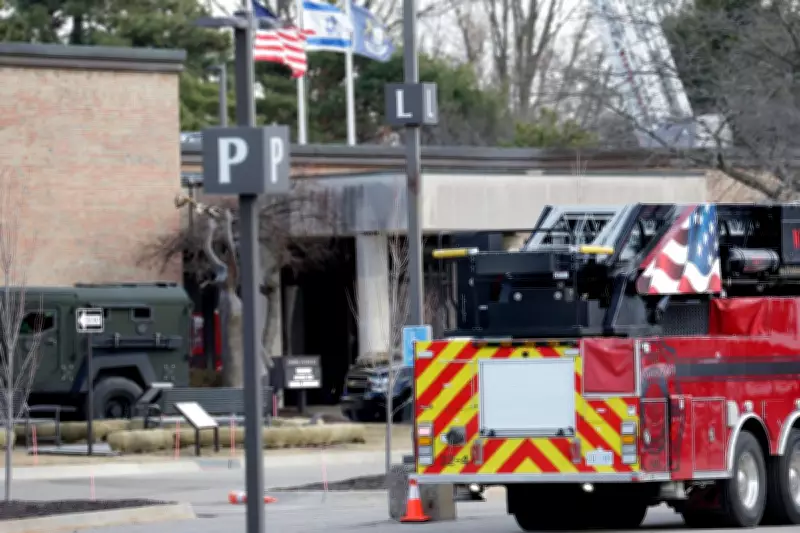
A violent exchange of gunfire ensued with another guard before Ghazali ultimately fatally shot himself. Remarkably, despite approximately 150 children and staff being present within the building at the time, no other injuries were reported. Runyan emphasized that this was a "Hezbollah-inspired act of terrorism purposely targeting the Jewish community and the largest Jewish temple in Michigan."

Evidence of Premeditation and Ideology
Investigators uncovered disturbing evidence on Ghazali's social media accounts, including videos and images that demonstrated his embrace of vengeance and Hezbollah's militant ideology. In the days leading up to the attack, he had conducted online searches for Michigan synagogues and Jewish cultural sites, even looking up the specific lunchtime schedule at Temple Israel. It remains unclear whether Ghazali was aware that children would be present in the education area he targeted.
His vehicle was found to contain commercial-grade fireworks and over thirty gallons of gasoline, indicating plans for a potentially larger explosive event. A fire did ignite in the truck's engine compartment, but fortunately, no explosion occurred. U.S. Attorney Jerome Gorgon for the Detroit area drew stark parallels to Hezbollah's infamous 1983 truck bomb attack on U.S. Marine barracks in Beirut, Lebanon, stating, "That is exactly what this terrorist did a few weeks ago in our backyard."
Personal Motivations and Broader Context
Ghazali's ex-wife had previously alerted law enforcement, expressing concern that he was distraught and suicidal after losing family members during an Israeli airstrike in his native Lebanon just days earlier. This airstrike occurred during the ongoing conflict involving Iran, Israel, and the United States that began on February 28. Israel's military confirmed that Ghazali's brother, Ibrahim Ghazali, who was killed in the strike, was a Hezbollah commander operating in Lebanon.
National Intelligence Director Tulsi Gabbard informed a Senate committee that Ayman Ghazali had direct family ties "to a Hezbollah leader." Hezbollah, founded in 1982 during Lebanon's civil war with the original aim of ending Israel's occupation of southern Lebanon, continues its militant activities despite Israel's withdrawal by 2000. The United States officially designated Hezbollah as a foreign terrorist organization in 1997, though it also functions as a significant political party within Lebanon's parliamentary system.
The Targeted Institution and Wider Implications
Temple Israel, the synagogue attacked, is a cornerstone of Reform Judaism—the largest Jewish denomination in North America, known for emphasizing progressive values including social justice and gender equality. Established in Detroit in 1941 before relocating to suburban West Bloomfield in the 1980s, it is the second-largest congregation within the Reform movement, boasting a membership exceeding 12,000 individuals.

This alarming incident represents the latest in a concerning series of attacks targeting religious buildings worldwide, significantly intensifying fear among faith leaders and worshippers across different communities. The FBI's investigation continues to examine all aspects of Ghazali's motivations, connections, and the precise nature of the Hezbollah inspiration behind this violent act of domestic terrorism.