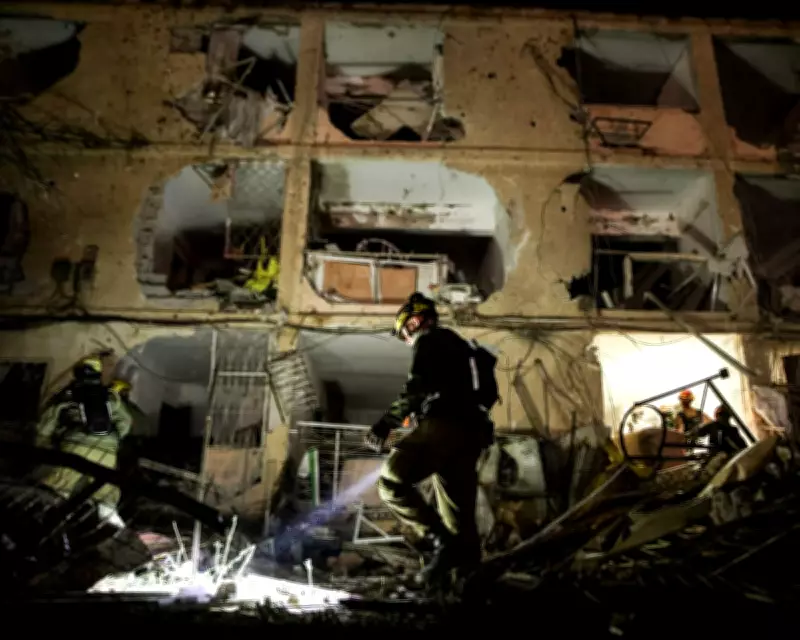
Iranian Missile Attack Targets Dimona, Injuring 33 Near Israeli Nuclear Facility
In a significant escalation of hostilities, an Iranian missile has struck the Israeli town of Dimona, located in close proximity to a nuclear facility widely believed to house the Middle East's sole nuclear arsenal. The attack, which Iran has explicitly stated was in retaliation for earlier strikes on its own nuclear enrichment complex at Natanz, resulted in substantial damage and injuries.
Casualties and Damage Reported in Dimona
First responders from Magen David Adom reported treating 33 individuals injured at multiple sites in Dimona. Among the casualties was a 10-year-old boy who sustained serious shrapnel wounds. Paramedic Karmel Cohen described the scene as one of "extensive damage and chaos", highlighting the severity of the impact. The Israeli military confirmed a "direct missile hit on a building" in the town, with images from Israeli media showing an object crashing at high speed.
Retaliation for Natanz Strike and Nuclear Tensions
Iranian state television declared the Dimona attack a "response" to the strike on the Natanz facility, which hosts underground centrifuges for uranium enrichment as part of Iran's disputed nuclear programme. This facility had previously been damaged in last year's June war. The UN nuclear watchdog chief, Rafael Grossi, reiterated calls for military restraint to prevent any risk of a nuclear accident. Notably, Israel has never officially admitted to possessing nuclear weapons, though the Dimona site is suspected to hold such capabilities.

Regional Escalation and International Reactions
The conflict has intensified, with three weeks of heavy US-Israeli bombardment failing to significantly blunt Iran's retaliatory capacity. In a related development, the United Arab Emirates reported facing aerial attacks after Iran warned against allowing strikes from its territory on disputed islands near the Strait of Hormuz. This vital waterway, crucial for global crude trade, has been choked off by Iran, leading to soaring oil prices—North Sea Brent crude now exceeds $105 per barrel.
Admiral Brad Cooper of US Central Command detailed that US warplanes targeted an underground facility on Iran's coast, destroying anti-ship cruise missiles and radar relays to degrade threats to the strait. Meanwhile, a joint statement from leaders of countries including the UK, France, and Germany condemned the "de facto closure of the strait of Hormuz by Iranian forces" and expressed readiness to ensure safe passage.
Political and Social Fallout in Iran
As the war enters its fourth week, Iran marked the end of Ramadan with Eid al-Fitr prayers, though the new supreme leader, Mojtaba Khamenei, remained out of public view. Citizens expressed mixed emotions; Farid, an advertising executive, noted the painful thought of people dying during celebrations, while Shiva, a painter, described a pervasive sense of uncertainty. Analysts, such as Neil Quilliam of Chatham House, observed that Iran's strike capacity has shown unexpected resilience, surviving the loss of top leaders and deep-rooted challenges.
This incident underscores the high-stakes nature of the ongoing conflict, with both sides demonstrating a willingness to escalate despite international calls for de-escalation and nuclear safety concerns.