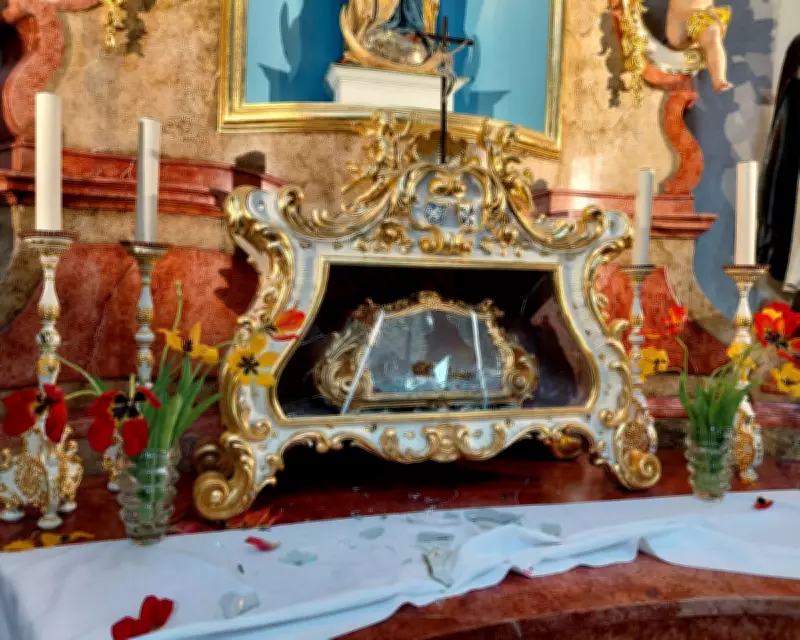
An 800-year-old relic believed to be the skull of Saint Zdislava, stolen earlier this week from a Czech church, has been recovered encased in concrete as experts work to extract it, police have confirmed.
Theft and Recovery
The skull was taken from a display box in a side chapel of the basilica of St Lawrence and St Zdislava in Jablonné v Podještědí on Tuesday. A 35-year-old suspect has been arrested, who allegedly confessed to taking the relic from a glass shrine. The man objected to the relic being publicly displayed and encased it in concrete before planning to throw it into a river, police said.
“We know he wanted to sink it in the river today to bid farewell in this way,” the local police chief, Petr Rajt, told reporters. “If we had failed to detain the man yesterday, the skull would probably never be found.”

Investigation Details
Police detained the suspect in Mladá Boleslav, north-east of Prague, on Thursday after what Rajt described as “meticulous police work and a bit of police luck”. The theft took place shortly before mass on Tuesday evening while the church alarm was switched off. The suspect allegedly smashed the glass shrine before fleeing with the skull.
“He prayed to God that he would be alone in the church – and that’s what happened,” Rajt said. “But he was obviously so determined to commit the crime that there was nothing to stop him.”
Legal Consequences
Jan Ujka, a local detective, said the suspect had pleaded guilty and was charged with offences including theft. He is being held in pre-trial custody. Ujka added that the man, who has no previous criminal record, faces up to eight years in prison if convicted.
About Saint Zdislava
Saint Zdislava, born around 1220 and believed to have died about 30 years later, was a noblewoman known for her charitable work. She was canonised by Pope John Paul II in 1995. The recovered skull is now being examined by experts to confirm its authenticity and assess any damage from the concrete encasement.