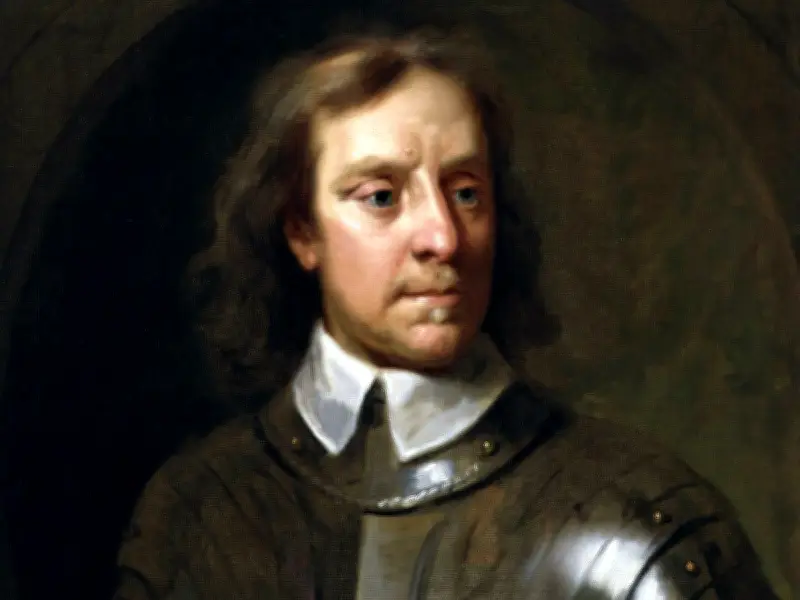
William Joyce, the voice of Nazi propaganda broadcasting to Britain during World War Two, was hanged 80 years ago this year. The British-American fascist, dubbed Lord Haw-Haw by the wartime press for his posh accent, was captured, tried, and executed. Here is a closer look at his story along with other lesser-known tales of those executed for treason.
William Joyce: The Voice of Nazi Propaganda
Born in New York to an Irish father and English mother, the scar-faced Joyce thought British fascist Oswald Mosley was not extreme enough. When World War Two broke out, he narrowly avoided arrest by escaping with his wife to Nazi Germany. There, he began his notorious radio broadcasts, furthering the regime's cause. The Third Reich's head of propaganda, Joseph Goebbels, described him as "the best horse in my stable," but Brits tended to simply laugh at Joyce's snooty rants.
When Adolf Hitler's rule ended in April 1945, Joyce went into hiding. But his voice gave him away to a wily British soldier, who challenged him and then shot him in the buttocks, thinking Joyce was pulling out a gun. The 38-year-old was tried for treason, due to having formerly held a British passport, and found guilty. He was hanged at Wandsworth Prison on January 3, 1946.

John Amery: The Minister's Son Turned Traitor
John Amery was the son of a British wartime minister, Leo Amery. He became a fascist supporter in the 1930s and moved to Germany during the conflict. There, he became a propagandist and began trying to recruit Brits from POW camps to join a Nazi-supporting unit that would become known as the British Free Corps. It was largely a failure.
Towards the end of the war, in April 1945, Amery was captured, along with his French mistress, in Italy by partisans and handed over to the British authorities. He was put on trial and pleaded guilty to treason. Amery was hanged in Wandsworth Prison on December 19, 1945, aged 33.
Roger Casement: The Irish Nationalist
The leading Irish nationalist Roger Casement travelled to Germany during World War One in a bid to get aid for the Easter Rising, which aimed to free Ireland from British rule. Before the war, he had been knighted for his work exposing humanitarian abuses in Africa and South America. But, on his return from Germany, Casement was arrested and sent to the Tower of London. At his trial, he said he was "proud to be a rebel" in the Irish cause.
Smears about his sexuality helped bring in a guilty verdict, and the 51-year-old, who had been stripped of his knighthood, was hanged on August 3, 1916, at London's Pentonville Prison.
Perkin Warbeck: The Pretender to the Throne
This intriguing 15th-century character claimed to be Richard, Duke of York, one of the princes supposedly murdered in the Tower of London in 1483. He said his older brother Edward V had been slain but claimed to have survived as a nine-year-old, after swearing not to reveal his identity.
In 1497, he re-emerged, threatening Tudor king Henry VII's throne by claiming to be the legitimate monarch. Warbeck landed in England with an army but was captured and thrown in the Tower of London. He was eventually hanged two years later after admitting to being an imposter named Piers Osbeck, a French boatman's son.
Oliver Cromwell: Hanged After Death
Already being dead is not always an excuse to avoid being hanged for treason. This was the case with Oliver Cromwell, who led the nation as Lord Protector after the execution of Charles I, also for treason, in 1649. The former Parliamentarian soldier had died of natural causes, aged 59, in 1658 and was buried in Westminster Abbey.
But in 1660, Charles II was restored to the throne and ordered that Cromwell's corpse be exhumed and tried for treason. It was then hanged at Tyburn in chains. The body was thrown in a pit, and the head was displayed on the top of Westminster Hall until 1684, before eventually being buried under the floor of a chapel in Cambridge.
Lady Jane Grey: The Nine Days Queen
Nicknamed "the Nine Days Queen," Lady Jane Grey has gone down in history as a tragic figure, dragged into the feverish political turmoil of mid-Tudor England. In 1553, when Henry VIII's son Edward VI died, he had nominated the Protestant Lady Jane Grey to take the throne. The 16-year-old was proclaimed queen on July 10 and awaited her coronation at the Tower of London.

However, Henry VIII's Catholic daughter Mary had other ideas and raised an army, and most of Jane's supporters deserted her. When Mary I seized power, she initially spared her rival's life. But when Jane's father started a rebellion, the new queen had her convicted of treason. She and her husband were beheaded in 1554.