Karen Solie on Poetry's Power in Existential Times
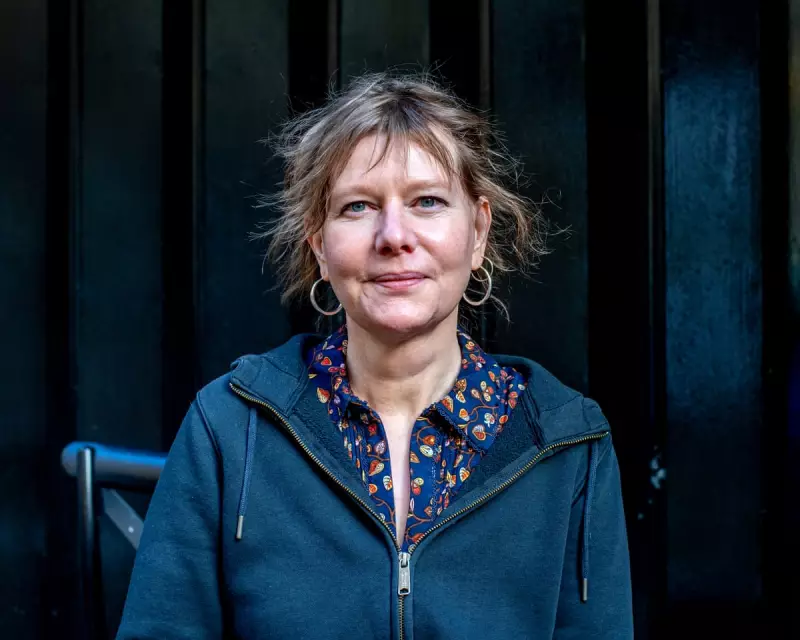
The morning after discovering she had won the prestigious TS Eliot prize, Canadian poet Karen Solie sat in Soho, London, reflecting on the role of art when the world feels like it is "careening towards some kind of head." Her winning collection, Wellwater, explores themes of environmental degradation, personal loss, and societal fractures with a raw candour that refuses to look away.
Confronting Unbeautiful Truths
Early in Wellwater, Solie offers an apology: "I'm sorry, I can't make this beautiful." This line appears in Red Spring, a poem addressing agribusiness and the human cost of glyphosate, the herbicide linked to cancer in cases like that of groundskeeper Dewayne Johnson. For Solie, poetry cannot be separated from the harsh realities around us. "We all have to keep our eyes open," she says, "but that doesn't mean we can't say we're scared, because it's scary." This stance echoes the sentiment of Noor Hindi's viral 2020 poem, emphasising that art must engage directly with contemporary crises rather than retreat into abstraction.
The Acceleration of Crisis
While the question of art's purpose in tumultuous times is ancient, Solie notes a distinct modern urgency. "There have been other times of crisis," she observes, "but now there is a sense of things careening towards a head." In an era where distractions and divisions are often amplified, she believes art is crucial for reconnecting us to our humanity. "We have to feel like human beings with a spirit in order to do anything about anything," she asserts, highlighting poetry's capacity to counteract fragmentation and foster empathy.

Finding the Remarkable in the Ubiquitous
Many poems in Wellwater focus on the natural world, particularly plants and animals that are so common they become invisible. Solie expresses fascination with "things that are so ubiquitous as to disappear in one's landscape," such as climbing vines, rats, or bogs termed "the mash" in Newfoundland. Through vivid personification—grasses passing "teaspoons of silence" or sheep reciting "panicked rosaries"—she revitalises these overlooked elements, urging readers to see them anew. This perspective, she suggests, stems from her upbringing in Saskatchewan, a region of flat fields and subtle beauty that taught her to appreciate the understated.
A Literary Journey from Prose to Poetry
Solie's path to poetry was unconventional. An avid reader in childhood, she devoured her father's anthology, A World of Great Stories, despite its occasionally adult content. After working as a reporter, she enrolled at the University of Lethbridge, where a contemporary poetry course in her mid-twenties introduced her to luminaries like WH Auden and Sylvia Plath. The physical response evoked by a perfectly crafted sentence, which she first experienced with short stories, became central to her poetic practice. Later influences include Tomas Tranströmer, Anne Carson, and contemporary voices like Isabelle Baafi and Catherine-Esther Cowie, whose work she finds revitalising.
Urban Landscapes and Housing Insecurity
Interspersed with nature poems are stark depictions of urban life. In Basement Suite, Solie writes of being closer to consequence and unloved creatures, while Toronto the Good critiques the city's unaffordable housing market, where "funky" flats are often "tiny museums of illegality." She laments how many residents are forced into temporary accommodations, a trend she sees in cities worldwide. "It's infuriating to see the direction that so many cities have gone," she says, acknowledging the difficulty of finding viable solutions.

Loss and the Gesture Beyond
Wellwater is permeated by loss, both environmental and personal, including the death of Solie's father, to whom the collection is dedicated. Yet, she hopes the book offers "some kind of gesture past all of that." The penultimate poem, Starcraft, written after her father's passing, imagines alternate dimensions where loved ones are merely "out of frame," suggesting a fragile solace. Solie describes her writing process as painstakingly slow, involving many revisions to achieve each word's precise impact.
Recognition and Future Focus
Winning the TS Eliot prize, which includes a significant financial award, is "incredibly encouraging" for Solie, who notes the solitude and self-doubt inherent in writing. The prize will allow her to dedicate more time to her craft, a prospect she welcomes with practical relief, joking about paying off her credit card. As she continues to teach part-time at the University of St Andrews and write, Solie remains committed to poetry's power to illuminate our most pressing challenges, proving that even in existential times, art can provide a vital lens through which to view the world.