Argentina's Disappeared: An Open Wound as New Remains Identified
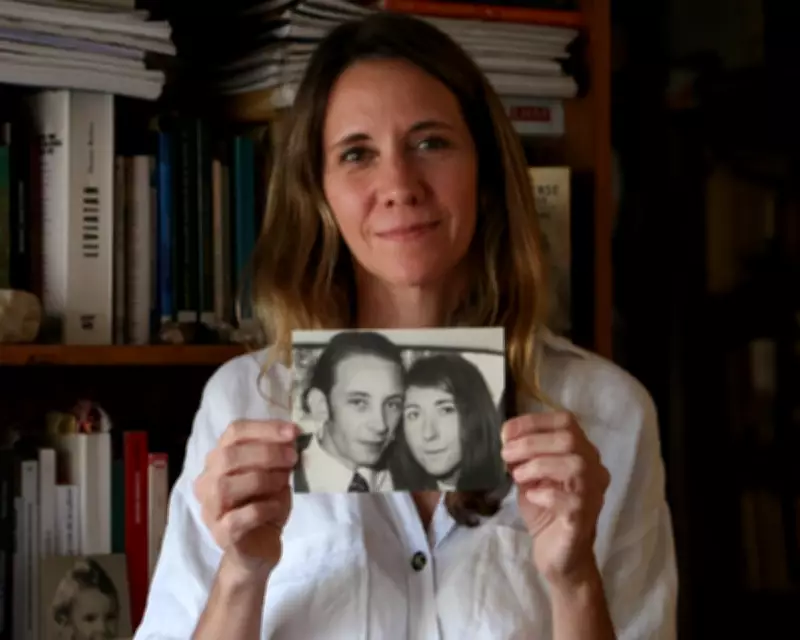
Soledad Nívoli holds a photograph of her father, Mario Alberto Nívoli, who was disappeared in 1977, and her mother, Graciela Gauchat. This image symbolizes a painful legacy that continues to haunt Argentina fifty years after the military seized power. In 1976, the armed forces forcibly disappeared an estimated 30,000 people, including workers, students, teachers, and political activists, leaving families in a state of perpetual grief and uncertainty.
The Search for Closure
Earlier this month, Soledad Nívoli received a call from her lawyer with news that investigators had found her father's remains, 49 years after his disappearance. She collapsed in tears, hugging her eight-year-old son, Emiliano. "We felt relief when we found those little bones," said Soledad. "[Emiliano] no longer has a disappeared grandfather – he has a grandfather who is dead, who was murdered, but that, finally, we can give him a proper sendoff." Mario was one of 12 people recently identified at La Perla, a former concentration camp in Córdoba province.
Forensic Breakthroughs at La Perla
La Perla, a 14,000-hectare site 12km from Córdoba city, served as the province's main detention centre between 1975 and 1979, holding an estimated 3,000 prisoners. In 1985, reports of mass executions emerged, but it wasn't until 2004 that forensic anthropologist Anahí Ginarte began working at the site. She recalled a conversation with Lt Col Guillermo Bruno Laborda, who confirmed that in early 1979, prisoners' bodies were exhumed using heavy machinery to cover up crimes before a human rights visit. "He replied: 'When you clean your house, do you clean every nook and cranny? No. There has to be something left,'" said Ginarte.

In 2014, burnt bone fragments were found, and by late 2024, aerial photographs from 1979 helped geologist Guillermo Sagripanti narrow the search area. Excavations in September 2025 uncovered remains, not in a mass grave, but as scattered fragments from a cleanup operation. Carlos Vullo, a geneticist with the Argentinian Team of Forensic Anthropology (EAAF), noted that identification relied heavily on genetics due to the fragmentary nature of the remains, matching profiles against a database of relatives.
Families' Stories of Loss and Hope
Not all identifications provided definitive answers. One tooth was linked to either Adriana or Cecilia Carranza, fraternal twins captured in May 1976 at age 18. Their niece, Fernanda Sanmartino, remembered them as funny and loving, members of the leftwing Revolutionary Workers' party. "Families didn't dare to speak up ... even after democracy was restored," she said. "Now, we know [they were disappeared] because they believed in something."
Instructing judge Miguel Hugo Vaca Narvaja, whose grandfather is also among the disappeared, expressed hope for more identifications. "There is always the hope that someday we will be able to find his remains, just as we did with these 12 families," he said.
Political Context and Historical Memory
Historian Marina Franco emphasized that the dictatorship remains an open wound in Argentinian society. She warned that the current far-right government, under libertarian president Javier Milei, justifies the repression by calling it a war with "excesses," which legitimizes modern-day oppression. "When the far-right government justifies the dictatorship by calling it a war, it legitimises repression today," Franco stated.
Milei's administration has dismantled official efforts to preserve historical memory, reduced state involvement in criminal investigations for crimes against humanity, and obstructed access to dictatorship archives, according to United Nations human rights experts. Vaca Narvaja criticized this stance, suggesting it stems from either ignorance or support for the genocide's outcomes.

Continuing the Search
Graciela Geuna, tortured at La Perla in 1976 and shown her husband's dead body, recently found a pendant engraved with her name and birthday date, which she had given to him for protection. "What one generation doesn't solve becomes a burden to the next," she said. "I have to solve this myself; I don't want my children to keep looking – I want to find him. And we are finding them, right? We are finding them."
As forensic teams persist in their work, the fate of Argentina's disappeared continues to resonate, offering both closure and a stark reminder of the enduring impact of state terror.