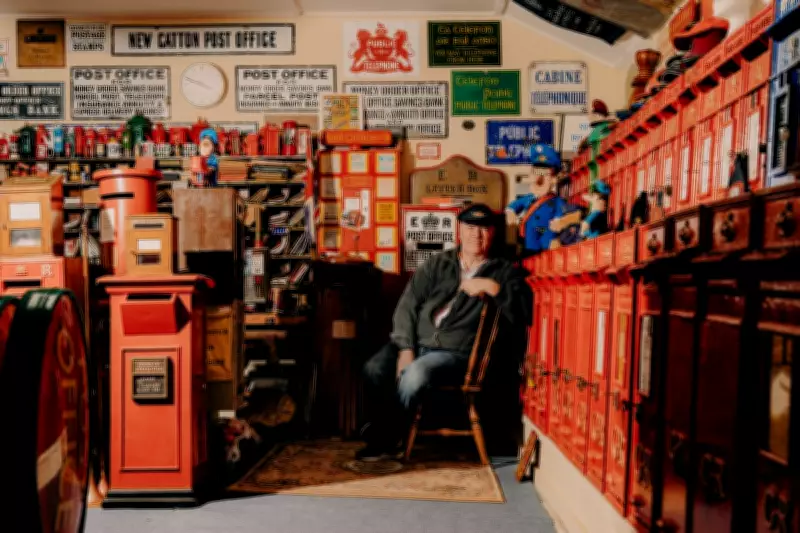
Arthur Reeder's Postal Museum: A Lifelong Passion for Postboxes
Arthur Reeder, a dedicated collector based on the Isle of Wight, has spent decades amassing one of the largest collections of postboxes in the United Kingdom. With over 260 pieces sourced from locations as diverse as Scotland, Ireland, and Hong Kong, his museum stands as a testament to postal history and personal perseverance.
The Humble Beginnings of a Remarkable Collection
It all started in 1994 during a trip to north Wales, where Reeder, a railway enthusiast, visited Rhyl station to see miniature steam trains. On the platform, he noticed the painted outline of a postbox that had once stood there since the late 1800s. The original box had been vandalised, set alight, and discarded in a skip.
When Reeder inquired about it, the station manager jokingly offered it for 20 pounds. Reeder agreed, provided he received a receipt, marking the inception of his now extensive collection. This initial acquisition, an obscure railway postbox, sparked a passion that would grow into a full-fledged museum.

Expanding the Collection: From Garden Finds to International Treasures
After writing an article about his first postbox for a specialist magazine, Reeder began receiving offers from others looking to part with their own boxes. One visitor mentioned a man with postboxes in his garden, while another pointed him to a stonemason in east London who had a pillar box stored in his garage for years. Reeder embraced these opportunities, asking, "why not?" each time.
His collection now includes postboxes from East Mey in Scotland, Truro in Cornwall, Cork in Ireland, and even one from Hong Kong. Among the standout pieces is a postbox designed to resemble a giant tin of baked beans, originally from the old Heinz factory in Park Royal, London, which had its own branded post office.
The Journey of a Collector: Travel, Connections, and Community
Reeder has travelled thousands of miles to acquire postboxes, often combining his trips with his former job as an electrician. Along the way, he photographed postboxes and connected with local postal workers who helped him locate old models. His reputation has grown to the point where Royal Mail contacts him during clear-outs at their storage yards before scrapping items.
He joined the Letter Box Study Group, a club for enthusiasts interested in the history of postboxes and Royal Mail. Through this group, he has met people from all walks of life, including electricians, builders, and self-employed business owners, united by their common interest. Reeder has become the go-to expert for postbox details, able to identify and describe any box from a photograph.
Loss, Legacy, and the Museum's Future
Over the years, Reeder has lost dear collector friends, some of whom bequeathed parts of their collections to him. For instance, a friend in Somerset left him postboxes upon passing, and a former postal worker in Cowes had his wife donate his boxes after his sudden death. Reeder acknowledges that without these contributions, his collection would not be as extensive.
In 2006, he established his museum on the Isle of Wight to properly store and display his collection. Previously kept in various sheds, the museum now welcomes visitors by appointment, hosting everyone from casual walk-ins to groups of 90 people. Reeder and his wife enjoy sharing their passion with others.
Reflections on Modern Postal Changes and the Collection's Fate
Reeder notes the decline of traditional postboxes, such as the loss of a local box attached to a telegraph pole last Christmas, deemed unfit by Royal Mail. This forces elderly residents to walk a mile to the nearest postbox. Additionally, Royal Mail is rolling out 3,500 solar-panelled postboxes nationwide, replacing some classic models.
He expresses concern that with the decreasing use of letters, modern boxes may not last more than 50 years, viewing it as progress but lamenting the loss of historical connections. Regarding his collection's future, Reeder worries that if anything happens to him or his wife, it might be dispersed, as he doubts anyone will take it over. For now, he continues to enjoy showcasing his museum to visitors.