Banksy's Identity Revealed Again: Art Experts Debate Impact on Value and Legacy
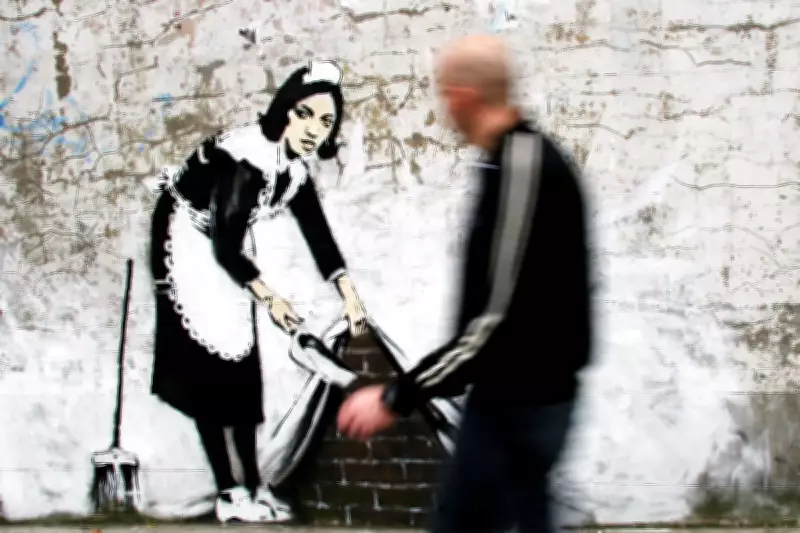
The enduring mystery of Banksy's identity has long been a crucial element in the valuation and allure of his provocative artworks. For decades, this anonymity has allowed his pieces to challenge authority from public walls worldwide and even self-destruct during high-profile auctions. Now, with Reuters reportedly unmasking the artist once more, the art world is abuzz with questions about whether his works can maintain their cultural significance and financial worth without the shroud of secrecy.
The Loss of Mystique and Fan Backlash
Many devoted Banksy enthusiasts have expressed profound disappointment at this latest revelation, mourning the loss of the enigmatic persona that has captivated global audiences. The backlash against the news outlet has been fierce, with one fan comparing the experience to being abruptly informed that Santa Claus does not exist. "I feel like they are telling me how a magic trick is done," remarked Thomas Evans, an artist based in Denver. "Sometimes I just want to enjoy the magic trick." This sentiment underscores the emotional connection fans have with Banksy's anonymous identity, viewing it as integral to the artistic experience.
Expert Opinions on Enduring Appeal
Despite the uproar, numerous art experts argue that Banksy's murals and their powerful messages will survive this naming. They contend that his appeal extends far beyond mere anonymity. Banksy's works—often mischievous yet darkly poignant—serve as stark witnesses to global injustices, oppression, and inequality, from his native England to conflict zones like Bethlehem and Ukraine. According to these analysts, removing his anonymity does not diminish the art's capacity to inspire reflection and provoke discussion.

"People buy his works because they absolutely love it," stated Acoris Andipa, director of the Andipa gallery in London. "The main feedback that I get is that they really, frankly, don't care if they know who he is." This perspective suggests that the core value of Banksy's art lies in its thematic resonance and visual impact, rather than the identity of its creator.
The History of Banksy's Alleged Identity
Banksy is widely believed to have been born as Robin Gunningham around 1972, emerging from the street art tradition where anonymous public displays are seen as subversive expressions. His artistic journey began on the postindustrial canvases of Bristol, later expanding to global stages in London, New York, and beyond, just as social media began to rise. Interestingly, his alleged identity has been an open secret among fellow artists and easily accessible online for years, with outlets like The Daily Mail and The Associated Press previously reporting on it.
Reuters' recent investigation claims that after The Daily Mail's 2008 report, Banksy legally changed his name to David Jones—a common British name shared by the late musician David Bowie, whose Ziggy Stardust persona inspired a 2012 Banksy painting of Queen Elizabeth II. The report also links a David Jones to travels in Ukraine with a known Banksy associate in late 2022, coinciding with the appearance of Banksy's murals on bombed buildings there. Banksy later confirmed creating seven works in the war zone, including one depicting a child flipping a judo-practicing adult, a nod to Russian President Vladimir Putin.
Institutional Acceptance and Public Engagement
Evidence suggests that even the establishments Banksy critiques have come to accept his work. For instance, he faced no arrest after the Royal Courts of Justice removed a stencil showing a judge beating a protester—a privilege not always extended to other street artists. Some speculate that Banksy himself may have orchestrated this latest round of naming, given his history of stunts and satire. "That would be very much in line with his practice," observed Madeleine White of London's Hang-Up Gallery, noting that the backlash targets the media rather than the artist or his work's potency.

Reuters defends its decision to publish details about Banksy's identity, citing his status as a public figure with significant influence on events and discourse, and noting that much of his art is created on others' property. This raises ethical questions about privacy versus public interest in the art world.
The Future of Banksy's Stardom
Art experts unanimously agree that Banksy's stardom transcends anonymity. His ability to install new works under the watchful eyes of authorities, even in an era of CCTV and social media, continues to inspire wonder. His spectacles and wit draw audiences in, while settings like bombed buildings or border walls invite deep reflection. Fans are now eagerly anticipating how he might respond to the revelations about Robin Gunningham and David Jones.
Joe Syer, founder of MyArtBroker, emphasizes that Banksy's relevance lies in his response to world events. "If anything, Banksy's anonymity has functioned less as a celebrity device and more as a way to keep the work universally accessible, detached from personality, ego, or biography," he explained. This detachment allows the art to occupy public spaces politically and culturally without being tied to an individual narrative.
Christopher Banks, founder of the Objects of Affection Collection in New York, interprets the naming as "a structural stress test" of Banksy's system of managing his absence. He asserts that the artist's best works carry meaning independently of the author, citing murals in Ukraine as examples of solidarity with victims. "The name matters less than the presence. The presence was always what the work was about," Banks concluded, highlighting the enduring power of Banksy's artistic legacy beyond any identity revelation.