Avian Portraits: A Decade-Long Journey Through Bird Photography and Conservation
Few subjects have captivated the human imagination as profoundly as our avian friends. A new book, 'Birds of a Feather', showcases 120 colour portraits of live birds, photographed on location against opulent backgrounds. These images highlight the individuality of each bird, revealing personalities as vivid and diverse as their plumage. The series has evolved over a decade, transforming from a purely visual study into a deep exploration of humanity's complex and often fraught relationship with the natural world. Published by Warwick Editions and Workshop Arts, all photographs and accompanying words are the work of Claire Rosen, whose creative journey has touched on themes ranging from colonialism to wallpaper design and even backyard chickens.
The Creative Process and Early Inspirations
Nature has always been at the heart of Claire Rosen's creative process. 'I was drawn to animals from a young age, their presence sparking a deep curiosity and fondness that have carried into my art,' she explains. The series began modestly with her own parakeet and some colourful domestic parrots. 'I persuaded a bird shop to let me photograph its birds in a makeshift portrait studio in their lobby. One by one, I paired birds with backgrounds, aiming to complement their colours. The process was enthralling,' Rosen recalls. Each bird revealed a unique personality: some were curious and inquisitive, others playful and dramatic, and a few seemed indifferent to the entire endeavour. These early sessions established a collaborative relationship, with each bird influencing the final image through its own behaviour and temperament.
Evolution of Themes and Critical Reception
The initial images, staged in the lobby of a pet store, attracted positive press but also drew scathing commentary from animal rights activists. 'This was eye-opening, and the comments led me to investigate issues facing these feathered creatures,' says Rosen. She learned that parrots, for instance, are highly intelligent animals requiring proper care and companionship; without it, their mental state can deteriorate. Sadly, many birds are surrendered to shelters when owners become unable or unwilling to care for them. This realisation shifted Rosen's perspective, leading her to see the wallpaper backgrounds as symbols of the man-made interiors birds inhabit as pets. Though the birds might appear in harmony with their curated settings, these environments are a far cry from their natural homes. The series thus reflects a long historical tradition where nature is transformed into objects for human enjoyment, decoration, and status.

Historical Context and Colonial Influences
The use of Victorian wallpaper motifs in the portraits references an era when European colonisation spread across the globe, bringing with it the brutal domination of distant places, creatures, and cultures. As 'discoveries' were displaced to Europe and the Americas, they fuelled aviary collection and display, driven by an impulse to collect and catalogue the natural world. This intersection of art and scientific study gave rise to a new genre of avian art, popularised by figures like John James Audubon, whose collectible folios brought the natural world into homes as decor. However, Audubon's legacy is complex: while his name is synonymous with bird conservation today, he was responsible for the deaths of thousands of birds sacrificed in the name of art and knowledge. In contrast, ornithologists such as Graceanna Lewis and Florence Merriam Bailey, predominantly female, advocated for quiet observation of birds in their natural environments, arguing this yielded greater knowledge with less environmental cost.

Global Encounters and Pandemic Adaptations
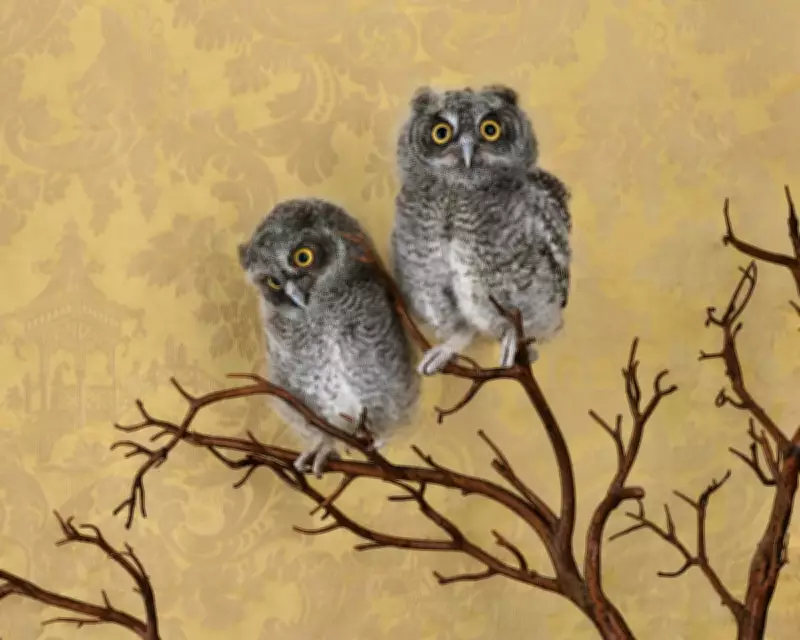
The series expanded as Rosen encountered diverse birds worldwide. 'In Dubai, I was introduced to the fascinating world of falconry. In South Africa, I was captivated by owls at a rescue centre. In Jordan, I marvelled at fancy pigeons, pheasants, and a dazzling white peacock,' she shares. Florida offered beautifully hued but indifferent flamingos, while a Pennsylvania falconer provided an elusive goshawk and a pair of fluffy, wide-eyed owlets. During the pandemic, Rosen adapted by photographing her neighbours' chickens and ducks in makeshift outdoor sets. 'Each encounter reaffirmed the thrill of connecting with animals through my art. Whether capturing the elegance of a falcon or the playful antics of a backyard duck, I feel fortunate to share time with these creatures, allowing their natural behaviour to inspire and guide my work,' she reflects.
Collaboration and Conservation Messages
Rosen has come to view the photographic process as a collaboration, with both photographer and bird contributing their own special magic, unlocked by mutual trust. 'These images are an invitation to explore the interior lives of these exquisite creatures, and how they fit into our own pursuit of home, happiness, and diversion,' she says. The interplay of subject and setting invites reflection on themes of beauty, domestication, and the human impulse to collect and classify the natural world. Understanding the impact of modern society on these creatures drives Rosen's work. All species featured are affected by human activities, whether through inadequate care in captivity, habitat loss, light pollution, illegal trapping, chemical and plastic pollution, animal testing, or the brutality of factory farming.
'I have seen the deep connection and care that we can have for non-human creatures and how our empathy can extend to the most unusual of animals. But modern society has made it incredibly difficult to avoid doing harm to creatures that we would never wish to hurt,' Rosen notes. She hopes her photographs can contribute to conversations about preserving, protecting, and restoring our natural environment and its inhabitants. 'I believe that we can always do better, from our smallest daily decisions to our greatest aspirations of how to live mindfully in this entangled world.' Nature remains the original and enduring muse, urging us to reconsider our role in the delicate balance of life.