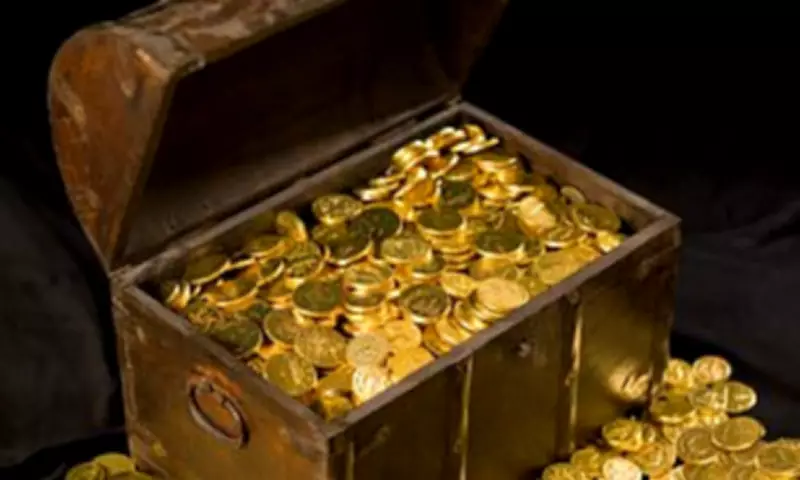
The Enduring Allure of Buried Treasure Through the Ages
The ancient English epic poem Beowulf concludes with a poignant burial of treasure, described as 'a crumbling legacy from a lost world'. This melancholy moment sees survivors drifting into exile, representing what the text calls 'the worst of Anglo-Saxon fates'. Beneath the glittering surface of gold and jewels, there always lies an undercurrent of tragedy and menace that has fascinated generations.
Landscapes of Memory and Legend
Jeremy Harte's evocative work, Treasures On Earth, paints a vivid portrait of the landscapes inhabited by our ancestors while demonstrating how remarkably far back folk memories can stretch. One particularly enduring tale from Beauworth in Hampshire claims that King Stephen's crown jewels remain hidden down a well behind the Fox and Hounds pub—a legend that must trace its origins back nearly a thousand years.
The fundamental appeal of buried treasure is immediately understandable. Someone else performed all the arduous labor generations ago—mining the gold, accumulating wealth, and secreting it away. Today, with just a few well-placed thrusts of a spade, one could theoretically become instantly wealthy. This fantasy parallels contemporary dreams among metal detectorists or those who imagine winning the lottery.

Eccentric Treasure Seekers of History
Historical dreamers include wonderfully eccentric characters like Mary Parish, described as 'fat, fond of brandy, and given to sudden outbursts of temper', and her colleague Godwin Wharton, 'the impoverished younger son of a Whig grandee'. They first met in 1683 when Mary was 52, and Wharton—mentally unstable and serving as a Member of Parliament—fell completely under her spell.
Soon he was purchasing pure white candles, herbs, and flowers for her fairy incantations. Later, they ventured onto Hounslow Heath, which Mary believed served as a gateway to the upper world for subterranean fairies. They discovered a mound surrounded by four elm trees where she claimed a vast treasure had been buried since King John's reign, though they never actually found it. Remarkably, as Harte notes, 'they never doubted, never gave up, and hardly ever quarrelled'. He adds, 'Only the cruellest of fairies would have ended their happiness by producing an actual cache of coins.'
Moralistic Tales and Supernatural Consequences
Many stories and anecdotes in this realm seem simultaneously borderline bonkers, fabulously imaginative, and grimly moralistic. Consider 'the man who dared face the black hen of Chiddingly, and ended up a cripple in a cradle' or those who disturbed ancient barrows or standing stones in search of buried treasure, only to end up squashed flat or pursued to madness by a monstrous black dog or raven.
The author observes that there is often 'an unseen link between buried treasure and hidden violence'. These tales bear an odd resemblance to modern folkloric stories where someone discovers a huge stash of drug money—such as in Danny Boyle's film Shallow Grave—or even the drugs themselves. The central question remains: what happens next? Staggering riches, suddenly and ill-deservedly acquired, rarely lead to happy endings.
The Mysterious Disappearance at Wallingford
Harte concludes his beguiling survey with one of the simplest and neatest tales. In Wallingford, Oxfordshire (originally Berkshire before boundary changes), a gardener became convinced that a secret cache of gold lay hidden in the grounds of the old medieval castle. He was forever digging holes nearby, meticulously stacking turves in neat piles to replace later.
One day, he went missing. All that was found was a small, freshly dug hole with his gloves and spade laid neatly beside it. He was never seen again. Did he finally discover his treasure and retire to a palatial villa in the Caribbean? Or did the story have an altogether darker ending? As with many treasure legends, we will never know for certain.