Cambridge Handel Opera Company Delivers Witty Imeneo Staging
The Cambridge Handel Opera Company has mounted a production of Handel's mid-career novelty operetta Imeneo that captures all its knowing, self-referential charm. Staged at the Festival theatre within the Cambridge Buddhist Centre, this delightful presentation showcases Handel in a mischievous, end-of-term mood, offering an exhilarating and often meta-theatrical experience.
Handel's Playful Operatic Experiment
Composed in the 1740s as the vogue for Italian opera waned in favour of English oratorios, Imeneo finds Handel in a playful, experimental frame of mind. The composer himself did not dignify it with the weight of a full opera, labelling it an operetta instead. This piece sets up conventional operatic tropes only to cleverly knock them down. Expect da capo arias only occasionally, a mad scene that is not really one, and certainly no traditional happy ending.
While any opera featuring two pairs of young lovers invites comparison to Mozart's Cosi fan tutte, a better reference point for Imeneo is Shakespeare's A Midsummer Night's Dream. There are unexpected Mozartian depths to this intimate comedy exploring duty and desire, but none of Cosi's characteristic cynicism or cruelty. The games played here are strictly at opera's own expense, creating a light-hearted and charming theatrical confection.

A Staging of Wit and Invention
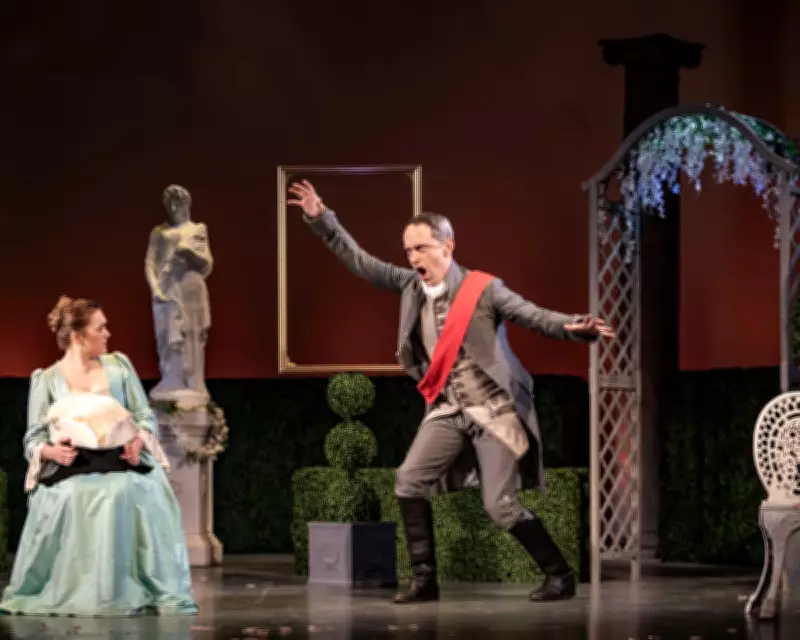
Director Guido Martin-Brandis, in collaboration with the Cambridge Handel Opera Company, has crafted a staging that fully embraces the work's self-referential nature. The set design offers a row of Ionic columns flanking the stage as the sole nod to the drama's Athenian setting. Otherwise, the production presents an 18th-century fantasy world of topiary and trellis, with an arbour dripping with wisteria that playfully winks to modern audiences familiar with shows like Bridgerton.
This is a world where necklines are fashionably low and dramatic stakes are deliberately even lower. The plot, involving pirate-kidnappers who seize the city's marriageable young virgins, is dispatched with remarkable efficiency. Pirate leader Imeneo, portrayed by Timothy Nelson, resolves this conflict within a few phrases of recitative in the opening five minutes.
The remaining dramatic tension revolves around whether Rosmene, played by Ellie Neate, will choose gratitude and marry her rescuer Imeneo, or remain faithful to her original lover Tirinto, portrayed by Bethany Horak-Hallett. Handel spins this dilemma out deliciously, aided by a sub-plot involving Rosmene's younger sister Clomiri (Lisa Dafydd) and their father Argenio (Trevor Eliot Bowes). The composer lulls audiences into familiar romantic comedy rhythms before cleverly confounding expectations with an ending that separates and unites all the "wrong" people.
Meta-Theatrical Engagement and Musical Performance
Martin-Brandis's production actively engages with its meta-theatrical possibilities. Music director Julian Perkins conducts from the harpsichord, positioned on stage alongside his period instrument band. The director invites these musicians into the dramatic action, with characters making asides to them and even receiving commentary in turn from instruments like the double bass.
The production frequently breaks the fourth wall, aided by Trui Malten's articulate and expressive lighting design. With only a chair, a couple of gilded picture frames, and a pair of hats as props, the cast demonstrates endless invention, wit, and care in their usage. The performers beautifully balance Handel's precise cocktail of theatrical artifice and emotional sincerity throughout.
Perkins demonstrates a deep understanding of this music, breathing life into Handel's score. On opening night, the orchestra showed occasional tentativeness, with violin entries sometimes sagging, but these minor issues did not detract from the overall excellence. The cast proved uniformly superb, with Neate's Rosmene growing in vocal power through the immense final scene. Dafydd captivated as the determined Clomiri with sweetly sung passages, while Horak-Hallett's glossy mezzo was evenly matched with rival Nelson's handsome baritone.

Trevor Eliot Bowes nearly stole the show, turning the patriarch Argenio into an irrepressible comic turn. This production demonstrates conclusively that Handel's operatic afterthought scrubs up remarkably well as a main event. The Cambridge Handel Opera Company's production of Imeneo continues its run until 28 March, offering audiences a rare opportunity to experience this witty and charming Handel operetta in a staging that fully understands and celebrates its unique theatrical qualities.