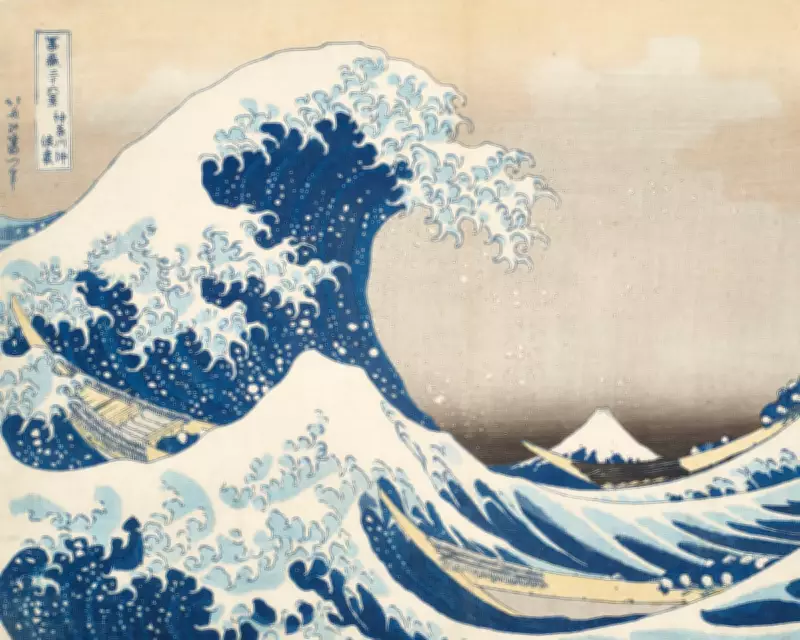
Beneath the Great Wave: Hokusai and Hiroshige Exhibition Review
The exhibition Beneath the Great Wave: Hokusai and Hiroshige at the Whitworth in Manchester offers a profound exploration of how two Japanese masters reinvented art through woodblock prints. These works, known as ukiyo-e or "pictures of the floating world," were originally mass-produced media, affordable like a bowl of noodles, yet they evolved into breathtaking masterpieces that changed art history.
From Popular Culture to Artistic Genius
Initially, these prints captured the glamour of Tokyo's high-life, featuring famous kabuki actors and beautiful courtesans from the Yoshiwara district. They provided vicarious enjoyment for ordinary people, making professional art accessible for the first time. The exhibition's first half highlights this popular culture, with works like Kunichika's gender-bending actor portraits and Eizan's voyeuristic depictions of fashionable beauties, reminiscent of modern fashion magazines.
However, beneath the surface, these images often revealed darker themes. Hiroshige's print of a man hiding his face at dawn from the red-light district underscores the transgressive nature of this world. Shunchô's portrait of young girls apprenticing into the sex industry hints at the despair underlying the hedonism, adding depth to the seemingly charming snapshots.

The Evolution into Landscape Masterpieces
The exhibition's second half focuses on the mid-19th-century landscapes by Hiroshige and Hokusai, marking a shift from urban pleasure districts to cosmic themes. This expansion was influenced by exposure to European art via Dutch sailors, which introduced western perspective. Hokusai's Thirty-Six Views of Mount Fuji series, later expanded to 46 prints, combines dramatic depth with striking graphics, while Hiroshige's Fifty-three Stations of the Tōkaidō Road blends Asian and western styles, creating vistas that inspired the impressionists.
The centerpiece is Hokusai's iconic Great Wave off Kanagawa, a print so familiar it risks being seen as cosy, but in reality, it presents an apocalyptic vision. The wave threatens fishing boats and even Mount Fuji, symbolizing Japan's anxiety during the end of the Edo period and impending change. Displayed alongside Hiroshige's harmonious homage, printed about 25 years later, the contrast highlights their differing temperaments and the transformative power of their genius.
Artistic Legacy and Human Consciousness
Hokusai and Hiroshige's collaboration with skilled artisans and their cultural context were crucial, but their ability to access profound ideas—like mono no aware, the melancholy awareness of life's transience—elevated woodblock prints from disposable media to instruments expanding human consciousness. Their works reconcile the fleeting nature of the world with eternal truths, as seen in details like spume transforming into snow or foam into birds.
This exhibition, running until 15 November, not only showcases their technical brilliance but also reminds us of art's power to convey deep emotions and societal shifts, making it a must-see for art enthusiasts and historians alike.