Living Review: A Family Saga Racing Through Six Decades in Sheffield
In a bold theatrical endeavour, Leo Butler's new drama Living at the Playhouse in Sheffield delivers a high-velocity journey through the last six decades of modern history. This family saga, set in a council house in Burngreave, Sheffield—historically home to miners, steelworkers, and immigrants—captures the shifting sands of time from 1969 to the present day.
A Rapid Replay of Modern Milestones
The play races exhaustively through key historical events, much like a pantomime's recap for latecomers, but on a grand scale. It ticks off moments such as:
- 1969 and Neil Armstrong's moon landing
- 1971 and decimalisation
- 1974 and the Wombles
- 1979 and Margaret Thatcher's rise
- 1984 and the Orgreave clashes
- 2020 and the Covid pandemic
- Recent nods to the Barbie movie and Ukraine conflict
Alongside these, it references Vietnam, the winter of discontent, the Falklands war, stock market crashes, Northern Rock, and 9/11, with local touches like Cabaret Voltaire, Nick Clegg, and Arctic Monkeys. The arrival of VHS recorders, CDs, and the iPod Mini adds to the nostalgic tapestry.

Characters Shaped by Circumstance
Living excels when depicting characters molded by historical forces. Brian, played by Kenny Doughty, transforms from a freedom-loving dropout and striking agitator into a Thatcherite materialist. His daughter Rebecca, portrayed by Abby Vicky-Russell, evolves from an acid-house partygoer to a warzone activist. These arcs highlight the play's strength in showing how external events shape personal identities.
However, the drama weakens when focusing on babies, illness, and ageing, veering towards soap-opera sentimentality. At three hours long, it matches the ambition of Our Friends in the North in scope, if not always in political depth.
Production and Performance Highlights
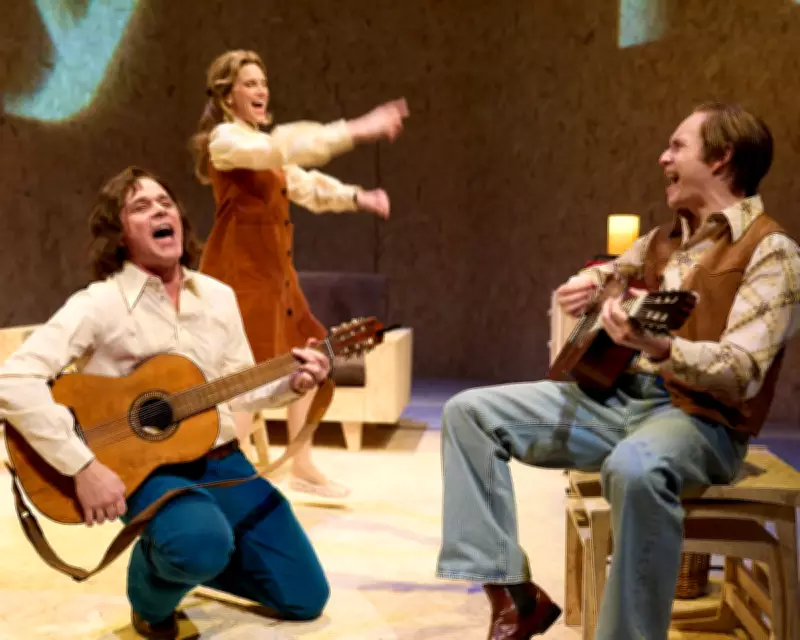
Vigorously directed by Abigail Graham on Sarah Beaton's set of amorphous chipboard, the production keeps pace with changing fashions through Beaton's costumes. The acting is tremendous, with standout performances from:
- Kenny Doughty as Brian
- Abby Vicky-Russell as Rebecca
- Liz White as mother Kathy
- Samuel Creasey as son Mike
They chart the transitions from optimistic youth to damaged maturity with subtlety, sensitivity, and tireless energy. Melina Sinadinou and Samuel Creasey also feature in scenes that reflect evolving styles.
Political Purpose and Narrative Shape
Butler offers sharp observations on topics from feminism to "incels," but when the political focus slips, especially in an endless closing sequence, the play can feel shapeless. Ultimately, Living works better as a mirror of collective experience than as a deep analysis, resonating with audiences through its reflection of shared history.
At the Playhouse in Sheffield until 4 April, this production invites viewers to explore the intersections of personal and political life across generations.