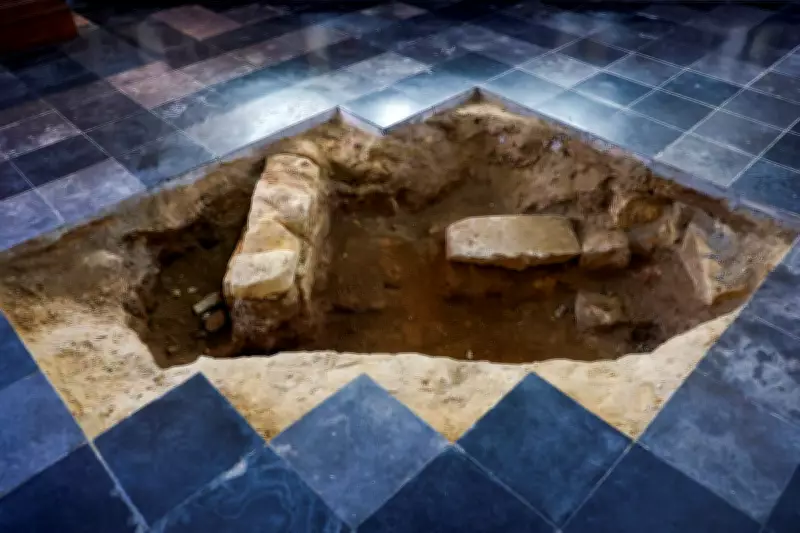
In a remarkable archaeological discovery, human remains unearthed beneath St Peter and Paul Church in Maastricht, the Netherlands, are believed to potentially belong to Charles de Batz de Castelmore d'Artagnan, the historical figure who inspired Alexandre Dumas's famous novel 'The Three Musketeers'. The find occurred after a section of the church floor unexpectedly subsided, revealing a hidden grave that had lain undisturbed for centuries.
Historical Context and Discovery Details
D'Artagnan served as a spy and musketeer for King Louis XIV of France and met his end during the Siege of Maastricht in 1673, succumbing to a musket ball wound to the throat. Historical records had long suggested that the church might be his final resting place, making this discovery a significant breakthrough for researchers and historians alike.
Scientific Analysis and Supporting Evidence
To confirm the identity of the skeleton, scientists are currently conducting advanced DNA tests on a jawbone recovered from the grave. These tests involve comparing the genetic material with known descendants of d'Artagnan, aiming to establish a definitive link. Additionally, the burial site yielded further compelling clues that align with historical accounts of his death.

Among the artifacts found were a French coin dating back to 1660 and a lead bullet located at chest level within the grave. These items provide tangible evidence that supports the theory that these remains could indeed be those of the legendary musketeer. The coin's origin and the bullet's placement are consistent with the era and circumstances of d'Artagnan's demise, adding weight to the ongoing investigation.
Implications and Future Research
If confirmed, this discovery would not only solve a long-standing historical mystery but also offer new insights into the life and death of a figure immortalized in literature. The findings could reshape our understanding of 17th-century European history and the real events that inspired one of the world's most beloved adventure stories. Researchers plan to continue their analysis, including further archaeological digs and historical reviews, to piece together the full story behind this extraordinary find.