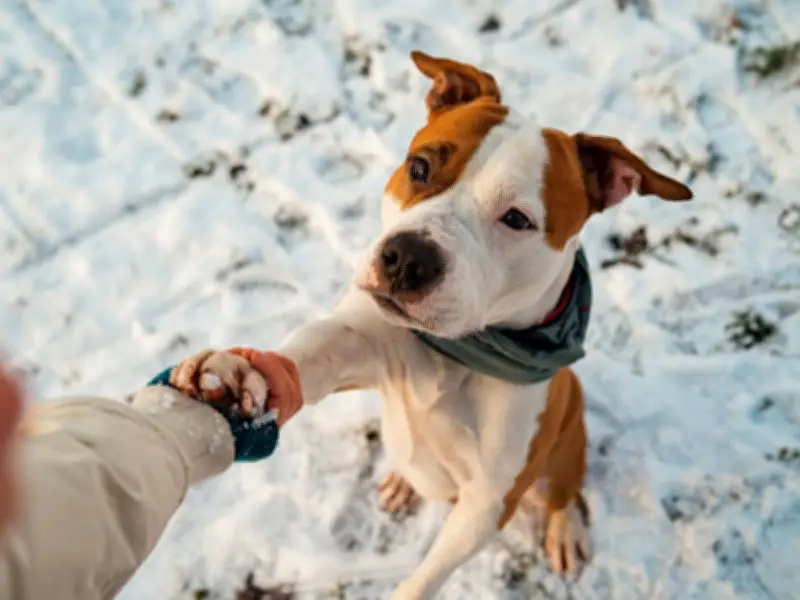
Dogs often place their paws on you while you pet them, and contrary to what some might think, this action is not a request to stop. According to a TikTok creator who shares videos of his dog Smuckers the Pitbull, this behavior is actually a sign of affection. In a video, Smuckers is seen lifting a paw to rest on his owner's arm while being petted under the chin. The owner explains: "Did you know that if your dog paws you while petting them, that's their way of petting you back? Laying their paw on you is a sign that they love you and trust you."
Instinctive Behavior from Puppyhood
Pawing begins as an instinctive behavior in puppies, who paw at their mothers for milk. As dogs grow, they learn that pawing is an effective communication tool because it often results in pet parents tending to them, according to PetMD. Dogs quickly figure out that if they want something—such as food, attention, or access to a location—pawing is a proven way to get it.
Interpreting the Pawing
While pawing often signals a request for attention, it is not always the case. It is important to consider the dog's overall body language to understand their emotions and intentions. For instance, a dog might paw to indicate they need to go outside to relieve themselves, often combined with standing by the front door. Many pet parents also notice their dog becomes restless about 30 minutes before mealtime, using their paw to signal hunger.

Dogs may also use pawing as part of a broader set of body language indicators to communicate stress or anxiety. If a dog shows stressful pawing, it is advisable to remove them from the situation. However, when a dog rests a paw on your arm while you are petting them, it is typically an expression of love and trust.
Understanding Canine Communication
Even though dogs and humans do not share a language, they learn to communicate through body language and repeated commands. Behaviors like tail wagging, ear movements, and pawing are normal dog instincts that can also express underlying needs, emotions, or health issues. Recognizing these signals helps strengthen the bond between dogs and their owners.