The Untold Story of Nazi 'Mischlinge' Children: A Family's Survival Against All Odds
In 1935, mother-of-two Erna Bernstein was preparing dumplings in her central Berlin tenement flat when two Gestapo officers knocked on her door. They delivered an ultimatum: divorce her Jewish husband Sigi, or face dire consequences for their children. "If you do, the life of your children will be considerably better," they threatened. Erna refused without hesitation.
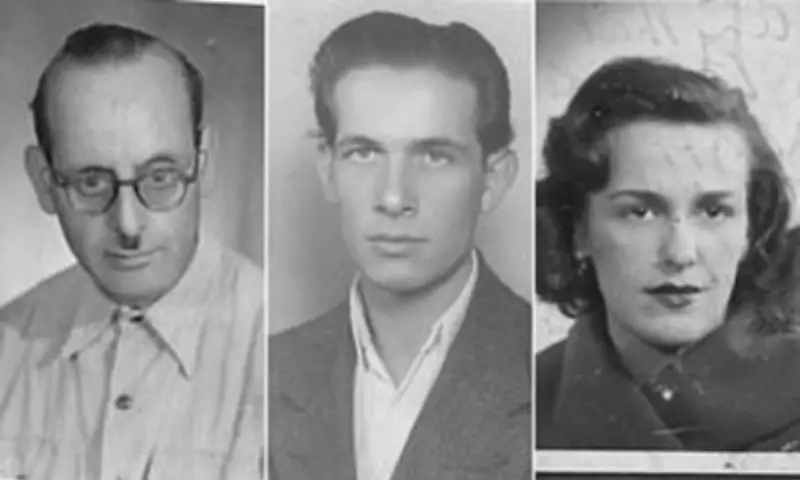
Sigi Bernstein was Jewish by birth, though his parents had disowned him for marrying Erna, who was born Christian. Neither attended synagogue nor church—they were simply a working-class Berlin couple raising their children, Heini and Edie. As Nazi control tightened, the family was torn apart, with Sigi eventually sent to Auschwitz.
The Cruelty of Nazi Racial Laws
The Nazis, in their twisted anti-Semitic ideology, branded children of mixed heritage as 'Mischlinge'—a derogatory term implying "mongrel" for dogs. Heini and Edie, who had never set foot in a synagogue, were suddenly considered subhuman by the regime. Month by month, racial laws intensified, making life for Jews and Mischlinge increasingly unbearable.

This deeply unsettling account of Heini and Edie's decade-long ordeal is now revealed by Edie's daughter, Sharon Ring. Towards the end of Edie's life in a Norfolk bungalow, she pointed to a black box and told Sharon, "That's your Uncle Heini's memoir. I've never read it, because I know it will be painful. I know it, because I was there too."
Edie's Harrowing Experiences
For decades, Edie and Heini avoided discussing their wartime trauma, choosing to look forward rather than back. But finally, Edie shared her story with Sharon:
- Forced to leave school at age 12 because teachers declared, "we don't want her to mix with the Aryan race"
- Contracting rickets from malnutrition and being confined indoors due to fear of street violence
- At 16, being subjected to slave labour—picking through Berlin bombsites littered with human remains for 12 hours daily
- Narrowly escaping rape by a Russian soldier in 1945 who assaulted the woman beside her
Erna remained steadfast, refusing to abandon her husband despite Gestapo threats against their family.
Heini's Brutal Ordeal
Heini's experiences were equally appalling. A handsome, resourceful teenager working as a plumber, he initially defied racial laws by visiting his non-Jewish girlfriend Margot during curfew hours. In 1943, the Gestapo arrested him, interrogated him, and forced him into an "educational camp," where he worked 12-hour shifts building railways in -10°C temperatures.
One humane guard, Sergeant Franke, allowed Heini to send a postcard home and receive visits from his mother, who brought warm clothing. Heini even found ration coupons on the ground, which Franke permitted him to exchange for cigarettes and food.
When a Russian prisoner escaped, Heini was sent to chase him—and decided to flee himself. However, without ration cards, survival at home was impossible, forcing his return to camp. His punishment was severe: demotion to dogsbody for sadistic SS officers who whistled commands, including counting 25 lashes administered to another prisoner tied to a flagpole.
The Descent into Buchenwald
Heini was then transported in a cattle truck to Buchenwald, where a prisoner hanging from gallows greeted new arrivals. Despite having no experience, he secured work as an electrician with help from a Czech prisoner named Frantisek. Prisoners slept on bare-wire beds that dug into their emaciated bodies.
Heini himself received 25 lashes when pliers went missing—he had lent them to Russian escapees but refused to confess. Sleeping on wire beds with a bleeding back became excruciating.
Liberation and Reunion
The "thousand-year Reich" collapsed after just 12 years. On April 1, 1945, during a forced march from Buchenwald where prisoners hauled SS belongings, the guards suddenly vanished. The prisoners feasted on sausages and tobacco from abandoned trailers.

Miraculously, the entire Bernstein family survived. Sigi, a forced labourer in Auschwitz, was so skeletal upon liberation that he required months to recover before embarking on the 350-mile journey back to Berlin. Their flat had been destroyed in an Allied air raid, and Erna now lived in a former Nazi-owned apartment.
New Beginnings and Ongoing Struggles
Edie's story found a fairytale ending. In summer 1945, she traveled to the countryside and met Jimmy Ring, a delightful English soldier. Five days later, he declared, "I'm going to marry you." They moved to London, married, had daughter Sharon, and eventually bought a three-bedroom semi in Enfield using Edie's German war compensation.
Heini, Sigi, and Erna attempted to relocate to Palestine but, homesick for Germany, returned separately. A new horror awaited: the sudden erection of the Berlin Wall on August 13, 1961, trapping Heini on the east side while his parents remained in the west.
A Testament to Resilience
This memoir provides an essential historical perspective through the experiences of two children with Jewish grandparents. As Edie told Sharon, "That man [Hitler] didn't dominate my life. I made it a happy one, and gave you a happy life, too, my daughter. That was my triumph."
The book Mischlinge, detailing this remarkable survival story, is now available, preserving a crucial chapter of history that must never be forgotten.