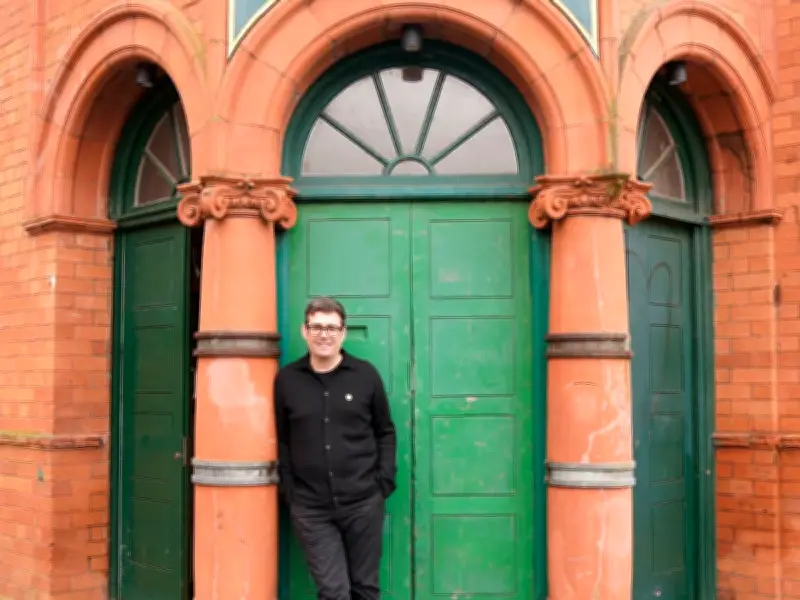
Twenty-four years after Lottery chiefs recommended demolishing Salford Lads Club, the iconic building has been upgraded to Grade II* listed status, securing its future as a cultural landmark. The decision by the Department for Culture, Media and Sport, on advice from Historic England, recognizes the club's exceptional architectural and historic significance.
From Bulldozer to Heritage Gem
In 2002, the club applied for £400,000 for urgent repairs to toilets, central heating, and the roof. National Lottery bosses rejected the bid, suggesting it would be cheaper to bulldoze the structure and build anew. The rejection letter is now displayed in The Smiths Room at the red-brick Edwardian building, which opened in 1904.
Fast forward to 2024: the club faced closure but was saved by a Manchester Evening News fundraising campaign. In just six weeks, £273,000 was raised, including £100,000 from Salford Council, £50,000 from former Smiths frontman Morrissey, and £30,000 from gas company Cadent. In August 2025, Historic England awarded a grant of £437,961 through its Heritage at Risk Capital Fund, the largest single grant the 122-year-old institution has ever received.

Global Fame Through The Smiths
The club attracts fans worldwide after The Smiths were photographed on its steps by Stephen Wright for the 1987 single "Stop Me If You've Heard This One Before." The images also appeared on the inner sleeve of "The Queen Is Dead" and a Best of album. The Smiths Room and an archive room draw thousands of visitors annually.
Exceptional Architectural and Historic Significance
Salford Lads and Girls Club, built in 1903 to designs by architect Henry Lord, is considered the finest surviving purpose-built lads' club in England. Funded by William Grimble Groves and James Grimble Groves of the Groves and Whitnall Brewery, it remains in active use and is believed to be the oldest lads' club building still occupied by its original organization. Key features include the Wall of Names, a laser-cut steel artwork bearing the names of 22,500 members from 1903 to 2015.
Crossley House in Openshaw, Manchester, formerly the Crossley Lads' Club, has also been added to the National Heritage List at Grade II. Built in 1912 as a memorial to Sir William Crossley, it combines Edwardian Baroque architecture with an early reinforced-concrete frame.
Community and Cultural Impact
Leslie Holmes, Culture and Heritage Projects Manager at the club, said: "This is brilliant news. It’s what I have been working towards since I first came into the building in 2002. The creation of the Smiths room and the archive room has enabled us to showcase the unique cultural importance of the building, and to attract thousands of visitors every year; I am immensely proud of what we have achieved."
Laura Slingsby, Chief Executive of the Club, said: "We are incredibly proud that Salford Lads and Girls Club has been recognised as a building of more than special interest. This is a tribute not only to the building itself, but to the generations of members, volunteers and staff who have kept it at the heart of the community for more than 120 years."
Emma Squire, Co Chief Executive Officer for Historic England, said: "These two remarkable buildings tell the story of a movement that transformed opportunities for generations of young people. Salford Lads and Girls Club is the finest surviving example of its type in the country and fully merits its Grade II* status."
Councillor Hanna Robinson-Smith, Lead Member for Culture, Heritage, Sports, and Leisure at Salford City Council, said: "I’m so pleased to see Salford Lads Club has now been designated as a Grade II* listed building. The building holds such a special place in many local resident’s hearts across Salford."
Preserving a Legacy
David Britch, owner of Architects Britch, who has worked on the club for 25 years, said: "It has been my privilege to have worked on The Salford Lads Club. A building of invaluable cultural, social and architectural significance, both locally and far beyond."

Historic England's research found that Salford Lads and Girls Club and Crossley House are thought to be the only surviving purpose-built lads' club buildings in Greater Manchester. By 1907 there were 23 lads' clubs across Manchester and Salford; today, very few survive nationally. The club continues to provide opportunities for young people, and this recognition helps secure its future for generations to come.