Len Deighton: The Spy Writer Who Redefined a Genre
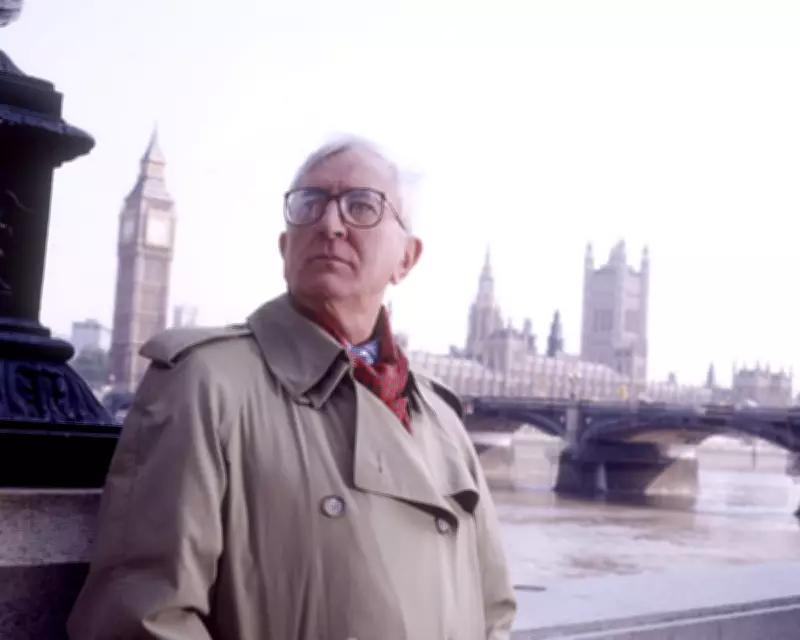
Len Deighton, the acclaimed author whose 1962 novel The Ipcress File had a seismic impact on spy fiction, has died at the age of 97. Deighton, who described himself as "the most illiterate writer ever" in a 1969 interview, leaves behind a prolific legacy that includes bestselling novels, cookbooks, and significant contributions to military history.
Early Life and Literary Breakthrough
Born in Marylebone, London, in 1929, Deighton was the son of a cook and chauffeur. His upbringing in Gloucester Place Mews included an early brush with espionage when he witnessed the arrest of a pro-Nazi neighbour at age 11. After serving in the RAF and studying at the Royal College of Art, he worked as a graphic artist before writing The Ipcress File "for a lark" while living in France in 1960.
The novel, rejected by two publishers, was serialised in the London Evening Standard and published in November 1962. Its initial print run of 4,000 copies sold out on the day of publication, marking an instant success. Deighton's anonymous, grammar school-educated hero, later named Harry Palmer in films, offered a stark contrast to the suave spies of Ian Fleming and John Buchan.

Innovations and Cultural Impact
The Ipcress File introduced revolutionary elements, including footnotes, appendices, and an all-white dust jacket designed by Raymond Hawkey. Deighton even paid part of the design fee himself when publishers hesitated. The novel's timing coincided with heightened Cold War tensions, including the Berlin Wall construction and the Cuban missile crisis, cementing its relevance.
Deighton's creativity extended beyond spy fiction. He developed "Cookstrips," step-by-step graphic recipes for the Observer, encouraging a new generation of home cooks. He also edited Len Deighton's London Dossier in 1967, featuring a cut-out keyhole cover with Twiggy, capturing the swinging 60s zeitgeist.
Film and Television Ventures
The film adaptation of The Ipcress File in 1965 starred Michael Caine, though Deighton's hand was used in a cooking scene when Caine struggled to crack eggs one-handed. Deighton ventured into film production, buying rights to Oh What a Lovely War! and assembling an all-star cast for Richard Attenborough's directorial debut. However, disillusionment with production credits led him to remove his name from the film.
Later Works and Retirement
In the 1970s, Deighton expanded into military history with books like Fighter and Blitzkrieg, while novels such as SS-GB explored alternative histories. The 1980s saw the Bernard Samson trilogies, adapted for television, though not to Deighton's satisfaction. After 30 years of writing, he retired quietly in the 1990s, though he contributed forewords and saw adaptations of his work, including a 2022 ITV version of The Ipcress File co-produced by his son Alexander.
Deighton, who avoided public praise and declined awards like the Diamond Dagger, believed in hard work over inspiration. He is survived by his wife, Ysabele, and two sons.