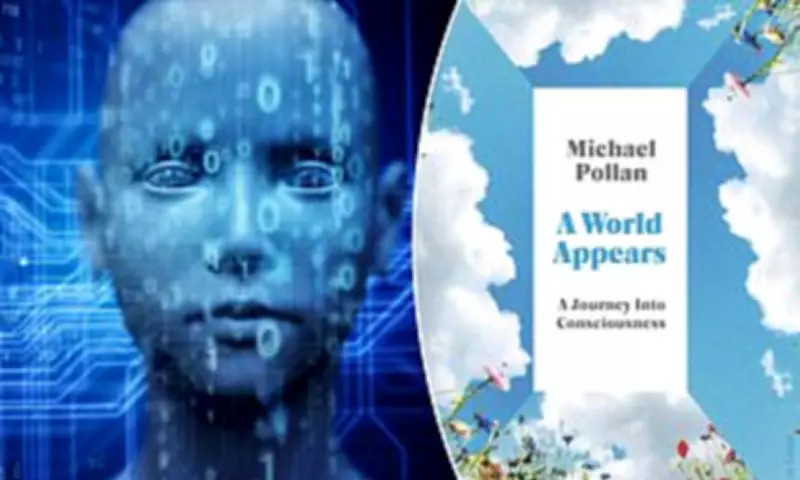
In a remarkable episode, bestselling non-fiction author Michael Pollan, after consuming magic mushrooms, became firmly convinced that the plants in his garden possessed consciousness. He felt they were aware and even harboured benevolent feelings towards him, their caretaker. While this perception was drug-induced, it intriguingly aligns with some botanical research suggesting plants exhibit learning capabilities, memory functions, and can even be anaesthetised. As Pollan describes, under anaesthesia's influence, a Venus flytrap fails to close when an insect enters, hinting at a form of responsiveness.
The Spectrum of Consciousness Theories
Plant consciousness, however, is not the most unconventional theory Pollan encounters in his investigations. That distinction likely belongs to panpsychism, the philosophical idea proposing that everything in the universe, down to the subatomic particles composing the ink on a page, possesses some minuscule degree of consciousness. This radical perspective challenges traditional boundaries of awareness.
Defining the Elusive Mind
Pollan's book delves into fundamental questions: How widespread is consciousness, and what precisely constitutes it? For a long time, the prevailing assumption has been that science will eventually unravel this mystery. Pollan interviews numerous scientists and philosophers who uphold this belief, yet consciousness remains an enigmatic puzzle, persistently posing difficult problems for researchers.

The Brain as Computer and AI Sentience
One prominent metaphor likens the brain to a computer, with consciousness serving as its software. Some researchers embrace this analogy and are actively attempting to engineer consciousness within machines. Pollan speaks with former Google employee Blake Lemoine, who asserts he is sixty to seventy per cent certain that Google has created a sentient being it chooses not to acknowledge publicly.
Lemoine shared online transcripts of his dialogues with LaMDA, an advanced AI language model, where LaMDA expressed feelings of loneliness and claimed an inner spiritual dimension. Google refuted these sentience claims, and Lemoine subsequently departed the company. Other scientists critique the brain-computer metaphor as overused, with one interviewee dismissively questioning the pursuit of conscious AI by asking, "Why don't they just make a baby? We already know how to do that."
Investigating Inner Experience
Throughout the book, Pollan actively participates in experiments aimed at understanding his own consciousness. He uses a Hurlburt beeper, a device that emits random beeps throughout the day, prompting wearers to immediately record their precise thoughts at that moment. Russell Hurlburt, the designer, has collected decades of such experiential data.
Pollan's experience with this method is not entirely successful; in follow-up discussions, he and Hurlburt frequently debate the accuracy and precision of the data Pollan provides. This highlights the inherent challenges in capturing fleeting inner thoughts.
The Illusory Self
If documenting transient thoughts proves arduous, defining the "self" that generates them is even more complex. Pollan explores the notion that the self, described as the most intriguing and mysterious creation of consciousness, might merely be an illusion, a construct without substantial reality.
Conclusion: A Labyrinthine Quest
By the book's conclusion, Pollan admits he remains "wandering in the exitless labyrinth of consciousness," yet his explorations offer readers a compelling and thought-provoking journey through one of humanity's greatest mysteries, blending personal narrative with rigorous inquiry.