Iranian Author Shahrnush Parsipur Declares Women Will Bring Down the Islamic Republic
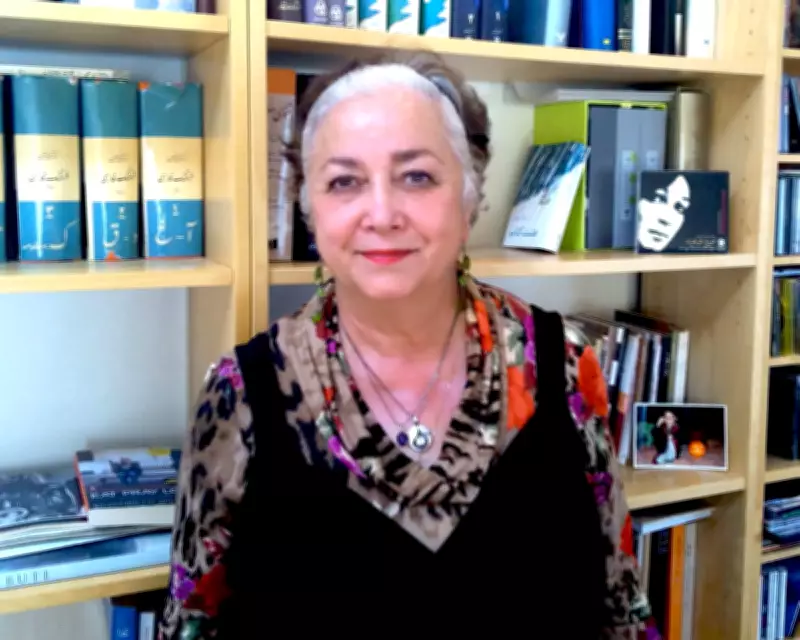
As her groundbreaking 1989 novella Women Without Men receives its first UK publication and longlisting for the 2026 International Booker prize, Iranian author Shahrnush Parsipur speaks from exile about a lifetime of literary resistance. At 80 years old, Parsipur remains one of Iran's most celebrated living writers and a pioneering feminist voice, whose work continues to resonate amid ongoing protests and state crackdowns in her homeland.
A Life of Resistance and Imprisonment
Parsipur's literary journey has been marked by both acclaim and persecution. During the 1980s, her stories became the talk of Iran's literary circles, leading to nearly five years of imprisonment without formal charges. Three years after her release, she published both Touba and the Meaning of Night and Women Without Men, which quickly became underground sensations passed secretly among Iranian women.
The novella's depiction of women's bodies and sexuality proved particularly dangerous. When a copy reached the wife of an Islamic Republic official, Parsipur was arrested and imprisoned again. "The Islamic Republic wanted to scare and punish me," she recalls. "Mrs K, the wife of the Islamic Republic official, said that the book was anti-Islamic. The book is not anti-Islamic. Her problem was that there was a part of the book about virginity."

The Revolutionary Power of Women Without Men
Set in Tehran during the 1953 coup, Women Without Men blends magical realism with traditional Iranian allegory to condemn the policing of women's bodies through five interconnected stories. The narrative follows Munis, who escapes her brother's control by jumping from a rooftop and continues narrating after death; pious Faezeh, whose rape shatters her faith; Zarrin, a sex worker who begins seeing her clients as faceless and flees; Mahdokht, who fears sex so intensely she transforms into a tree; and Farrokhlaqa, who leaves her middle-class husband to buy a garden outside the city.
These women converge at Farrokhlaqa's garden, creating a temporary refuge from marriage, male control, and sexual shame. Though still banned in Iran, the novella has been translated into numerous languages and adapted into a 2009 film. "It found its place in the world," Parsipur notes from her California home, where she has lived in exile since the mid-1990s.
The Central Taboo of Virginity
Throughout our conversation, Parsipur returns repeatedly to the concept of bekarat—virginity—which she identifies as the core issue behind her persecution. "It has a deep meaning for Iranians," she explains. "It shows that this woman hasn't been with others. This is so strong in Iran. My grandmother would tell me a non-virgin woman will go to hell."
Parsipur shares her own childhood confusion about female anatomy, believing she had lost her virginity because no one explained the difference between labia and vagina. "They wouldn't tell anything to girls. I suffered for so long thinking I'm not a virgin, so I decided to write this book so other girls don't suffer."
She describes how one woman told her Women Without Men saved her life: "She was suffering so much from not being a virgin. After she read it, she was so happy. She realised it's not that important; that her life will pass without her virginity; that marriage is possible without virginity."
Changing Social Dynamics in Iran
While acknowledging that pressure on women comes from "grandmothers, aunts, the wider society, and especially men," Parsipur observes significant changes in Iranian society. She points to the rise of "white marriages"—couples living together without formal registration—as evidence of evolving attitudes. "It's normal now," she says. "The Islamic Republic doesn't know. Nobody checks. It's not because divorce is hard. They want their personal independence."
Parsipur contrasts her own experience with that of her younger sister, born thirteen years later: "In Iran lots of things had changed by the time she was born. Women had more freedoms. She had it easier."

Exile and the Future of Iranian Women
Living in an Iranian community near San Francisco for the past two decades, Parsipur rarely speaks English, plays bridge, and celebrates Persian traditions. She has stopped writing in recent years, explaining: "The thoughts and ideas I had are fading. I'm not in Iran, so I can't write something new. I've written all my stories already. I can't write a California story."
Yet her perspective on current events remains sharp. Regarding the ongoing "Woman, Life, Freedom" protests that began more than three years ago, Parsipur states unequivocally: "The women of Iran have changed so much, so many without hijab. They don't care what the Islamic Republic thinks." After a significant pause, she adds with conviction: "The women of Iran will cause the fall of the Islamic Republic."
Reflecting on her literary legacy, Parsipur expresses satisfaction with how her work has been received: "I was up against society and society received me. People loved the books." Despite the personal costs—imprisonment, exile, danger to her life and freedom—she believes her writing has served its purpose in challenging taboos and offering liberation to generations of Iranian women.