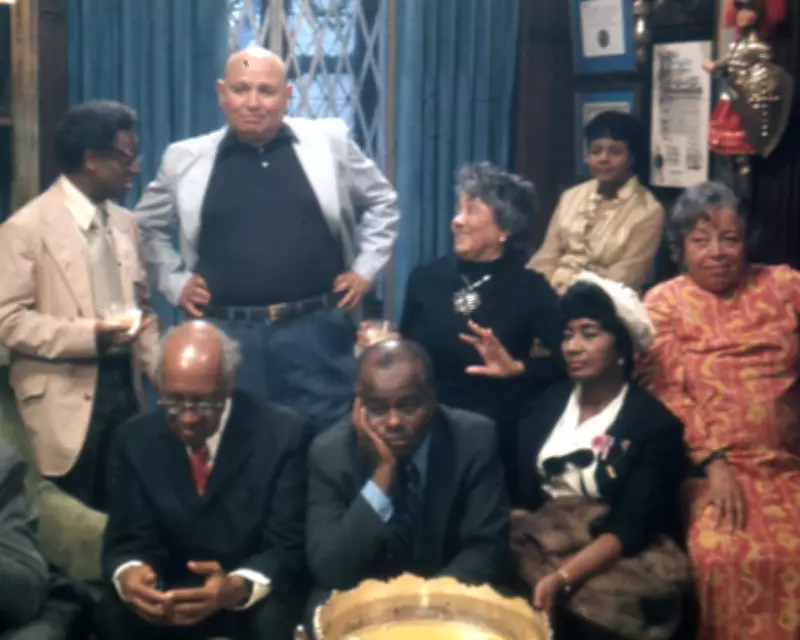
Once Upon a Time in Harlem, a documentary completed by the family of pioneering filmmaker William Greaves after his death, has finally received its international premiere at the Cannes Directors' Fortnight, more than 50 years after the footage was shot.
The Film's Origins
In 1969, William Greaves expressed his anger over the racially degrading stereotypes perpetuated by white film producers. He stated that unless Black people began producing information for screen and television, the Black image would always be distorted. Three years later, he embarked on what he considered his most important project: a feature documentary gathering surviving figures of the Harlem Renaissance to reflect on the movement they had built half a century earlier.
The film centres on a cocktail party Greaves hosted at Duke Ellington's townhouse in Harlem in August 1972. He invited every surviving participant he could locate, many of whom had not seen each other for decades. Among them were painter Aaron Douglas, queer artist and writer Richard Bruce Nugent, poet Arna Bontemps, musicians Eubie Blake and Noble Sissle, photographer James Van Der Zee, and Ida Mae Cullen, widow of Countee Cullen.

Filming the Party
For four hours, Greaves filmed the guests as they laughed, reminisced and debated. The film follows the rhythm of the party itself, from tentative greetings and warm memories to animated debates over politics, language and legacy. David Greaves, who was 22 at the time and worked as a cameraman under his father, recalled being aware of the importance of those present.
Duke Ellington himself was unwell and did not attend, but his sister Ruth was there. Four cameras and two crews circulated through the apartment, capturing conversations and moments. David noted that his father mostly let the guests freestyle, making the film very fluid.
Relevant Discussions
Among the film's strengths is its looseness. At one point, guests debate whether the term 'Negro' should be discarded in favour of 'Afro-American'. Elsewhere, they discuss Marcus Garvey, Langston Hughes and the global reverberations of anti-colonial struggle. Aaron Douglas reflects on jazz, calling it a revolution in relation to other music, but not to them.
For David Greaves, these conversations feel strikingly current. He noted that discussions about whether to call oneself Black or Negro are still happening today. He also drew parallels between Haile Selassie's 1936 appeal to the League of Nations and Volodymyr Zelenskyy's seeking international support after Russia's invasion of Ukraine.
The film also reminds viewers of the recentness of America's racial violence. David pointed to footage accompanying the anti-lynching poem The Lynching, ending on a young white girl watching with 'fiendish glee'. He noted that she would have been about the same age as his father, meaning her child would be his age, and her grandchild his daughter's age. He emphasised that the US is not that far away from that time, just three generations.
Completion and Legacy
The footage was originally shot but unused for Greaves' 1974 documentary From These Roots. Though he made dozens more films, including the experimental Symbiopsychotaxiplasm, he never finished the Harlem project closest to his heart. After his death in 2014, the material passed to his widow Louise, who worked on it until her death in 2023. David and his daughter Liani then took over, restoring and digitising 60,000 feet of 16mm film.
David said that in the process, he came to understand his father more deeply. Reading notes in his books on eastern philosophy, he discovered the intellectual roots of conversations about pain, suffering and consciousness. He followed his father's principle: if something affects you viscerally, go with it.
The unfinished film screened in fragments in 2024 and 2025, drawing rapturous responses. Richard Brody of The New Yorker called it one of the greatest talking pictures he had ever seen. David hopes to release the film for Greaves' centenary in October, with retrospectives planned in New York and at the Barbican in London.