Fashion World Reels as John Galliano Announces Zara Partnership
When news emerged that John Galliano would be designing collections for Zara, even the most dedicated fashion observers were taken completely by surprise. The announcement for 2026 seemed so improbable that many initially believed it to be an elaborate April Fool's joke that had arrived months early.
Galliano stands as one of the most celebrated couturiers of his generation, a designer whose theatrical creations have defined luxury fashion for decades. Simultaneously, he remains a deeply controversial figure following his 2011 racist and antisemitic outburst that led to his cancellation from the industry's highest echelons.
The Ultimate Fashion Paradox
Zara represents the polar opposite of Galliano's traditional milieu. As a high street behemoth, the Spanish chain has built its empire on affordable, disposable fast fashion—the complete antithesis of haute couture's exclusivity and craftsmanship. This partnership creates what many are calling the ultimate fashion paradox.

While designer collaborations with high street brands are not unprecedented, Galliano's alignment with Zara feels fundamentally different from previous arrangements. The closest comparison might be H&M's 2004 partnership with Karl Lagerfeld, but even that precedent fails to capture the sheer unexpectedness of this particular union.
"This is a monumental acquisition for Zara," reveals one industry insider. "Everyone acknowledges Zara's substantial financial resources, but the exact figures on that contract remain shrouded in mystery."
Motivations Behind the Partnership
At sixty-five years old, Galliano may not be at the absolute peak of his career, but sources close to the designer insist this move isn't purely financially motivated. Instead, they claim his primary interest lies in reaching a broader customer base—individuals who could never afford his previous luxury creations.
The official announcement from Zara describes a two-year creative partnership commencing in September 2026. Galliano will "reauthor the brand's archives through a series of seasonal collections" by working directly with garments from Zara's past seasons, deconstructing and reconfiguring them into new creations.
This description has raised eyebrows across social media, with many users questioning whether a fast fashion retailer like Zara truly possesses "archives" in the traditional luxury sense. One particularly scathing comment noted: "Chanel maintains archives. Zara contributes to landfill."
Controversy and Rehabilitation
The collaboration represents a significant risk for Zara, given Galliano's history. In 2011, he was dismissed from Christian Dior after video surfaced of him making antisemitic remarks in a Parisian bar while apparently intoxicated. A French court later convicted him of hate speech, rendering him essentially unemployable in fashion's upper circles for years.
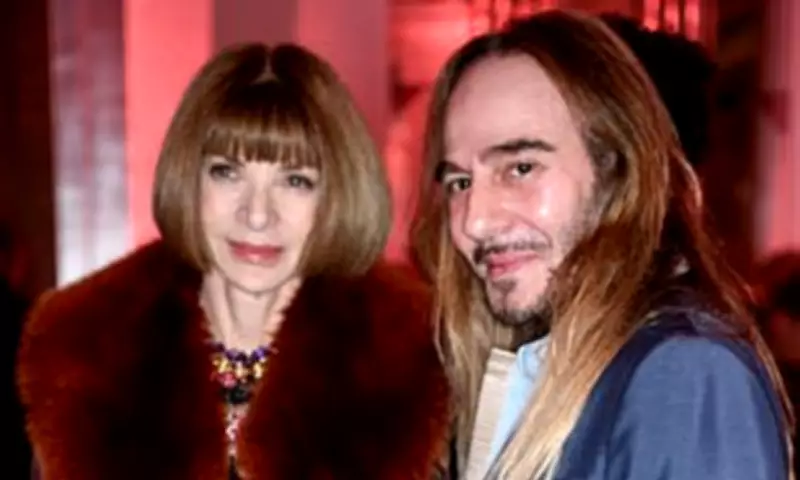
Following two years away from public life, during which he entered rehabilitation for substance abuse and educated himself about Jewish history and culture, Galliano began his gradual return to the industry. This rehabilitation was masterminded largely by Anna Wintour, the formidable British-born fashion icon who served as American Vogue's editor-in-chief for thirty-seven years.
Wintour's support proved instrumental in Galliano's 2014 appointment as creative director at Maison Margiela, where he maintained a deliberately low profile for nearly a decade while producing critically acclaimed collections that gradually shifted the narrative from scandal back to craftsmanship.
Strategic Shifts and Industry Power
The woman who orchestrated this unlikely partnership is Marta Ortega Perez, the forty-two-year-old daughter of Amancio Ortega (Spain's wealthiest individual and owner of Zara's parent company Inditex). Since becoming Inditex's non-executive chairman in 2022, Ortega Perez has strategically repositioned Zara as a destination for "affordable luxury."

This Galliano collaboration represents her most ambitious move yet, following previous partnerships with designers like Narciso Rodriguez, Stefano Pilati, and model Kate Moss. Ortega Perez has reportedly been a lifelong admirer of Galliano's work, and the designer visited Zara's headquarters in A Coruña before finalizing the agreement.
Despite criticism of Zara as a prime example of fast fashion—producing approximately 450 million garments annually across 2,000 stores in 96 countries—the company claims less than two percent of its stock remains unsold. Ortega Perez argues that popular styles frequently sell out precisely because they aren't produced in excessive quantities.
Industry Implications and Consumer Impact
Fashion editors describe this partnership as a potential game-changer. "Shoppers will want to preserve these pieces and pass them down through generations," predicts one editor. "If the quality matches expectations, a Galliano design inherently possesses longevity—the exact opposite of fast fashion's disposable nature."
The economic implications are equally significant. While a Dior or Margiela gown typically costs four figures (with couture versions reaching six figures), Galliano's Zara creations will retail at a fraction of those prices. This accessibility represents a fundamental shift, potentially democratizing high fashion design for millions of consumers previously excluded by exorbitant price tags.
Rumors continue to circulate about Galliano's potential 2027 exhibition at New York's Metropolitan Museum of Art—an honor previously bestowed upon fashion legends like Karl Lagerfeld. As an elective trustee of the Met who oversees the prestigious Met Gala, Anna Wintour would likely approve such an exhibition, further cementing Galliano's rehabilitation within fashion's highest institutions.
As the fashion world awaits September's first collection reveal, this partnership raises profound questions about brand strategy, designer rehabilitation, and the evolving relationship between luxury and accessibility in contemporary fashion.