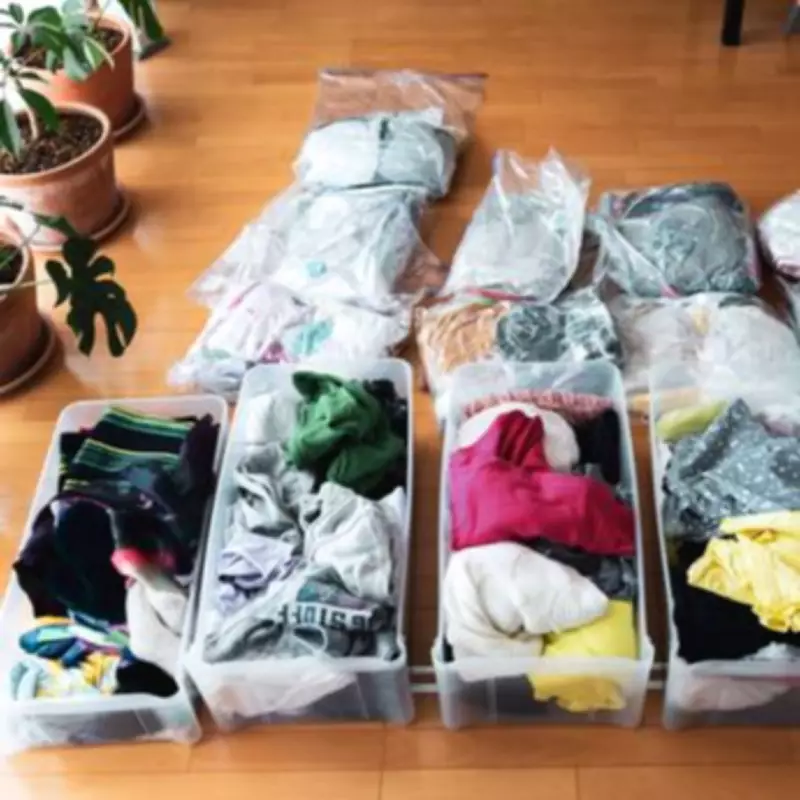
The Hidden Danger in Your Wardrobe: How Plastic Storage Ruins Clothes
As seasons change and wardrobes rotate, many people instinctively reach for plastic storage boxes to protect their winter woollens or special occasion outfits. This common practice, however, is silently destroying garments according to storage professionals. While plastic containers appear to offer robust protection against dust and pests, they create a sealed environment that traps moisture against fabric, leading to yellowing, mildew, and permanent damage.
The Science Behind Storage Damage
"People are often shocked when they open their storage boxes after several months to discover yellow stains or musty odours on their favourite garments," explains Chris Townsend, a storage expert at Three Movers. "The irony is that they believed they were protecting their clothing carefully. What they fail to understand is that plastic creates perfect conditions for fabric deterioration."
Plastic containers present multiple significant problems for stored clothing, particularly items made from natural fibres like wool, cotton, and silk. The fundamental issue lies in plastic's complete lack of breathability. Even in temperature-controlled homes, warmth fluctuations cause condensation within sealed plastic containers. This accumulated dampness on clothing, without proper ventilation, establishes ideal environments for mildew and bacterial proliferation.

Specific Risks to Different Fabrics
White and pale-coloured clothing suffers particularly from plastic storage. Over time, the confined dampness and absence of airflow trigger chemical reactions within fabric fibres, resulting in permanent yellowing. "We observe this constantly with wedding dresses and white shirts," Townsend notes. "Once that yellowing establishes itself, it's frequently impossible to eliminate completely."
Perhaps most concerning is what storage experts term "storage rot"—the progressive deterioration of fabric fibres in stale, moisture-heavy environments. Natural materials like wool and cotton prove especially vulnerable as they require ventilation. Synthetic fibres perform slightly better but can still develop unpleasant odours and discolouration.
"The fabric literally begins to decompose," Townsend states. "You might not notice immediately, but after six to twelve months in plastic storage, clothes can develop weak spots, holes, or a musty smell that never completely washes out."Proper Storage Solutions and Techniques
Townsend outlines the correct methodology for long-term clothing storage that protects garments without causing harm. For delicate pieces and natural fibres, acid-free tissue paper proves essential. He recommends wrapping individual items or placing tissue between folded clothes, particularly for wool jumpers, silk blouses, and special occasion wear.
"Regular tissue paper contains acids that can transfer to fabric over time, causing yellowing," Townsend explains. "Acid-free tissue creates a protective barrier between garment layers and helps absorb excess moisture without trapping it against the fabric."
Cotton or canvas storage bags represent the gold standard for wardrobe storage. For hanging garments, breathable garment bags made of cotton or nonwoven fabric are ideal. "These materials permit air circulation while still protecting clothes from dust and light," Townsend emphasises. "Unlike plastic, they allow moisture to escape naturally, preventing that damp, musty environment where mould thrives."
Essential Preparation Steps
Townsend maintains that thorough preparation matters equally as much as storage technique. "Always ensure clothes are completely clean and dry before storage. Even minimal residual moisture or invisible body oils can cause problems over months in storage. For valuable or sentimental items, consider adding silica gel packets to absorb excess humidity, but never within sealed plastic containers."

"The most frequent mistake we encounter when assisting people with moves is discovering entire wardrobes damaged by improper storage," Townsend continues. "What proves particularly frustrating is that this damage is entirely preventable with appropriate approaches."
If storing clothes for any duration, invest in proper materials. While breathable fabric bags and acid-free tissue paper cost more than plastic bins, they're significantly cheaper than replacing a ruined wardrobe. "We've witnessed people lose beautiful clothing items simply because they didn't realise plastic storage was causing harm," Townsend observes.
"My recommendation is to treat storage preparation identically to packing for a house move," Townsend concludes. "Take time to execute it properly, utilise correct materials, and your clothes will emerge from storage in identical condition to when they entered. The additional effort proves worthwhile."