Channel 5's Huw Edwards Drama Sparks Debate on Timing of True-Crime Storytelling
In October 2011, Jimmy Savile died, leading to a slow and shocking reveal of his abuses. My book, In Plain Sight: The Life and Lies of Jimmy Savile, was published in July 2014, more than two and a half years after his death. The BBC drama The Reckoning, based largely on that book, did not air until October 2023, twelve years after Savile's death. Distance allows evidence to accumulate and testimony to be tested, ensuring narrative follows fact rather than the other way around.
The Lack of Distance in the Huw Edwards Drama
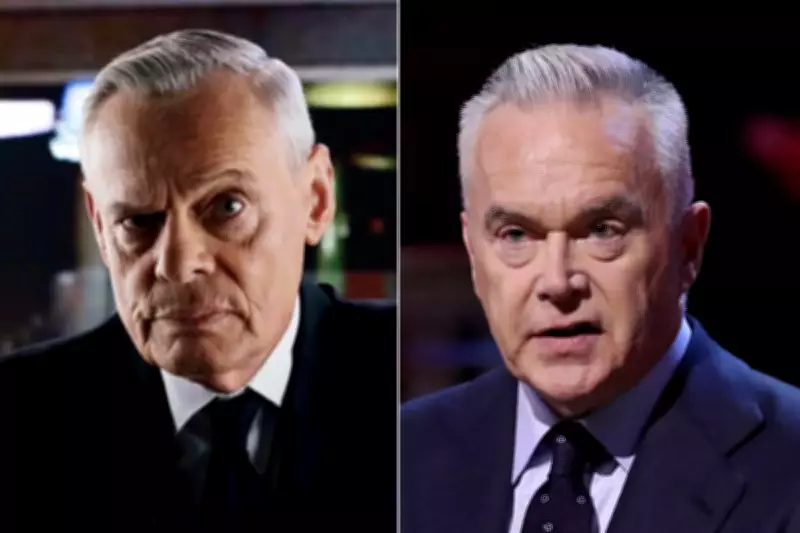
That crucial distance is absent in Channel 5's new drama, Power: The Downfall of Huw Edwards. Starring Martin Clunes as the disgraced newsreader, the film arrives less than two years after Edwards' conviction, attempting to shape a story that is still forming. Having watched it and spoken extensively with its director, Michael Samuels, I find myself caught between admiration for its intent and unease at its timing. The Edwards story is not one narrative but several, layered uneasily on top of one another.
Samuels argues this is precisely the point. "I think people are a bit hazy as to what Huw Edwards did or didn't do," he tells me. This admission is striking and revealing. If the public record remains blurred, what does it mean to dramatise it so soon?

Multiple Versions of the Story
There are different versions of the Huw Edwards story. The first entered public consciousness in July 2023 through a tabloid investigation by The Sun, which triggered a tidal wave of rumour and denial. The BBC plunged into crisis management with its headline "BBC STAR IN SEX PICS PROBE". Although Edwards was not named initially due to privacy concerns, the impact was immediate and explosive, leading to his suspension and hospitalisation before his wife identified him.
The Channel 5 drama depicts how the story reached The Sun, showing the stepfather of the young man, referred to as "Ryan" (not his real name), approaching the newspaper. It portrays the luring of Ryan into dependency and despair, the anguish of his parents, the BBC's failure to address their concerns, and the editorial deliberations at The Sun. Samuels explains that the production had access to The Sun's investigation and affidavits, shaping the film's narrative architecture with characters including the reporter, her superiors, and Ryan's family.
The Serious Allegations and Conviction
The initial allegation that a BBC presenter paid a teenager for explicit images was later disputed, with police finding no evidence of criminality. However, something far more serious was already unfolding. Edwards had been in contact with Alex Williams, later convicted for possessing and distributing indecent images of children, for nearly two years. Between December 2020 and August 2021, Williams sent Edwards hundreds of explicit images via WhatsApp, including Category A material involving very young children. Edwards viewed them, which in law constitutes "making" indecent images. This led to his arrest, guilty plea in 2024, and the complete implosion of his career.
The film connects these threads through Ryan, revealing that his introduction to Edwards came via Alex Williams. During a lockdown date, Williams described himself as Edwards' "porn dealer," receiving money from the newsreader. The relationship between Ryan and Edwards becomes the emotional core of the drama, beginning with a £500 payment that creates dependency and evolves into a dynamic of power, vulnerability, and coercion.
Focus on Victims and Psychological Complexity
Samuels emphasises that this is "very much a victim's story," framing it as a form of public service broadcasting to discern the DNA of coercive control relationships. However, the court case that convicted Edwards centred on the images from Williams, not Ryan. Psychiatric reports at sentencing detailed Edwards' mental health crisis, chronic depression, and a cerebrovascular disorder impairing his decision-making, though not diminishing his responsibility.

When I note the psychological dimension feels less present in the film, Samuels pushes back, asking, "Should we be in the business of absolving someone because they're having psychological issues?" This reveals the film's centre of gravity, focusing on one perspective rather than holding all taut, thereby shaping how the story is understood.
Risks of Definitive Narratives and Accelerated Storytelling
The film risks creating a narrative that feels definitive. Samuels counters that telling it now is no less right than in six years, suggesting "too soon" is often an excuse to brush things under the carpet. I have seen the consequences of delayed stories, but also the benefits of time, as with Savile, where patterns emerged and institutional failures were understood.
Samuels confirms the young man involved decided to tell his story, consulting frequently during the drama's writing. The film avoids lazy caricature, with Samuels insisting, "We didn't want a two-dimensional villain," aiming to portray someone capable of charm and abuse. This instinct is correct, yet coherence comes at a cost in a media environment where scandal moves quickly from revelation to dramatisation.
The Broader Shift in Media
Production companies now accelerate from reporting to reconstruction in months, not years. Samuels acknowledges the responsibility, stating, "You are dramatising a real person's story and you want to make that as accurate and as truthful as is humanly possible." However, accuracy is not completeness, and completeness takes time. This tension lies at the heart of Power: The Downfall of Huw Edwards.
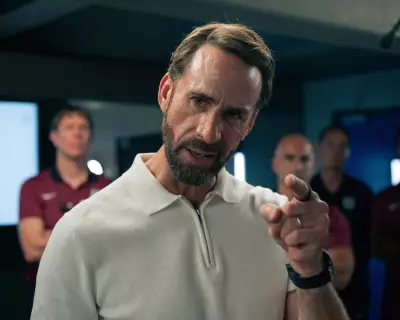
Martin Clunes, who undergoes a remarkable physical transformation for the role, notes the challenge of portraying more than just the projected face of a famous person. The film is a serious, thoughtful attempt to understand power abuse, rooted in research and careful in tone. Yet, it is part of a broader shift towards telling stories in real time, before they have fully settled into history.
Power: The Downfall of Huw Edwards airs on Tuesday 24 March 2026 at 9pm on Channel 5.