The second Friday the 13th of 2026 is fast approaching, a date that has long been synonymous with misfortune and bad luck for those who hold superstitious beliefs. This year offers a particularly ominous triple dose, as the 13th day of the month aligns with Fridays in February, March, and November, heightening the sense of dread among the wary.
The Biblical Origins of the Number 13
The superstition surrounding the number 13 is widely believed to trace its roots back to the Last Supper, a pivotal event in Christian tradition. On Maundy Thursday, Jesus Christ gathered with his 12 disciples, making a total of 13 individuals present. This gathering occurred just before his crucifixion by Roman soldiers on Good Friday, linking the number 13 to betrayal through Judas Iscariot, the disciple who betrayed Christ.
This association has led to the number 13 being viewed as imperfect and unlucky, especially when contrasted with the number 12, which symbolises completeness, such as the 12 months in a year or the 12 signs of the zodiac.

The Knights Templar and the Infamous Friday the 13th
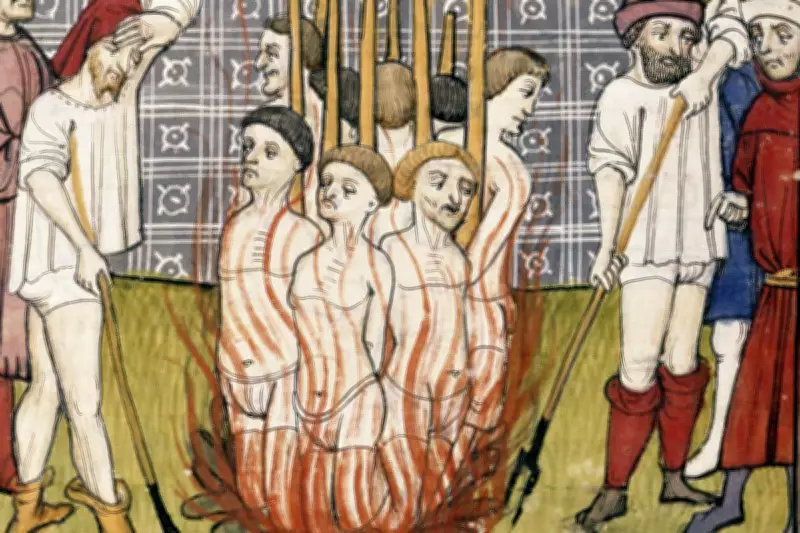
The union of Friday and the 13th as a particularly unlucky date is often traced to a dark historical event: the arrest of hundreds of Knights Templar on Friday, 13 October 1307, under the orders of King Philip IV of France. Acting under pressure from Pope Clement V, the king targeted the wealthy Catholic crusader order based on allegations made by an excommunicated former member.
These claims, which accused new recruits of being forced to spit on the cross, deny Christ, and engage in homosexual acts during initiation ceremonies, were later found to be entirely without foundation. However, they served as a convenient pretext for Philip IV to persecute the Knights Templar, allowing him to seize their assets and waive substantial debts he owed them following wars with England.
The Tragic Fate of the Knights Templar
Charged with moral and financial corruption, as well as worshipping false idols—often based on confessions extracted under torture—many of the knights were subsequently burned at the stake in Paris. The order's Grand Master, Jacques de Molay, met his end in front of Notre Dame Cathedral, where he is said to have uttered a curse upon his persecutors.
De Molay's alleged cry, "God knows who is wrong and has sinned. Soon a calamity will occur to those who have condemned us to death," has echoed through history. According to tradition, this event cemented the association of Friday the 13th with bad luck, with De Molay's hex believed to cast a shadow over every subsequent occurrence of the date.
Global Variations of Date-Based Superstitions
While Friday the 13th is widely feared in many cultures, it is not the only date associated with misfortune. In Spanish-speaking countries and Greece, Tuesday the 13th is considered unlucky, whereas in Italy, it is Friday the 17th that evokes similar dread. This highlights how superstitions can vary significantly across different regions and traditions.
Other Common Bad Luck Omens
Beyond date-based superstitions, numerous other omens are believed to bring bad luck. These include a black cat crossing one's path, breaking a mirror, walking under a ladder, opening an umbrella indoors, and uttering the name of Shakespeare's "Scottish play" (Macbeth) within a theatre. Such beliefs reflect the enduring human fascination with luck and the supernatural.
Understanding Paraskevidekatriaphobia
The irrational fear of Friday the 13th is formally known as paraskevidekatriaphobia, a term derived from Greek roots. This phobia can cause significant anxiety for those affected, leading them to avoid activities or make special preparations on this date. The persistence of such fears underscores the deep-seated nature of superstitions in human psychology.
In summary, the unlucky reputation of Friday the 13th is rooted in a blend of biblical narratives and historical events, particularly the arrest and persecution of the Knights Templar. As 2026 brings multiple occurrences of this date, it serves as a reminder of how ancient beliefs continue to influence modern perceptions of luck and fate.