Ursula Andress at 90: The Reclusive Bond Icon's Life Beyond the Bikini
It was the cinematic moment that launched a global franchise and created an enduring star, yet it also cast a shadow that would follow Ursula Andress throughout her life. Today, as the legendary actress celebrates her 90th birthday, we reflect on her extraordinary journey from that iconic James Bond debut to her decades of reclusive living.
The Scene That Changed Everything
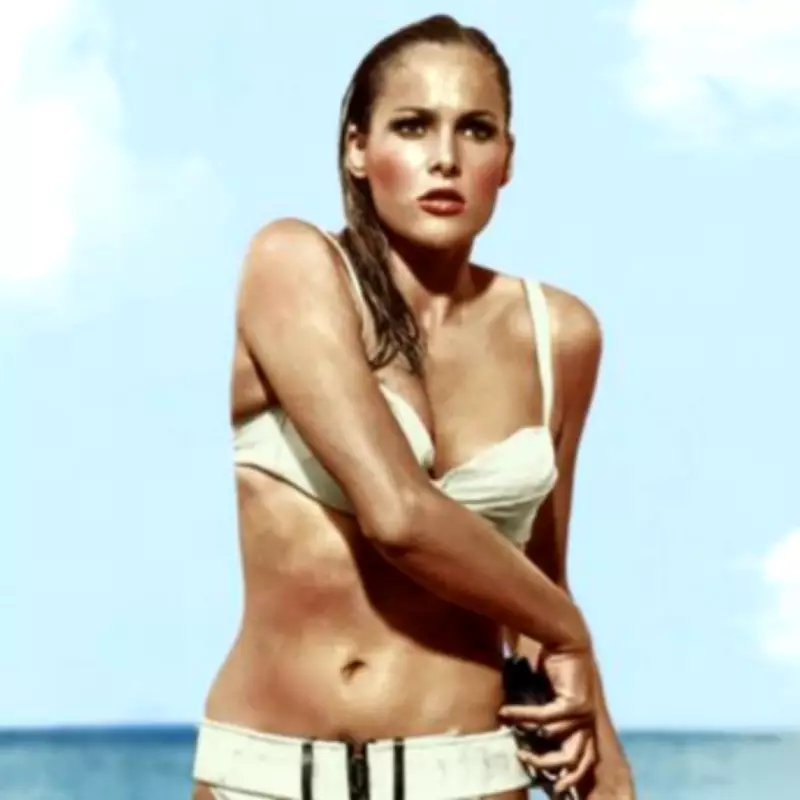
More than six decades have passed since audiences first witnessed the statuesque 25-year-old emerging glistening from the ocean in a white bikini, a knife strapped to her hip, in the 1962 film Dr No. This legendary moment, later voted the sexiest in movie history, nearly overshadowed Sean Connery's debut as 007 and transformed the unknown Swiss actress into an international sensation overnight.
"That bikini made me into a success," Ursula revealed in a rare 2001 interview. "It gave me freedom, money, power." Yet she acknowledged the profound cost: "I was never really seen. They only saw the body. Sometimes I would arrive on set and I knew - this wasn't about making a film. It was about taking my clothes off."

From Dramatic Beginnings to Hollywood Stardom
Born in 1936 in Bern, Switzerland, to a Swiss mother and German diplomat father, Ursula's path to fame began dramatically at age 17 when a French film crew arrived at her boarding school. She began an affair with its 35-year-old leading man, Daniel Gélin, running away with him to Paris and then Rome, even evading Interpol agents dispatched by her concerned parents.
After establishing herself as a model and appearing in several low-budget Italian films, she heeded advice from Gélin's friend Marlon Brando to try Hollywood. Her initial seven years in America proved challenging, with roles elusive partly due to her reluctance to learn English. Instead, she made headlines for her personal life, including a romance with James Dean shortly before his tragic death and her marriage to actor John Derek.
The Bond Legacy and Its Aftermath
Everything transformed in 1962 with her casting as shell diver Honey Ryder in Dr No, though her strong accent necessitated dubbing by German actress Nikki van der Zyl. The now-legendary beach scene, where she emerges from the sea clutching a shell, nearly didn't happen as planned. James Bond creator Ian Fleming almost wandered into shot during filming, forcing director Terence Young to shout "Lie down!" as Fleming and two companions were hastily concealed behind a sand dune for nearly an hour.
Chris Blackwell, a production assistant on the film, recalled how the movie had appeared destined for failure until the beach footage arrived. "It was electrifying," he remembered. "We suddenly felt, 'Gosh, we've got a movie.'" Ursula herself admitted she expected the low-budget production to be her first and possibly last film, unaware it would launch both her career and save the Bond franchise.
Career Peaks and Personal Struggles
Ursula won the Golden Globe for New Star of the Year in 1964 for her Dr No performance, which also helped establish the bikini as a global fashion staple. She subsequently starred opposite Elvis Presley in Fun in Acapulco and appeared alongside Frank Sinatra, Dean Martin, and Anita Ekberg in 4 for Texas. Later films included She (1965), The Fifth Musketeer (1979), and Clash of the Titans (1981).
Yet despite these successes, Ursula found herself increasingly typecast as a screen siren rather than recognized for her acting talent. She embraced this image initially, becoming one of the 1960s' most daring stars, unapologetically sensual and fiercely independent. When asked why she posed nude for Playboy seven times while other actresses avoided such exposure, she replied simply: "Because I'm beautiful."
The Retreat from Spotlight
Her personal life proved equally sensational, with relationships including Ryan O'Neal, Jean-Paul Belmondo, and Franco Nero following her scandalous divorce from John Derek. "I fell in love often, but never foolishly," she reflected. "I always knew the price."

As roles diminished when she tired of being cast primarily for her appearance, Ursula rejected television work, turned down lucrative deals, and even took legal action against a studio for unauthorized use of her image. By the late 1970s, Hollywood had largely turned its back on her.
Her life transformed again in 1980 when she became a mother at age 44 to son Dimitri with actor Harry Hamlin. She retreated from public life to raise him away from fame's glare, declaring: "Dimitri is the only thing I've done that lasted. He is my masterpiece."
Recent Challenges and Reclusive Existence
Interviews became increasingly rare, and public appearances nearly ceased entirely. In 2001, she sold the famous Dr No bikini at a Christie's auction for £93,000, revealing she had never worn it since the iconic scene and had discovered it in a friend's attic in Virginia.
Her complex feelings about the film that defined her career remained evident. "They made hundreds of millions from my body, my image, my name," she stated. "And me? Ten thousand dollars. No royalties. Nothing."
Recently, Ursula's story has taken another difficult turn. Earlier this year, reports emerged that the actress filed a criminal complaint against her late asset manager Eric Freymond, alleging approximately £17 million of her fortune disappeared through dubious transactions conducted without her knowledge.
Now, as she marks her 90th birthday, friends reveal the woman once celebrated as the world's most beautiful rarely leaves her homes, dividing time between her Rome villa and Swiss Alps chalet. Diagnosed with osteoporosis and moving with difficulty, she has reportedly expressed: "I don't want people to see me like this. I want them to remember who I was."
From that unforgettable emergence from Caribbean waters to her current reclusive existence, Ursula Andress's journey represents both the dazzling heights of cinematic fame and its profound personal costs, a legacy forever intertwined with that single, transformative moment in film history.